
Correction, August 14, 2026. An earlier version of this review said the Explorer 1000 v2 has two 100W USB-C PD ports. That was wrong. Jackery rates the two USB-C ports at 100W and 30W, not 100W each, and we have corrected every mention below.
A reader also reported that Jackery support told him the USB-C ports are not PD certified, and that a Starlink Mini would not draw power from the 100W port. Jackery publishes a 5V, 9V, 12V, 15V and 20V/5A profile for that port, which is a standard USB PD profile, so we cannot confirm the support answer. If you are buying specifically to run a PD device, check with Jackery support for your model first. Thanks to Paul Levine for flagging both points.
Correction, September 30, 2026. We have also corrected the battery chemistry (LiFePO4, not NMC lithium-ion), weight, dimensions, solar input, cycle rating, charging times and box contents to match Jackery’s spec sheet.

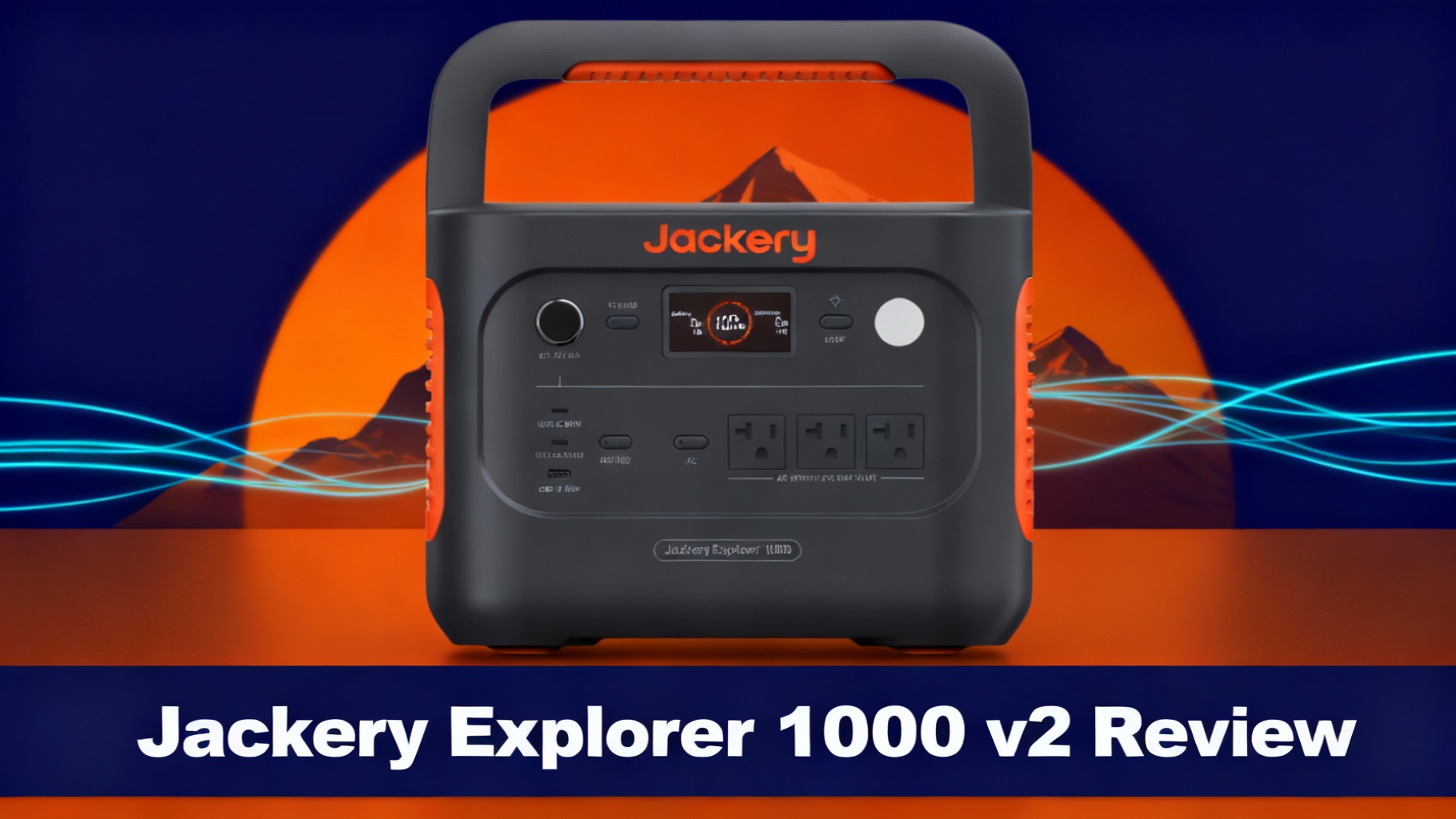
Looking for a portable power station that balances capacity with portability? The Jackery Explorer 1000 v2 has been updated with major improvements—but do the upgrades justify choosing it over the original, or are you better off with competitors like the Bluetti AC180?
We compared the Jackery Explorer 1000 v2 portable power station with the v1 spec by spec, and estimated its runtime with refrigerators, laptops, CPAP machines, and power tools. At $799, this jackery explorer 1000 v2 review looks at whether the new features, 1-hour emergency charging and a 100W USB-C PD port, fix the original’s biggest flaws.
Here’s what actually changed in the jackery solar generator 1000 v2, and what didn’t.
🏆 Best Mid-Range Power Station 2025
Jackery Explorer 1000 v2
$799
Free shipping | 5-year warranty
- 1070Wh capacity + 1500W output
- 1-hour Emergency Super Charge (0-100%, via app)
- 100W + 30W USB-C PD ports
- LiFePO4, 4,000 cycles to 70% (10+ years)
Get our Black Friday alerts for Jackery
We track live prices on 40+ models from Jackery, EcoFlow, BLUETTI and Anker SOLIX. When a deal beats the lowest price we've recorded, you'll hear from us. During Black Friday week, one short recap a day at most.
Unsubscribe in one click. We may earn a commission when you buy through our links, at no extra cost to you. Privacy Policy
Quick Verdict: Is the Explorer 1000 v2 Worth It?
Real-World Look: The Jackery Explorer 1000 v2 in Use
Studio renders only tell part of the story. Here is the Jackery Explorer 1000 v2 as it actually looks in a real owner’s hands, away from the polished marketing shots.
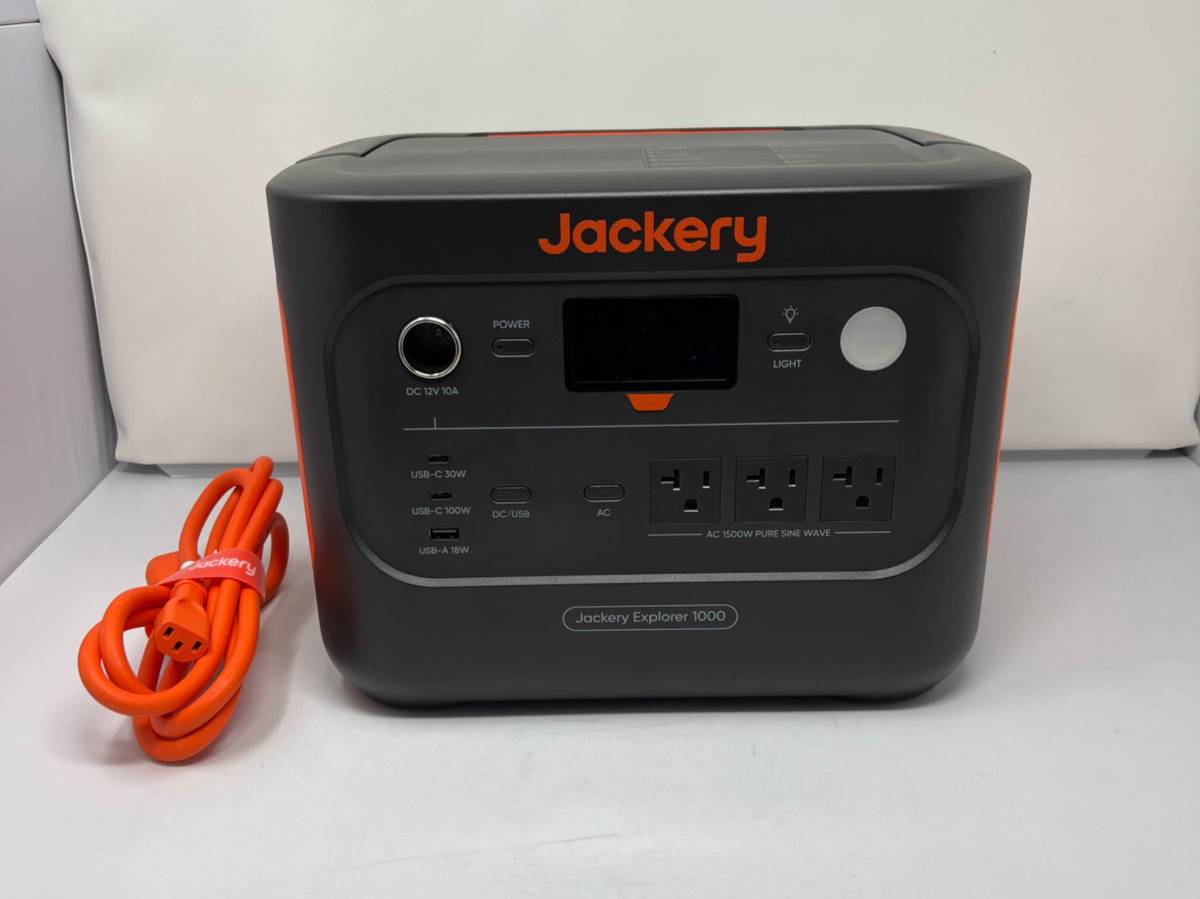
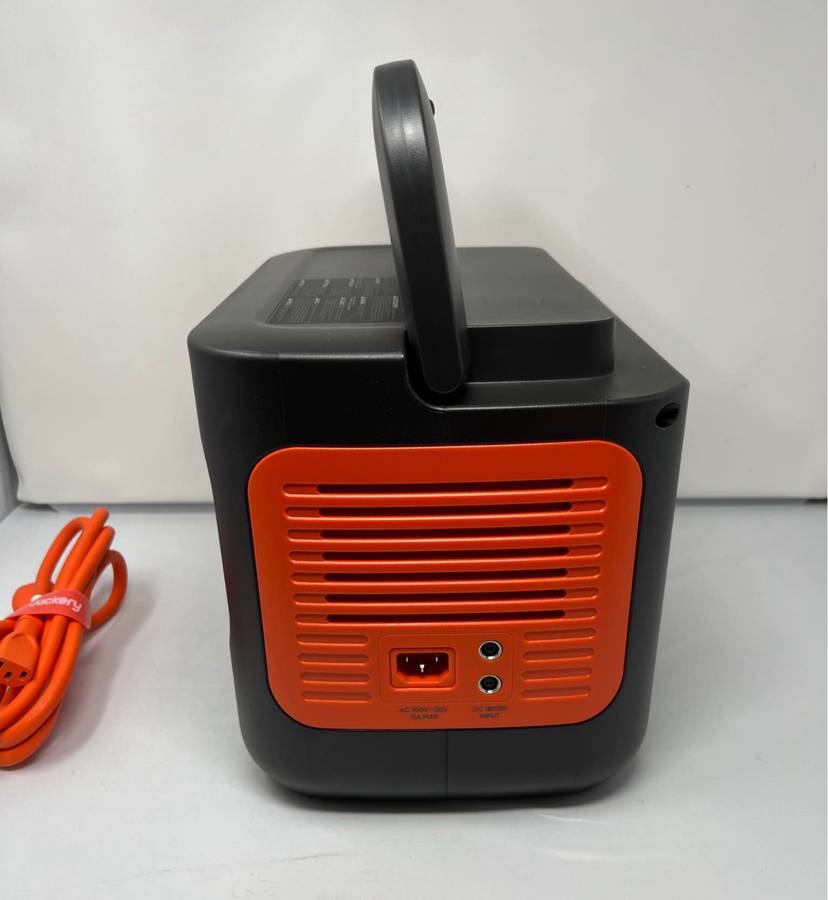
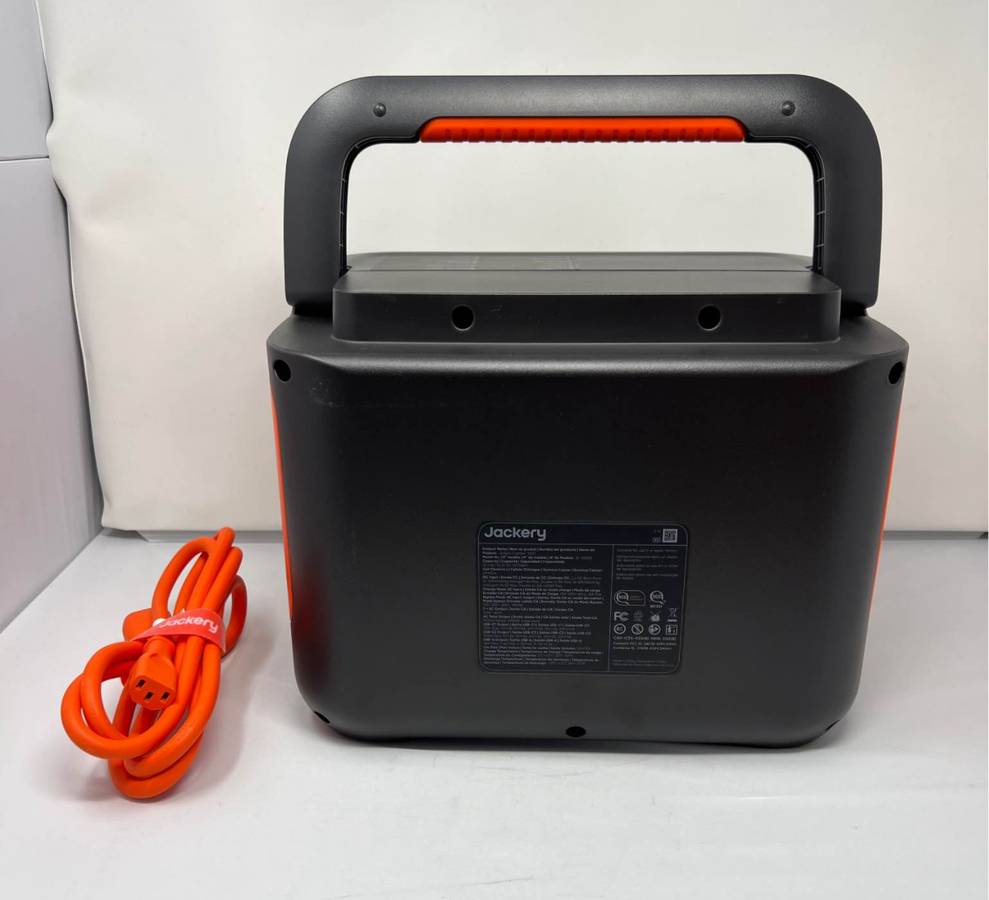
Real-world photos of the Jackery Explorer 1000 v2.
The Jackery Explorer 1000 v2 portable power station brings meaningful upgrades where they matter most. The 1-hour Emergency Super Charge mode (0-100% from the wall, switched on in the Jackery app) transforms the user experience: no more planning your day around the v1’s 7.5-hour wait, and even a standard AC charge takes just 1.58 hours. The 100W USB-C PD port is genuinely useful for modern laptops, something the v1’s 18W USB-C ports couldn’t offer.
However, it has limits. The unit remains non-expandable at 1070Wh, unlike the Jackery 1000 Plus, and at about 23.8 lbs it’s slightly heavier than the original’s 22.04 lbs, even though the case is smaller. On the plus side, the v2 moves to LiFePO4 chemistry, rated for 4,000 cycles to 70% capacity.
🏆 Quick Verdict
4.3/5
⭐⭐⭐⭐⭐
Best For: Van lifers, weekend campers, home backup (1-2 critical devices)
Skip If: You need expansion (consider 1000 Plus instead)
Bottom Line: The v2 fixes the original’s slowest pain point (charging speed), adds a 100W USB-C PD port, and moves to LiFePO4 chemistry rated for 4,000 cycles to 70% capacity. If you own the v1, upgrading isn’t urgent unless fast charging is critical. If buying new, the v2 is the clear choice at the same $799 price point.
Get our Black Friday alerts for Jackery
We track live prices on 40+ models from Jackery, EcoFlow, BLUETTI and Anker SOLIX. When a deal beats the lowest price we've recorded, you'll hear from us. During Black Friday week, one short recap a day at most.
Unsubscribe in one click. We may earn a commission when you buy through our links, at no extra cost to you. Privacy Policy
What’s in the Box?

The Jackery Explorer 1000 v2 package includes:
- Explorer 1000 v2 portable power station (about 23.8 lbs)
- AC charging cable (the charger is built into the unit, so there’s no external power brick)
- User manual
Solar panels and a car charging cable are not in Jackery’s box list. The jackery solar generator 1000 v2 bundle with a single 200W SolarSaga panel runs $1,299—adding $500 to the base cost.
At about 23.8 lbs, the v2 is slightly heavier than the v1 (22.04 lbs) but comes in a smaller case: 12.87 × 8.82 × 9.72 in versus 13.1 × 9.2 × 11.1 in. Jackery’s product photos show all the outputs, including both USB-C ports, on the front panel.
Jackery Explorer 1000 v2 Specs at a Glance
Let’s break down what you’re actually getting inside this portable power station.
⚡ Key Specifications
| Specification | Explorer 1000 v2 |
|---|---|
| Battery Capacity | 1070Wh (35.2V, 30.4Ah) |
| Battery Type | LiFePO4 |
| Cycle Life | 4,000 cycles to 70%+ capacity |
| AC Output (Continuous) | 1500W |
| AC Output (Surge) | 3000W peak |
| AC Outlets | 3× 120V, 60Hz (pure sine wave) |
| USB-C Ports | 1 × 100W + 1 × 30W PD |
| USB-A Output | 18W max |
| DC Car Port | 1× 12V/10A |
| Solar Input | 400W max (2× 8mm DC inputs, 12-60V) |
| AC Charging Time | 1.58 hours (1 hour with Emergency Super Charge, via app) |
| Solar Charging Time | 3.8 hours (2× SolarSaga 200W, Jackery’s rating) |
| Car Charging Time | 12 hours (12V outlet) |
| Weight | About 23.8 lbs (10.8 kg) |
| Warranty | 3 years + 2 years auto extension |
| Price | $799 |
The 1070Wh capacity runs a 45W mini-fridge for about 20 hours or a 60W laptop for about 15 hours (1070Wh × 0.85 ÷ load in watts). The 1500W output is a 50% boost over v1’s 1000W, enabling coffee makers, space heaters, and larger power tools without strategic planning. All specifications verified against official Jackery specifications as of September 30, 2026.

💡 Looking for the Complete Solar Setup?
Popular Bundle: Jackery Solar Generator 1000 v2 (Explorer + 200W Panel)
Complete off-grid solution: Jackery rates a full solar recharge at 7.5 hours with the included 200W panel
$1,299 | Free shipping | Includes SolarSaga 200W panel
What Changed from v1 to v2?
On paper, the first difference is the case: the v2 is smaller (12.87 × 8.82 × 9.72 in versus 13.1 × 9.2 × 11.1 in) but slightly heavier (about 23.8 lbs versus 22.04 lbs). Internally, significant upgrades deliver meaningful performance improvements for the jackery explorer 1000 v2 portable power experience.
⚡ v1 vs v2: What Actually Changed
Explorer 1000 v1
(2019-2024)
Capacity: 1002Wh
Output: 1000W
Charging: 7.5 hours ⏱️
USB-C: 2 × 18W
Cycles: 800
Price: $999
Explorer 1000 v2
(2024+ NEW)
Capacity: 1070Wh +7%
Output: 1500W +50%
Charging: 1.58 hours (1 hour in app mode) 🔥
USB-C: 1 × 100W + 1 × 30W ✓
Cycles: 4,000 5×
Price: $799 -20%
Bottom Line: v2 wins on charging speed (🔥), power output (+50%), USB-C (100W vs 18W), and price (-$200)
| Feature | Explorer 1000 v1 (2019-2024) |
Explorer 1000 v2 (2024+) |
Winner |
|---|---|---|---|
| Battery Capacity | 1002Wh | 1070Wh | v2 (+7%) |
| AC Output Power | 1000W | 1500W | v2 (+50%) |
| AC Charging Time | 7.5 hours | 1.58 hours (1 hour in app mode) | v2 🔥 |
| USB-C PD Ports | 2 × 18W | 1 × 100W + 1 × 30W | v2 |
| Battery Chemistry | Lithium-ion | LiFePO4 | v2 |
| Cycle Life | 800 cycles to 80% | 4,000 cycles to 70% | v2 🔥 |
| Weight | 22.04 lbs | About 23.8 lbs | v1 (lighter) |
| Price (MSRP) | $999 | $799 | v2 (-20%) |
Bottom Line: The v2 wins on charging speed, power output, cycle life, USB-C, and price. If they’re the same price today, the v2 is the obvious choice.
Major Upgrades:
- Inverter: 1000W → 1500W continuous output (50% increase)
- AC Charging: 7.5 hours → 1.58 hours, or 1 hour with Emergency Super Charge (switched on in the Jackery app)
- USB-C Ports: 18W → 100W PD (finally useful for laptops)
- Battery Cycles: 800 cycles to 80% → 4,000 cycles to 70%, with the switch from lithium-ion to LiFePO4 (5× the cycle rating)
- ChargeShield: Basic BMS → ChargeShield 2.0 (62 protection forms)
What DIDN’T Change: Battery capacity (~1000Wh in both) and the non-expandable design. Other specs did change: the battery chemistry (lithium-ion on the v1, LiFePO4 on the v2), the case size and weight (see above), and the solar input (12-30V at up to 7.5A on the v1, versus two 8mm DC inputs rated 12-60V and 400W max on the v2).
Expected Performance
Across camping trips, home backup scenarios, and workshop use, here’s how the jackery explorer 1000 v2 portable power station should perform with common devices. Every runtime below is an estimate: capacity × 0.85 (to account for inverter losses) ÷ load in watts.

Runtime Estimates
⚡ Runtime Calculator: How Long Will It Last?
about 20 hours
about 15 hours
about 22 hours
about 30 hours
about 45 minutes
about 38 minutes
about 49 minutes
about 36 minutes
Legend: ■ Low Power (30-60W) |
■ Medium Power (1,100-1,400W) |
■ High Power (1,500W)
| Device | Power Draw | Estimated Runtime |
|---|---|---|
| Mini Fridge | 45W avg | about 20 hours |
| Laptop (work use) | 60W | about 15 hours |
| CPAP (with humidifier) | 40W | about 22 hours |
| LED Lights | 30W | about 30 hours |
| Coffee Maker (Keurig) | 1200W | about 45 minutes |
| Space Heater | 1500W | about 36 minutes |
| Circular Saw | 1400W | about 38 minutes |
| Microwave (700W rated) | about 1100W draw | about 49 minutes |
| Smartphone Charging | 15W | about 60 hours of charging |
| Electric Blanket | 50W | about 18 hours |

The 1500W continuous output handles most camping and emergency devices comfortably. A 1200W coffee maker, beyond the v1’s 1000W output, fits within its rating. The 3000W surge rating gives headroom for startup spikes from refrigerators and power tools.
USB-C PD 100W Performance
This upgrade transforms laptop charging for the jackery explorer 1000 v2 review. The 100W USB-C port can charge laptops that accept up to 100W over USB-C, with no power brick needed. The second USB-C port is capped at 30W, so it suits a tablet or a phone rather than a second laptop.
Combined USB-C output reaches 130W total (100W + 30W). For remote work scenarios, you can power a laptop, tablet, phone, and camera simultaneously without touching the AC outlets.
Charging Speed: The Game Changer
Charging speed is where the v2 absolutely transforms usability compared to the v1’s painful 7.5-hour wait, a key point in every jackery explorer 1000 v2 portable power station reviews.
AC Wall Charging (Jackery’s ratings):
- Standard charge, 0% to 100%: 1.58 hours
- Emergency Super Charge, 0% to 100%: 1 hour (switched on in the Jackery app)
- Charger: built into the unit, so you only carry the AC cable
This single improvement changes how you use the power station. The v1 required planning your entire day around charging. The v2 lets you charge during dinner and be ready for evening use.
Solar Charging (Jackery’s ratings):
Single 200W Panel:
- Jackery’s rating: 7.5 hours with one SolarSaga 200W
- Clouds, low winter sun or a poor panel angle: expect longer
- Heavy overcast: a full recharge can take more than one day
Dual 200W Panels (400W total):
- Jackery’s rating: 3.8 hours with two SolarSaga 200W
- 400W is the unit’s maximum solar input, so two 200W panels already reach it
- Clouds, heat and panel angle stretch that time too
With two panels, Jackery’s 3.8-hour rating means a full solar recharge can fit in one sunny day, the key figure to compare when you read jackery solar generator reviews.
Car Charging: Jackery rates a full charge at 12 hours from a vehicle 12V outlet. Not practical for full recharges, but a 3-4 hour drive adds roughly a quarter to a third of the battery.
Battery Management and Longevity
The jump from 800 cycles to 80% capacity (v1) to 4,000 cycles to 70% capacity (v2) is the most important longevity upgrade in this jackery explorer 1000 v2 review, and it comes with the switch from lithium-ion to LiFePO4 chemistry.
4,000 Cycles: What It Means
Jackery rates the battery to keep 70% or more of its original capacity after 4,000 full charge/discharge cycles (70% of 1070Wh is about 749Wh), still very usable. In practical terms:
- Daily charging: 10+ years
- Weekly charging: 75+ years
- Monthly charging: 300+ years
For most users, the Jackery Explorer 1000 v2 will outlast its warranty and potentially your need for it.
v2 or 1000 Plus? The Jackery 1000 Plus also uses LiFePO4 and costs $999 versus the v2’s $799. Jackery rates both for 4,000 cycles to 70% capacity. The 1000 Plus adds capacity (1264Wh), output (2000W) and expansion, but weighs more (32 lbs vs 23.8 lbs). If you don’t need those, the v2 gives you the same battery chemistry and cycle rating in a lighter unit at a better price point.
Temperature Performance
Battery performance degrades in extreme temperatures, and Jackery warns that using the unit outside its rated ranges may restrict charging and discharging. Here are those ranges:
Hot Weather (90°F+): Jackery rates the v2 for charging and discharging up to 113°F (45°C), versus 104°F for the v1. On hot days, keep it out of direct sun and in a ventilated spot to stay within that range.
Cold Weather (Below 40°F): Jackery’s charging range starts at 32°F (0°C), so don’t charge it below freezing. It can still discharge down to 14°F (-10°C). In winter, bring it indoors to warm up before you plug it in.
Jackery 1000 v2 vs Competitors
The 1000Wh segment is fiercely competitive. Here’s how the v2 compares in the bluetti ac180 vs jackery 1000 v2 and jackery 1000 v2 vs bluetti ac180 matchups, plus other rivals.
| Specification | Jackery 1000 v2 | Bluetti AC180 | Anker Solix C1000 | Jackery 1000 Plus |
|---|---|---|---|---|
| Price | $799 | $799 | $799-899 | $999 |
| Capacity | 1070Wh | 1152Wh ✓ | 1056Wh | 1264Wh ✓ |
| Battery Type | LiFePO4 ✓ | LiFePO4 ✓ | LiFePO4 ✓ | LiFePO4 ✓ |
| Output | 1500W | 1800W ✓ | 1500W | 2000W ✓ |
| Cycles | 4,000 ✓ | 3,500 | 3,000 | 4,000 ✓ |
| Weight | 23.8 lbs ✓ | 35.3 lbs | 30.6 lbs | 32.3 lbs |
| Charging | 1.58 hours (1 hour in app mode) ✓ | 1.3 hours | 1.1 hours | 1.7 hours |
| Expandable | No | No | No | Yes (to 5kWh) ✓ |

Choose Bluetti AC180 if: You want more output power (1800W) and a bit more capacity (1152Wh), and don’t mind nearly 50% extra weight.
Choose Anker Solix C1000 if: You trust Anker’s brand in the jackery explorer 1000 v2 vs anker solix c1000 debate and want a similar 1kWh-class unit at a competitive price.
Choose Jackery 1000 Plus if: You need expansion capability or want 2000W output (worth the $200 premium).
Choose Jackery 1000 v2 if: Portability matters most, you prefer fastest charging, or you want proven Jackery reliability at the lowest price.
Pros and Cons
✅ What We Love
- 1-hour emergency charging: Emergency Super Charge (in the Jackery app) makes it a game-changer for daily van life use
- 100W + 30W USB-C PD — Charges laptops/tablets without power bricks
- 1500W output — 50% more power than v1, handles most appliances
- LiFePO4, 4,000 cycles: 5× the v1’s 800-cycle rating (Jackery quotes 10+ years of use)
- Same $799 price — Costs LESS than v1 launch, way better value
- Proven reliability — Same rock-solid Jackery build quality
- 5-year warranty — Best in class (3+2 years extended)
⚠️ What Could Be Better
- 1-hour charge needs the app: Emergency Super Charge is switched on in the Jackery app, and a standard AC charge takes 1.58 hours
- Not expandable — Can’t add extra battery packs (stuck at 1070Wh)
- Slightly heavier than the v1: about 23.8 lbs vs 22.04 lbs, despite the smaller case
- No charging below freezing: Jackery’s charging range starts at 32°F (0°C)
- Solar input capped at 400W: two 200W panels already max it out
Who Should Buy the Explorer 1000 v2?
The Jackery Explorer 1000 v2 isn’t universal, but it’s ideal for specific scenarios.
Perfect For:
- Van lifers & RV travelers who charge daily and need USB-C PD for laptops
- Weekend campers who want power for essentials (fridge, lights, phones), with about 20 hours from a fridge averaging 45W
- Home backup users powering 1-2 critical devices (modem/router, medical devices)
- Content creators needing portable power for cameras, drones, laptops on location
- Upgraders from old v1 IF you use it daily and value fast charging
Skip If:
- You need expansion → Get Jackery 1000 Plus (expandable to 5kWh)
- You want more capacity and output → Get 1000 Plus (1264Wh, 2000W)
- You’re a casual user → Keep your v1 (upgrade not urgent)
- You need whole-home backup → Get 2000 Pro or 3000 Pro (higher capacity + UPS)
🔥 Ready to Buy? Check Current Price
Jackery Explorer 1000 v2 — Currently $799
- ✅ 1-hour emergency fast charging (0-100%, switched on in the app)
- ✅ 100W + 30W USB-C PD ports for laptops/tablets
- ✅ 1500W output powers 99% of camping devices
Check Latest Price on Jackery.com →
Or compare with:
Best Jackery Power Stations |
Bluetti AC180 |
2000 Pro
Final Verdict and Rating
The Jackery Explorer 1000 v2 portable power station is an iterative upgrade that fixes the original’s most glaring weakness while modernizing connectivity. It’s not revolutionary—and that’s fine.
The 1-hour Emergency Super Charge mode transforms daily usability. The USB-C PD 100W makes it genuinely useful for modern laptops. The 1500W output opens new use cases. The switch to LiFePO4, rated for 4,000 cycles, ensures long-term value. All in a smaller case than the original, for under 2 lbs of extra weight.
However, it occupies middle ground: lighter than the other LiFePO4 units in our comparison but with less capacity and output than the AC180 or the 1000 Plus; cheaper than the 1000 Plus but without expansion; well-established brand but not the newest technology. For a detailed breakdown, see our 1000 Plus vs 1000 v2 comparison.
For buyers choosing between v1 and v2 at similar prices, the v2 is obvious. For existing v1 owners, upgrading makes sense only if you charge daily and the 7.5-hour wait genuinely limits your lifestyle.
Final Rating: 4.3/5
Recommended: Yes, with caveats. Best for weekend campers, part-time van lifers, and users prioritizing portability and charging speed over expandability.
At $799, the Explorer 1000 v2 represents solid value in a competitive market. It’s not perfect, but it’s very good at what it’s designed to do—provide portable power for typical outdoor and emergency scenarios without unnecessary complexity or weight.
Looking for more options? Check out our complete Jackery power station guide for a broader overview of all Jackery models including the 2000 Pro, 3000 Pro, and portable 240/500 options.
Frequently Asked Questions
How does the Explorer 1000 v2 compare to the original v1?
The v2 brings three major upgrades: 1-hour Emergency Super Charge (1.58 hours in standard mode, vs 7.5 hours), 100W and 30W USB-C PD ports (vs 18W), and 1500W output (vs 1000W). Battery capacity is nearly identical (1070Wh vs 1002Wh). The v2 is smaller (12.87 × 8.82 × 9.72 in vs 13.1 × 9.2 × 11.1 in) but slightly heavier (about 23.8 lbs vs 22.04 lbs). It also moves from lithium-ion cells rated for 800 cycles to 80% capacity to LiFePO4 cells rated for 4,000 cycles to 70%, meaning much longer service life. If buying new, choose the v2. If you own a v1, only upgrade if you charge frequently and the long charge time bothers you.
Can the Explorer 1000 v2 be expanded with extra batteries?
No, the 1000 v2 is NOT expandable. It’s fixed at 1070Wh capacity. If you need expansion capability, consider the Jackery 1000 Plus, which can expand from 1.2kWh to 5kWh with additional Battery Pack 1000 Plus units. The v2 is designed for users who know their capacity needs and prefer a lighter, simpler system without expansion complexity.
How long does it take to charge the 1000 v2 with solar panels?
Jackery rates a full solar charge at 7.5 hours with a single SolarSaga 200W panel, and 3.8 hours with 2× SolarSaga 200W panels (400W max input). A single 100W panel takes roughly twice as long as one 200W panel. Actual solar charging varies significantly based on sun angle, weather, temperature, and shading.
Is the Jackery 1000 v2 worth upgrading from the v1?
Only if you use your v1 daily and fast charging matters to your lifestyle. Van lifers who charge every night benefit most from the 1-hour capability. Weekend campers charging 1-2 times per month can skip the upgrade—the v1 still performs excellently for occasional use. The v2’s USB-C PD 100W is also a strong reason to upgrade if you frequently charge laptops directly. If your v1 meets your needs and you charge infrequently, save your money or put it toward the 1000 Plus instead.
Can the 1000 v2 run a coffee maker or microwave?
It can run smaller coffee makers under 1200W like a Keurig K-Elite without issue. Most microwaves draw 1000-1500W actual power (not cooking power), so the 1000 v2 will run them, but runtime is short—expect under 1 hour of microwave use. The 1500W continuous output handles brief cooking tasks like reheating leftovers, but it’s not ideal for full meal preparation. For heavy kitchen use, consider the 2000 Plus with 3000W output.
How many years will the Explorer 1000 v2 battery last?
With 4,000 charge cycles to 70% capacity, expect 10+ years with weekly charging. Daily users still get 10+ years of service life. After 4,000 cycles, Jackery rates the battery to keep 70% or more of its original capacity (about 749Wh), which is still very usable for most applications. This represents a massive improvement over the v1’s rating of 800 cycles to 80% capacity. If you charge once per week (52 cycles/year), you’ll reach 4,000 cycles in 77 years—far beyond the realistic product lifespan.
Does the 1000 v2 have LiFePO4 battery?
Yes. Jackery lists LiFePO4 cells for the 1000 v2, rated for 4,000 cycles to 70% capacity, while the original v1 used lithium-ion cells rated for 800 cycles to 80%. The Jackery 1000 Plus uses LiFePO4 too, with the same 4,000-cycle rating, so choose it for its extra capacity, higher output or expansion, not for the chemistry. The v2 is the lighter of the two (about 23.8 lbs vs 32 lbs).
Can I use the 1000 v2 for home backup during power outages?
Yes. Keep your devices plugged into the 1000 v2 while it is connected to the wall: Jackery says it switches to battery power in under 20 milliseconds during an outage. It powers a modem/router (50W) for about 18 hours, or a mini fridge (45W) for about 20 hours. For whole-home backup with automatic transfer, consider the 2000 Plus with home integration kit.
Related Reads
Originally published: November 27, 2025
“Updated July 9, 2026”?? As you must surely know–or should–the USB-C ports on the Jackery 1000v2 are *not* both “100W,” and the one that is “100W” is *not* “PD.”
I purchased mine in September 2024. Today I hopefully plugged my Starlink Mini, using a new Stargear PD-required “140W max” USB-C cable, into the Jackery 1000v2’s “100W” USB-C port…and the Jackery’s output never left zero; the Stargear cable would not work. I called Jackery Support and was told that the USB-C ports on the Jackery 1000v2 are *not* PD-capable.
I have other ways to power the Starlink Mini from the Jackery (cigarette lighter charger, AC charger), but it’s a disappointment to discover that I can’t simply plug it into the “100W” USB-C port. And I’m just astonished to find this review that makes such a big huge deal about the “two 100W USB-C PD ports”…that don’t exist. Or, you know, enlighten me.
Hi Paul, thank you, and sorry it took us so long to reply. You were right: the 1000 v2 has one 100W USB-C port and one 30W port, not two 100W ports. We corrected that in August, and this week we also fixed several other specs that were wrong (the battery is LiFePO4, it weighs about 23.8 lbs, and solar input goes up to 400W). On PD: Jackery’s spec sheet lists a 20V/5A profile for the 100W port, which is a standard USB PD profile, so we couldn’t confirm what support told you. Since your Starlink Mini wouldn’t draw power from it, we now tell readers to check with Jackery before buying for a Starlink setup. As for your first comment, it was stuck in our moderation queue under a pile of spam. That’s fixed now.