
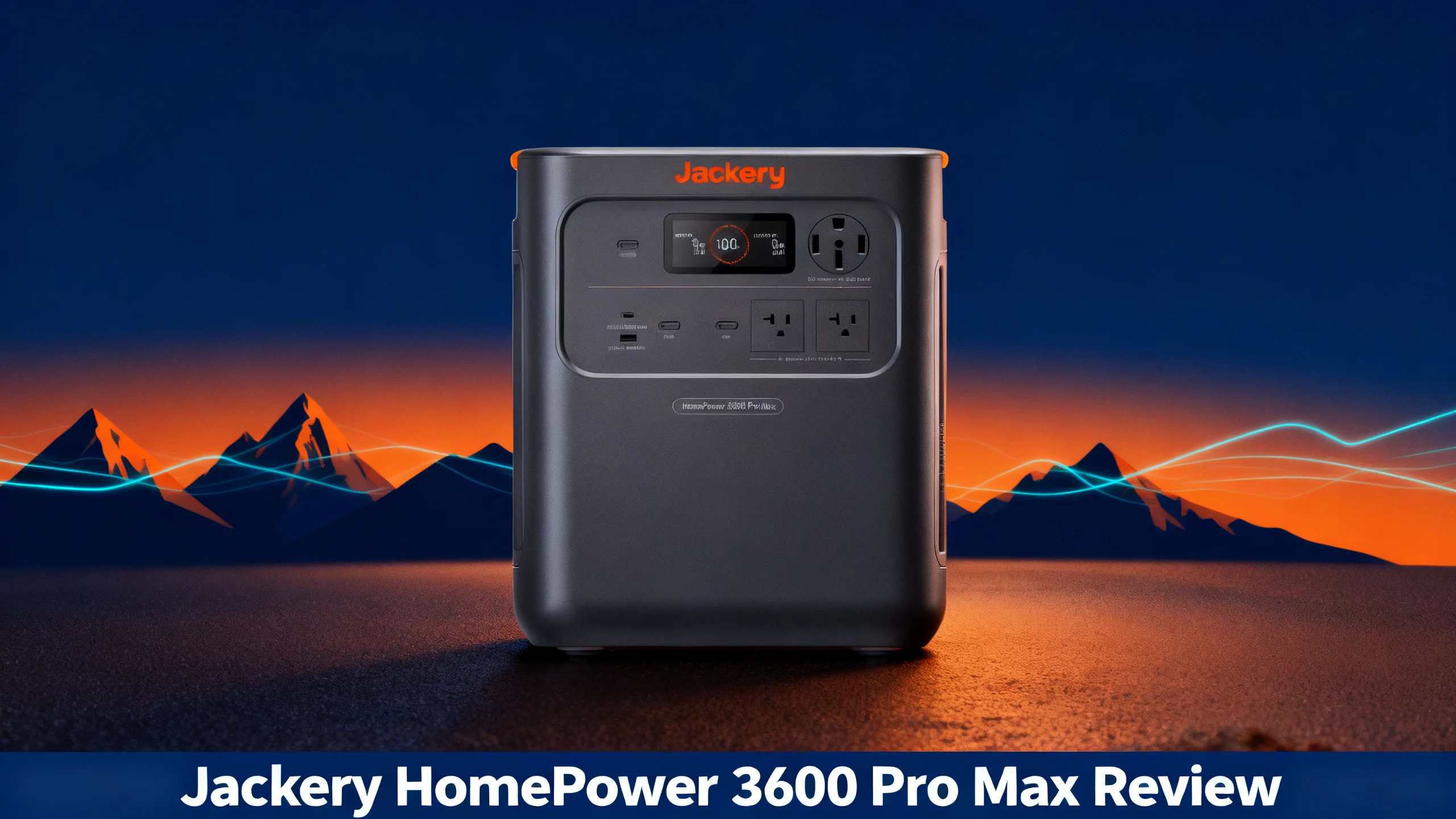
Most portable power stations stop at 120V. That works for a fridge and a few lights, but a well pump, an electric dryer, or a mini-split needs 240V, and until now a Jackery owner had to pair two units through a hub to get it. The Jackery HomePower 3600 Pro Max promises 240V from a single box, for $1,799.
That is a bold claim at that price. Paired with Jackery’s Manual Transfer Switch, the 3600 Pro Max also switches your circuits to battery on its own when the grid drops. Here is what the specs, the runtime math, and the trade-offs actually say.

Real-World Look: The Jackery HomePower 3600 Pro Max in Use
Studio renders only tell part of the story. Here is the Jackery HomePower 3600 Pro Max as it actually looks in a real owner’s hands, away from the polished marketing shots.
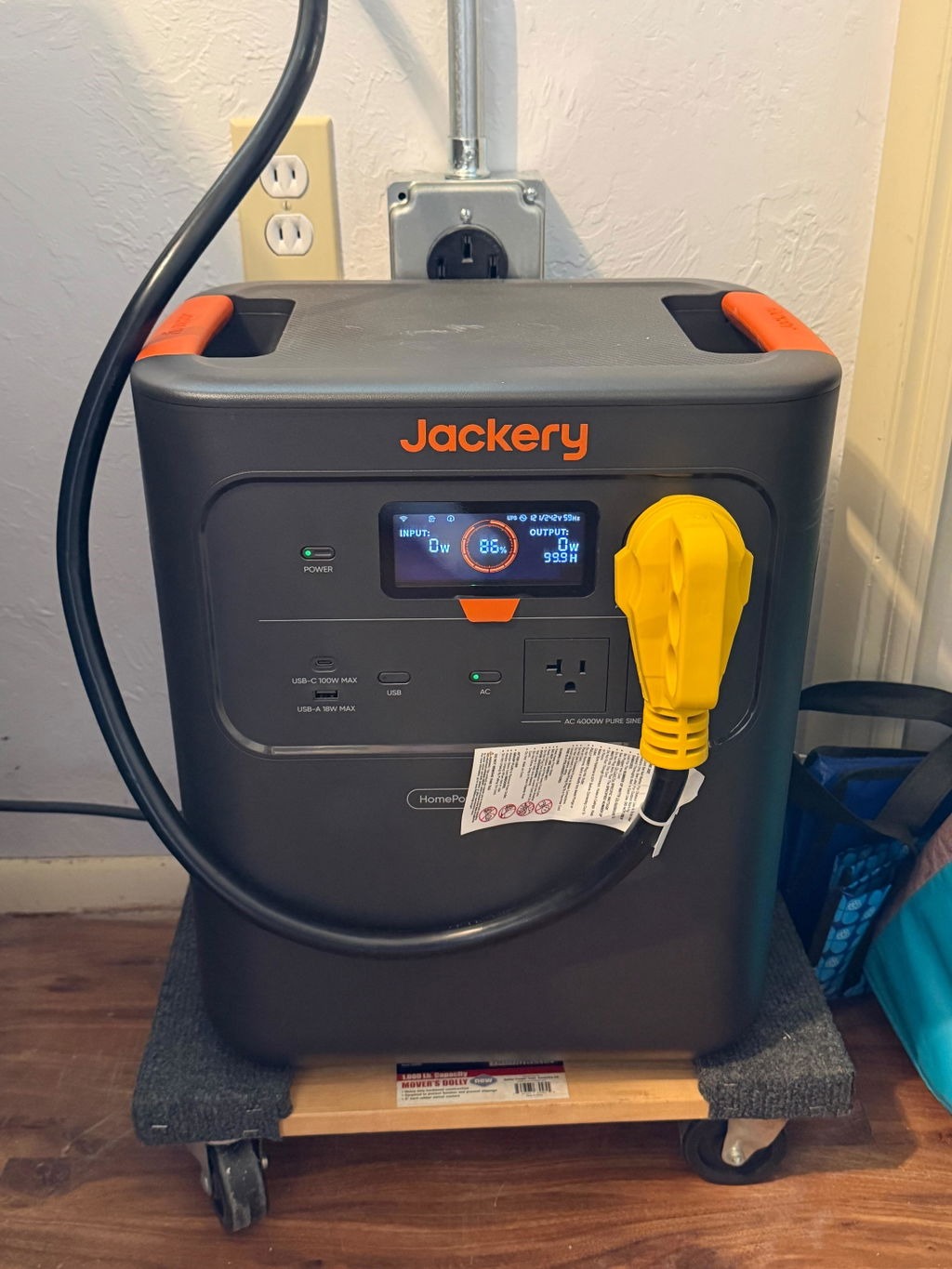
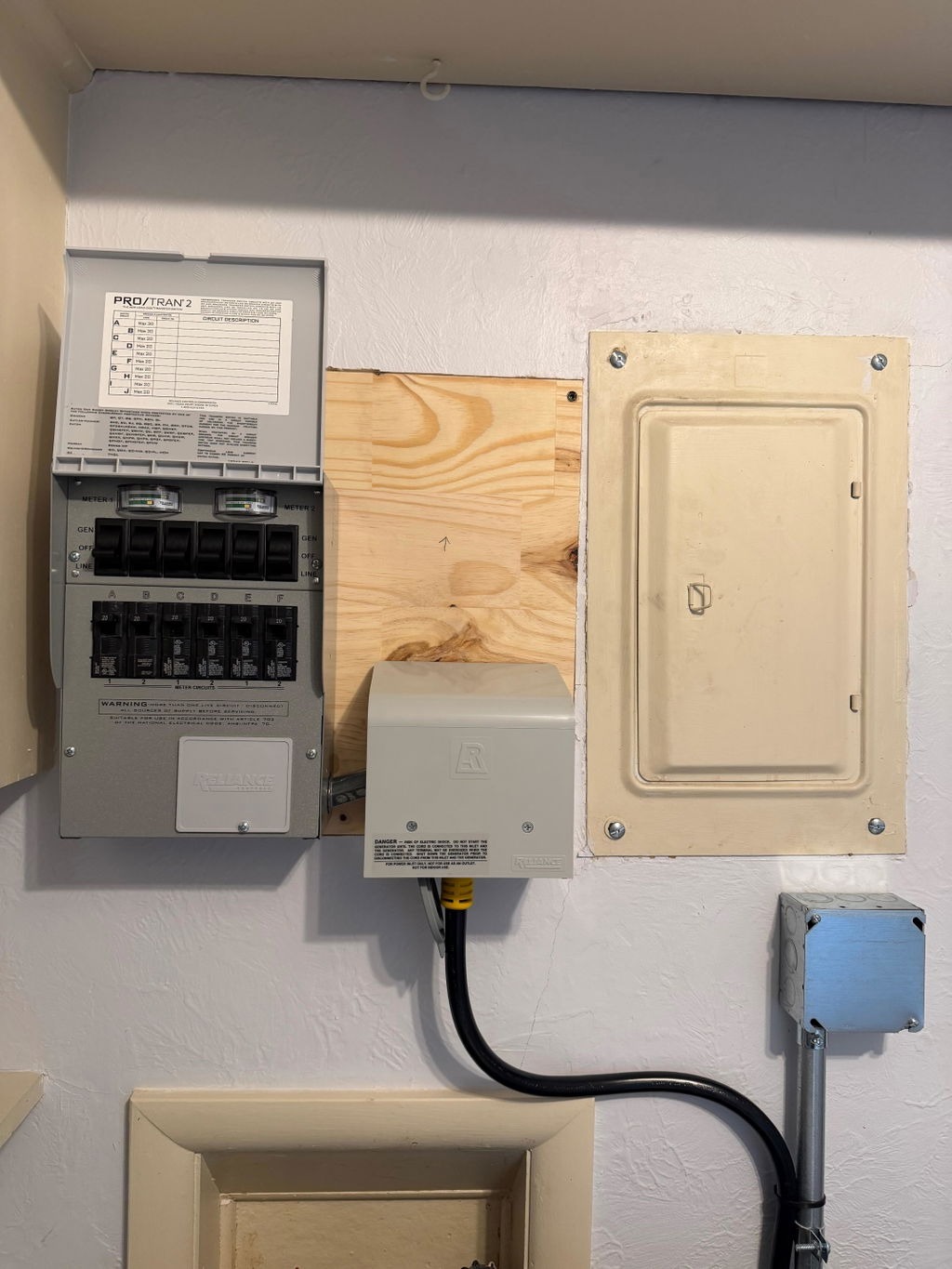
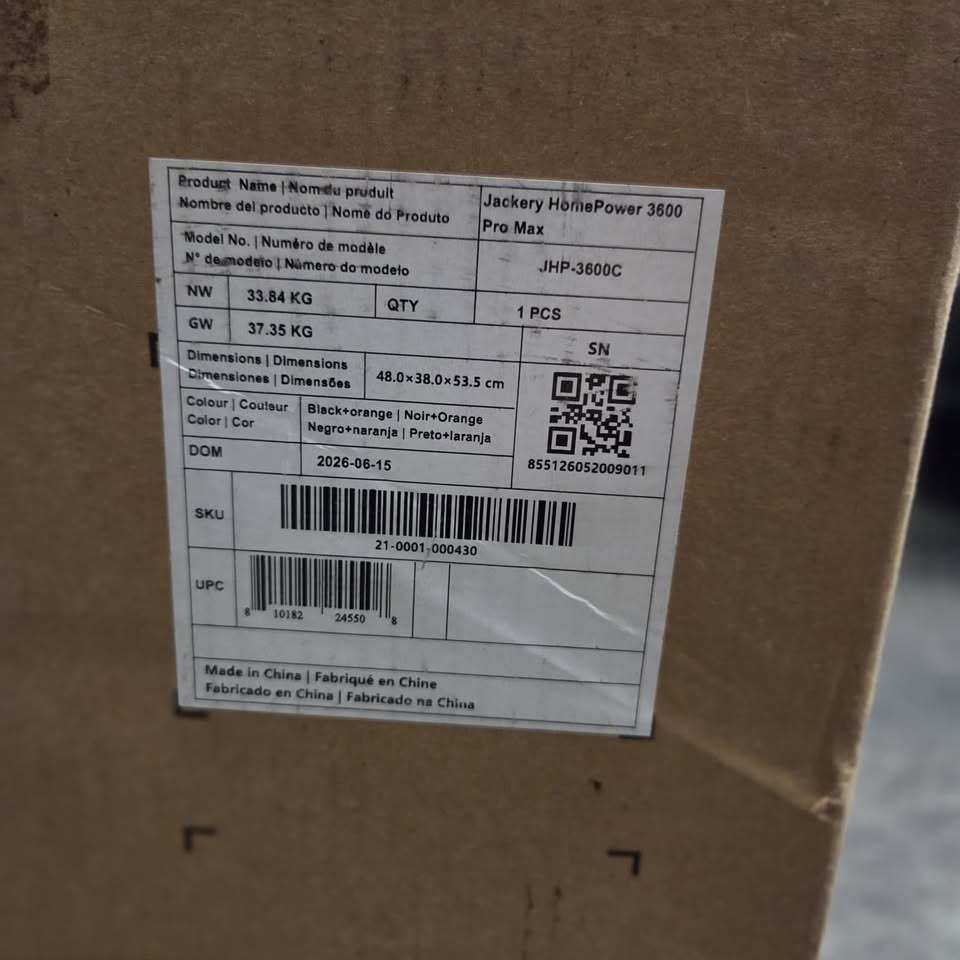
Real-world photos of the Jackery HomePower 3600 Pro Max.
It is the flagship of the HomePower range, above the HomePower 3600 Plus and the HomePower 2000 Plus v2. Below, you get the verdict first, then the details that matter before you spend close to $2,000.

Jackery HomePower 3600 Pro Max
$1,799 $2,099
- True 240V (4,000W) from a single unit
- Built-in auto transfer, sub-10ms switchover
- 3,584Wh LiFePO4, expandable to 43kWh
Quick Verdict: What the Data Shows
Spoiler: this is the most practical 240V Jackery yet. Native 240V at 4,000W from a single unit is the real differentiator: no other HomePower model offers it. Paired with Jackery’s Manual Transfer Switch, it also backs up your panel circuits automatically, with a switchover under 10ms.
But here is the thing. On 120V, a single unit tops out at 2,000W total, versus 3,600W on the HomePower 3600 Plus. For $90 more than the Plus, you trade 120V headroom for 240V capability and automatic backup. Whether that trade makes sense depends entirely on what you plan to run.
Jackery HomePower 3600 Pro Max: Overall Rating
9.1/10
“Single-unit 240V and automatic backup for less than $2,000”
240V Performance 9.6/10
120V Performance 7.8/10
Value 9.2/10
Charging Speed 9.4/10
Expandability 9.5/10
Safety 9.5/10
📊 Pros and cons at a glance
✅ Pros
- Native 240V at 4,000W from one unit
- Automatic backup under 10ms with Jackery’s Manual Transfer Switch
- Time-of-Use Mode for daily peak shaving
- Expands to 21.5kWh (43kWh with 2 units)
- UL 9540 listed with EPO for indoor installs
❌ Cons
- 120V output limited to 2,000W
- No TT-30 outlet for RVs
- Only two 120V outlets and two USB ports
- Transfer switch needs a licensed electrician
Jackery 3600 Pro Max Specs at a Glance
The core numbers: a 3,584Wh LiFePO4 battery (lithium iron phosphate, the chemistry rated for thousands of cycles), 4,000W continuous output with an 8,000W surge, and a single NEMA 14-50R outlet for 240V loads.
| Specification | HomePower 3600 Pro Max |
|---|---|
| Battery Capacity | 3,584Wh LiFePO4 |
| 240V Output | 4,000W (Surge 8,000W), NEMA 14-50R |
| 120V Output | 2,000W, 2x NEMA 5-20R |
| USB Ports | 1x USB-C 100W, 1x USB-A 18W |
| Transfer | Under 10ms, automatic with Manual Transfer Switch |
| Expansion | 21.5kWh (43kWh in parallel) |
| AC Recharge | 1.3 hrs (40A cable) / 2.5 hrs (wall) |
| Max Solar Input | 1,200W, about 4.3 hrs |
| Safety | UL 9540, 5VA materials, EPO switch |
| Noise | Under 30dB |
| Weight | 73.85 lbs |
| Warranty | 5 years (3 + 2 via jackery.com) |
Full dimensions and port diagrams are on Jackery’s official product page. Two lines in this table deserve a closer look: the transfer system and the 120V output. Both shape who should buy this unit.
Automatic Backup: How the Switchover Works
Most home backup setups need a separate automatic transfer switch, mounted and wired next to your panel. The HomePower 3600 Pro Max handles the switchover inside the unit instead, using the same sub-10ms UPS logic found across the HomePower range. Paired with Jackery’s Manual Transfer Switch, it moves your selected circuits to battery in under 10 milliseconds when the grid fails, fast enough that most electronics never notice.

Jackery claims this approach saves up to $3,000 compared to a conventional ATS installation and cuts install time roughly in half. Those are manufacturer figures, not independent measurements. The Manual Transfer Switch still needs a licensed electrician, and our transfer switch installation guide explains what that job involves.
⚠️ Important: Budget for professional installation. Connecting any power station to your home panel without a properly installed transfer switch can backfeed the grid and endanger utility workers.
Once installed, the setup runs without input from you. The grid drops, the unit takes over, and your essential circuits stay live. For anyone who travels or works away from home, that hands-off switchover is the main reason to choose this model.
240V Performance: What Changes With One Unit
The NEMA 14-50R outlet delivers 4,000W at 240V while the 120V outlets stay active. In practice, that covers a 240V well pump, an electric dryer, or a mini-split heat pump without buying a second unit and a hub. The 8,000W surge rating gives motor-driven appliances room to start.
With earlier HomePower models, 240V meant two paralleled units. That pushed the entry cost well past $3,000 before adding a single battery pack. One Pro Max changes that math.


Keep expectations realistic for central air, since a large system can exceed what one unit handles at startup. Central air is the hardest load in any home, and our guide to power stations for HVAC systems compares the options that can realistically start one.
The 120V trade-off
This is the limitation that matters most. Total 120V output on one unit is capped at 2,000W, split across two NEMA 5-20R outlets. The HomePower 3600 Plus delivers 3,600W on 120V from the same battery size.
3600 Pro Max, 120V
2,000W
2 outlets, no TT-30
3600 Plus, 120V
3,600W
More ports, TT-30 RV outlet
Port count is thin too: two 120V outlets, one USB-C (100W), and one USB-A (18W). There is no TT-30 outlet, so RV owners should look elsewhere. The Pro Max is built to feed a transfer switch, not to serve as a campsite power hub.
What Can It Power? Runtime Analysis
Runtime calculations below assume about 85% usable energy after inverter losses, or roughly 3,050Wh from a single 3,584Wh unit. Wattages are typical figures, so check your own appliance labels. The U.S. Energy Information Administration’s guide to measuring electricity explains how watts turn into watt-hours.
What Can It Power? (3,584Wh, single unit)
❄️
Refrigerator (120V)
~20 hrs
150W average
🌬️
240V mini-split AC
~3.4 hrs
900W
💧
240V well pump
~3 hrs run time
1,000W running
🚗
EV via Level 2
~10 miles
about 3.5 mi/kWh
The EV figure is emergency range, not a charging plan. Ten miles gets you to a hospital or a working charger during an outage, but it is no replacement for a wall connector. A well pump rarely runs nonstop, so three hours of pump time usually stretches across a full day of cycling.
Portable Power Station Calculator
Load profiles vary widely, so calculate your exact runtime before deciding how many battery packs to add.
For a typical outage plan (fridge, lights, internet, and a well pump cycling through the day), one HomePower 3600 Pro Max covers roughly a day. If you expect multi-day grid failures, plan on expansion packs or solar.

Charging Options
Recharge speed is one of the strongest points on the Jackery HomePower 3600 Pro Max spec sheet. With Jackery’s 40A charging cable plugged into the AC Expansion port, the unit accepts up to 4,000W and refills in about 1.3 hours. A standard wall outlet takes about 2.5 hours.
⚡ Time to full charge (Jackery data)
AC, 40A cable (4,000W) 1.3 hrs
240V generator 1.5 hrs
AC wall outlet 2.5 hrs
Solar, 1,200W max 4.3 hrs
Alternator, 600W DC-DC 7.7 hrs
Off-grid options are just as flexible. Two DC8020 inputs accept up to 1,200W of solar for a full charge in about 4.3 hours of good sun. A 240V generator refills it in 1.5 hours (2.5 hours on 120V), and the 600W DC-DC alternator charger works from a vehicle in about 7.7 hours. Jackery also sells a Solar Generator HomePower 3600 Pro Max bundle with a SolarSaga 500X panel, priced at $2,849.

Expandability and Time-of-Use Savings
Each unit supports up to five expansion batteries for 21.5kWh, and two units in parallel reach 43kWh. The Pro Max uses the same packs as the 3600 Plus, so the ecosystem is shared. Each Battery Pack 3600 adds 3,584Wh and currently sells for $1,349.

Time-of-Use Mode charges the battery when grid electricity is cheap and runs your home from it during peak hours. Jackery advertises savings of up to $4,238 per year, but read the conditions: that figure assumes one unit plus five battery packs, on California utility rates.
💡 Pro Tip: Pull your utility’s peak and off-peak rates before counting on TOU savings. With a single unit and no expansion packs, the daily shift is far smaller, and flat-rate plans see no benefit at all.
Treat the $4,238 as a best-case manufacturer number, not a measured result. It is a real bonus for TOU customers, not a reason to buy on its own.
Safety and Build
For a unit designed to live indoors full-time, the safety list is solid: UL 9540 certification (the standard for energy storage systems), 5VA fire-rated materials, and an EPO (emergency power off) button. The LiFePO4 cells are rated for 6,000 cycles to 70%+ capacity, about 16 years by Jackery’s estimate.

It charges in temperatures from -4°F to 113°F and runs under 30dB, quiet enough for a garage or utility room next to living space. At 73.85 lbs, it is not light, but wheels and a telescoping handle make moving it manageable.
3600 Pro Max vs 3600 Plus vs HomePower 3000
The closest sibling shares the same battery, and our HomePower 3600 Plus review covers it in detail. Here is how the three models line up on the specs that separate them.
| Feature | 3600 Pro Max | 3600 Plus | HomePower 3000 |
|---|---|---|---|
| Capacity | 3,584Wh | 3,584Wh | 3,072Wh |
| Output (rated/surge) | 4,000W / 8,000W | 3,600W / 7,200W | 3,600W / 7,200W |
| Max 120V output | 2,000W | 3,600W | 3,600W |
| 240V single unit | Yes | No (needs 2 units) | No |
| Expandable | 21.5kWh (43kWh with 2 units) | 21.5kWh (43kWh with 2 units) | No |
| Weight | 73.85 lbs | 77.16 lbs | 59.52 lbs |
| Price (Sept 2026) | $1,799 | $1,709 | $1,349 |
The Pro Max wins on 240V from one unit and on peak output. The Plus wins on 120V power, ports, and a TT-30 outlet for RVs, for $90 less. The HomePower 3000 is the budget pick, but it cannot be expanded.
Jackery HomePower 3000 Review
On a tighter budget? That model drops expandability to save several hundred dollars.
Who Is It For?
Is the HomePower 3600 Pro Max right for your home? The profile is specific: a homeowner with at least one 240V load who wants backup that switches over without anyone touching a cord.

✅ Buy this if…
- You need 240V (well pump, dryer, mini-split) without buying two units
- You want backup that switches automatically when the grid drops
- You pay time-of-use rates and want daily peak shaving
- You plan to keep the unit indoors full-time (UL 9540, EPO)
❌ Skip this if…
- Your loads are mostly 120V: the 3600 Plus gives 3,600W there
- You want an RV hookup: no TT-30 outlet on this model
- You need many direct ports: only two 120V outlets and two USB
- You cannot budget for an electrician to install the transfer switch
If most of your critical loads run on 120V, the 3600 Plus is the better buy. If 240V is non-negotiable, the Pro Max is a simpler and cheaper route than stacking two units.
Frequently Asked Questions
Can the Jackery 3600 Pro Max run 240V appliances on its own?
Yes. A single unit delivers 4,000W at 240V through its NEMA 14-50R outlet, with an 8,000W surge rating for motor startup. That means well pumps, electric dryers, and mini-split AC units no longer require two paralleled units and a hub. Large central air systems are the exception: check the startup draw of your specific system before relying on it.
How much 120V power does the HomePower 3600 Pro Max provide?
Up to 2,000W across its two NEMA 5-20R outlets. That is lower than the 3,600W available on the HomePower 3600 Plus, even though both share the same 3,584Wh battery. Homes with mostly 120V loads, such as a refrigerator, a microwave, and a space heater running at the same time, may be better served by the Plus.
Does the HomePower 3600 Pro Max switch to backup automatically?
Yes. Its built-in automatic transfer technology, paired with a Manual Transfer Switch, moves your circuits to battery power in under 10 milliseconds when the grid fails. Most electronics keep running without a reboot. The Manual Transfer Switch must be installed by a licensed electrician, so factor that cost into your budget.
How fast does the HomePower 3600 Pro Max recharge?
About 1.3 hours with the 40A charging cable through the AC Expansion port, 2.5 hours from a standard wall outlet, and around 4.3 hours with 1,200W of solar panels, according to Jackery. A 240V generator refills it in about 1.5 hours, and the 600W alternator charger takes roughly 7.7 hours from a vehicle.
What is the difference between the HomePower 3600 Pro Max and the 3600 Plus?
Both use a 3,584Wh battery and the same expansion packs. The Pro Max adds single-unit 240V, 4,000W output, and automatic panel backup with Jackery’s Manual Transfer Switch. The Plus offers more 120V power (3,600W), more ports, and a TT-30 RV outlet, and costs $90 less at $1,709. Choose based on whether your critical loads run on 240V or 120V.
Final Verdict
The Jackery HomePower 3600 Pro Max earns a 9.1/10. It is the first Jackery to deliver true 240V from a single unit, with automatic backup through Jackery’s Manual Transfer Switch, with fast charging and expansion to 43kWh, all for under $2,000.
The 2,000W ceiling on 120V, the short port list, and the missing TT-30 outlet keep it from being a universal pick. Buy it if your home has 240V loads and you want hands-off switchover. If everything you run is 120V, the 3600 Plus makes more sense.

Jackery HomePower 3600 Pro Max
$1,799
Best single-unit 240V Jackery under $2,000
Price verified September 2026. Free shipping available.
Originally published: September 25, 2026