

The best solar generator for camping is a power station whose battery matches your trip and whose solar input matches the panels you are willing to carry. A big battery with a slow solar input can take three days of sun to refill. A small one with a fast input fills up over lunch.
A “solar generator” is simply a portable power station paired with folding solar panels. Most brands sell both as a kit, but you can also buy the station first and add panels later. This guide ranks seven stations by how well they work with solar at a campsite: solar input, real recharge time with one or two panels, weight and capacity.
We compared the models from Anker SOLIX, EcoFlow, Jackery and BLUETTI that are on sale in the US right now, using each brand’s spec sheet (last checked October 2026) and our own solar math. BackupPowerHub doesn’t run lab tests (see our editorial guidelines), so every recharge time on this page is either quoted from the brand or a calculation you can check. Prices update automatically from each brand’s store.
- Anker SOLIX C1000 Gen 2: best overall, 1,024Wh with 600W of solar input.
- EcoFlow DELTA 3 Plus: fastest solar refill, up to 1,000W across two inputs.
- Jackery Explorer 1000 v2: simplest 1kWh solar kit, 23.8 lb.
- Anker SOLIX C2000 Gen 2: best for group and multi-day camping, 2,048Wh and 800W of solar.
- BLUETTI AC180: best for CPAP camping, 1,152Wh and 500W of solar.
- EcoFlow RIVER 2 Max 500: best small solar kit for tent camping, 13.2 lb.
- BLUETTI Elite 30 V2: best budget pick, 9.5 lb.
Solar Generators for Camping Compared
Live prices first, then the numbers that decide how a station behaves with solar: capacity, weight, maximum solar input and the recharge time each brand quotes.
| Model | Capacity / output | Price now | Per kWh | Lowest tracked | Link |
|---|---|---|---|---|---|
 Anker SOLIXC1000 Gen 2 | 1,024Wh · 2,000W | $529.99 | $518 | $469.99 (Oct 8) | Check deal |
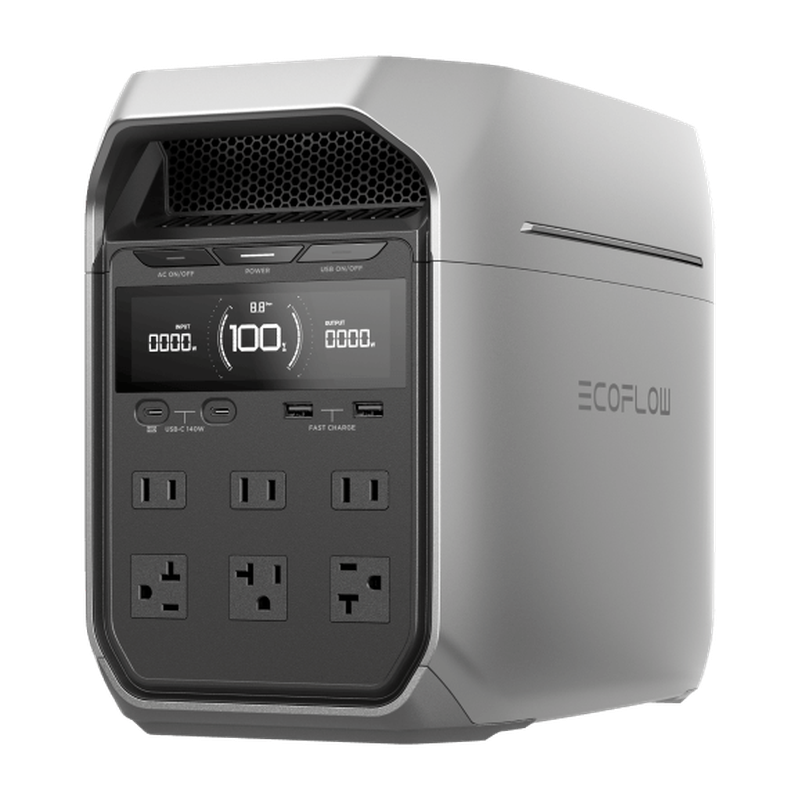 EcoFlowDELTA 3 Plus | 1,024Wh · 1,800W | $719 | $702 | $669 (Oct 6) | Check deal |
 Anker SOLIXC2000 Gen 2 | 2,048Wh · 2,400W | $949.99 | $464 | $849.99 (Oct 7) | Check deal |
 BLUETTIAC180 | 1,152Wh · 1,800W | $499 | $433 | $449 (Nov 2) | Check deal |
 EcoFlowRIVER 2 Max 500 | 499Wh · 500W | $309 | $619 | $289 (Oct 8) | Check dealExtra 5% off with code BPHUB5 |
 BLUETTIElite 30 V2 | 288Wh · 600W | $289.99 | $1,007 | $249.99 (Oct 8) | Check deal |
 JackeryExplorer 1000 v2 | 1,070Wh · 1,500W | $559 Sold out on store | $522 | $499 (Oct 28) | Check stockSold out at Jackery US right now. In stock: Jackery Explorer 1000 Plus (1,264Wh, 2,000W), $619 |
Prices come from each brand's US store and refresh automatically every few hours (oldest check on this table: Nov 12, 3:30 PM ET). Sale prices can change within the hour; the price in your cart is the one that counts. Prices, not coupon codes: some stores stack extra member or sign-up discounts at checkout.
| Model | Capacity | Weight | Max solar input | Solar recharge quoted by the brand | Battery cycles |
|---|---|---|---|---|---|
| Anker SOLIX C1000 Gen 2 | 1,024Wh | 24.9 lb | 600W | 1.8 hours at 600W | 4,000 to 80% |
| EcoFlow DELTA 3 Plus | 1,024Wh | 27.6 lb | 1,000W (2 × 500W) | about 70 min at 1,000W | 4,000 |
| Jackery Explorer 1000 v2 | 1,070Wh | 23.8 lb | 400W (2 × 200W) | about 7.5 hours with one 200W panel | 4,000 to 70% |
| Anker SOLIX C2000 Gen 2 | 2,048Wh | 41.7 lb | 800W | 3 hours at 800W | 4,000 to 80% |
| BLUETTI AC180 | 1,152Wh | 35.3 lb | 500W | not quoted | 3,500+ |
| EcoFlow RIVER 2 Max 500 | 499Wh | 13.2 lb | 220W | not quoted | 3,000 to 80% |
| BLUETTI Elite 30 V2 | 288Wh | 9.5 lb | 200W | about 2.2 hours | 3,000+ to 80% |
How Long Solar Really Takes at a Campsite
Brand solar times assume perfect sun and panels delivering their full rating. At a real campsite, heat, haze, shade and panel angle cut that output. A folding panel usually gives around 70% of its rated watts in good sun, and you only get about 4 to 6 hours of strong sun per day (called peak sun hours), even on a long summer day.
Here is what that gives for each pick, from empty to full. The “one 200W panel” column is the most common camping setup; the last column assumes you max out the station’s solar input.
| Model | One 200W panel | Days of sun (5 h/day) | At max solar input |
|---|---|---|---|
| Anker SOLIX C1000 Gen 2 | about 7.5 h | 1.5 days | about 2.5 h (600W) |
| EcoFlow DELTA 3 Plus | about 7.5 h | 1.5 days | about 1.5 h (1,000W) |
| Jackery Explorer 1000 v2 | about 7.5 h | 1.5 days | about 4 h (400W) |
| Anker SOLIX C2000 Gen 2 | about 14.5 h | 3 days | about 3.5 h (800W) |
| BLUETTI AC180 | about 8 h | 1.5 days | about 3.5 h (500W) |
| EcoFlow RIVER 2 Max 500 | about 3.5 h | under a day | about 3 h (220W) |
| BLUETTI Elite 30 V2 | about 2 h | half a day | about 2 h (200W) |
Can solar keep a camping fridge running? A 12V camping fridge averaging 45W uses about 1,080Wh per day. One 200W panel brings back roughly 700Wh on a good day (200W × 0.7 × 5 hours), so it slows the drain but doesn’t cover it. To run the fridge indefinitely, plan on about 300 to 400W of panels and a station that accepts that much.
For your exact panel and station, use the EcoFlow or Jackery solar charge time calculator.
Get our Black Friday alerts for power stations
We track live prices on 40+ models from Jackery, EcoFlow, BLUETTI and Anker SOLIX. When a deal beats the lowest price we've recorded, you'll hear from us. During Black Friday week, one short recap a day at most.
Unsubscribe in one click. We may earn a commission when you buy through our links, at no extra cost to you. Privacy Policy
#1 Anker SOLIX C1000 Gen 2: Best Overall Solar Generator for Camping

Anker SOLIX C1000 Gen 2
1,024Wh · 2,000W output · Lowest tracked: $469.99 (Oct 8)
1kWh of LiFePO4 power with 600W of solar input.
See the deal on Anker SOLIX Read our reviewThe C1000 Gen 2 has the best balance of capacity, weight and solar speed in the 1kWh class. 1,024Wh runs a 12V fridge through a long weekend, and at 24.9 lb one person can carry it from the car to the table.
Its 600W solar input is the reason it ranks first here. With one 200W panel it refills in about a day and a half of camping sun. Add a second or third panel and a sunny afternoon is enough. Anker quotes 1.8 hours at the full 600W.
Anker SOLIX C1000 Gen 2 Solar Setup
1,024Wh
LiFePO4, 24.9 lb
600W
max solar input
~7.5 h
with one 200W panel
49 min
to 100% from the wall
Best panel setup: one 200W folding panel for weekend trips, two or three for longer stays or a fridge running all day.
Anker SOLIX C1000 Gen 2 Pros and Cons
Pros
- 600W solar input in a 24.9 lb unit
- 49-minute wall recharge before you leave home
- 4,000 cycles to 80%
Cons
- Not expandable
- Reaching 600W takes several panels to carry
More detail in our Anker SOLIX C1000 Gen 2 review and C1000 Gen 2 solar setup guide.
#2 EcoFlow DELTA 3 Plus: Fastest Solar Recharge
EcoFlow DELTA 3 Plus
1,024Wh · 1,800W output · Lowest tracked: $669 (Oct 6)
1kWh with up to 1,000W of solar across two inputs.
See the deal on EcoFlow Read our reviewThe DELTA 3 Plus accepts up to 1,000W of solar through two 500W inputs, the highest in this list. EcoFlow quotes a full charge in about 70 minutes at that rate. Few campers carry 1,000W of panels, but the two inputs make it simple to run one panel on each.
It is also the only 1kWh pick that grows with you: EcoFlow’s extra batteries take it up to 5kWh, which suits a van or a trailer later on. The trade-off is weight, 27.6 lb, the most of the 1kWh-class picks.
EcoFlow DELTA 3 Plus Solar Setup
1,024Wh
LiFePO4, 27.6 lb
1,000W
solar, 2 × 500W inputs
~7.5 h
with one 200W panel
1,800W
output, 3,600W surge
Best panel setup: one panel per input. Two 200W panels refill it in about 4 hours of full sun.
EcoFlow DELTA 3 Plus Pros and Cons
Pros
- Highest solar input here, on two separate inputs
- Expandable to 5kWh
- Under 10 ms UPS switchover at home
Cons
- Heaviest of the 1kWh picks at 27.6 lb
- Its full solar speed needs more panels than most campers carry
More detail in our EcoFlow DELTA 3 Plus review and DELTA 3 Plus solar setup guide.
#3 Jackery Explorer 1000 v2: Simplest 1kWh Solar Kit

Jackery Explorer 1000 v2
1,070Wh · 1,500W output · Lowest tracked: $499 (Oct 28)
Sold out on store
1,070Wh at 23.8 lb, the lightest 1kWh pick here.
Check stock on JackerySold out at Jackery US right now. In stock: Jackery Explorer 1000 Plus (1,264Wh, 2,000W), $619 Read our reviewJackery’s Explorer 1000 v2 is the easiest 1kWh solar generator to set up: Jackery sells it with its own folding SolarSaga panels, which plug straight in. It is also the lightest 1kWh-class pick in this guide at 23.8 lb.
Solar input tops out at 400W, two 200W panels. Jackery quotes about 7.5 hours with one 200W panel, which matches our estimate. That is fine for weekend trips, but slower than the Anker and EcoFlow picks if you want to refill in an afternoon.
Jackery Explorer 1000 v2 Solar Setup
1,070Wh
LiFePO4, 23.8 lb
400W
solar, 2 × 200W
~7.5 h
with one 200W panel
1,500W
AC output
Best panel setup: one 200W panel for weekends, two for a fridge or a longer stay.
Jackery Explorer 1000 v2 Pros and Cons
Pros
- Lightest 1kWh pick here
- Plug-and-play with Jackery panels
- 4,000 cycles
Cons
- Solar input capped at 400W
- Cycles rated to 70% capacity, not 80%
More detail in our Jackery Explorer 1000 v2 review and Explorer 1000 v2 solar setup guide.
#4 Anker SOLIX C2000 Gen 2: Best for Group and Multi-Day Camping

Anker SOLIX C2000 Gen 2
2,048Wh · 2,400W output · Lowest tracked: $849.99 (Oct 7)
2,048Wh with 800W of solar and 800W of alternator charging.
See the deal on Anker SOLIX Read our reviewFor a family basecamp or a week off-grid, the C2000 Gen 2 doubles the capacity of the 1kWh picks: 2,048Wh and 2,400W of output (4,000W peak). That runs a 12V fridge for about 39 hours on its own.
A battery this size needs serious solar. With one 200W panel it takes about three days of sun to refill, so plan on two 400W-class panels to get close to Anker’s quoted 3 hours at 800W. Anker’s manual asks for panels in parallel when you connect several, within 60V. If you drive between sites, its 800W alternator charging is a second way to refill.
Anker SOLIX C2000 Gen 2 Solar Setup
2,048Wh
LiFePO4, 41.7 lb
800W
solar, full in 3 hours
~14.5 h
with one 200W panel
2,400W
output, 4,000W peak
Best panel setup: two 400W-class panels in parallel, or more smaller panels in parallel as long as the voltage stays within the 60V limit.
Anker SOLIX C2000 Gen 2 Pros and Cons
Pros
- Twice the capacity of the 1kWh picks
- 800W solar and 800W alternator charging
- 4,000 cycles to 80%
Cons
- 41.7 lb, a two-hand carry
- Needs a large panel setup to refill in one day
More detail in our Anker SOLIX C2000 Gen 2 review and C2000 Gen 2 solar setup guide.
#5 BLUETTI AC180: Best Solar Generator for CPAP Camping

BLUETTI AC180
1,152Wh · 1,800W output · Lowest tracked: $449 (Nov 2)
1,152Wh with a regulated 12V outlet for CPAP machines.
See the deal on BLUETTI Read our reviewThe AC180 is our pick for campers who run a CPAP every night. Its regulated 12V outlet lets you run the CPAP on DC, which wastes less energy than going through the AC inverter. 1,152Wh covers several nights for most machines.
Solar input goes up to 500W. BLUETTI doesn’t publish a solar recharge time, but by our math one 200W panel refills it in about 8 hours of full sun, and 400W of panels in about 4. The main drawback is weight: 35.3 lb is a lot to carry for 1,152Wh.
BLUETTI AC180 Solar Setup
1,152Wh
LiFePO4, 35.3 lb
500W
max solar input
~8 h
with one 200W panel
1,800W
AC output
Best panel setup: two 200W panels, which stays under the 500W limit and refills it in about 4 hours of full sun.
BLUETTI AC180 Pros and Cons
Pros
- Regulated 12V outlet for CPAP
- 500W solar input
- 3,500+ cycles
Cons
- 35.3 lb, heavy for its capacity
- No solar recharge time published by BLUETTI
More detail in our BLUETTI AC180 review, our guide to the best solar panels for the AC180 and our BLUETTI picks for CPAP.
#6 EcoFlow RIVER 2 Max 500: Best Small Solar Kit for Tent Camping

EcoFlow RIVER 2 Max 500
499Wh · 500W output · Lowest tracked: $289 (Oct 8)
499Wh at 13.2 lb, filled by a single 220W panel.
See the deal on EcoFlowExtra 5% off with code BPHUB5 Read our reviewFor tent camping, where you carry everything, the RIVER 2 Max 500 makes a simple solar kit. At 13.2 lb, one 220W panel matches its full solar input, and on our math that panel refills it in about 3 hours of full sun. You don’t need a second panel or any planning.
499Wh is enough for phones, lights, a fan and a camera over a long weekend, and for a small 12V cooler for a few hours. It can’t take an extra battery, so check that 499Wh covers your trip before you buy.
EcoFlow RIVER 2 Max 500 Solar Setup
499Wh
LiFePO4, 13.2 lb
220W
max solar input
~3.5 h
with one 200W panel
500W
AC output, 1,000W X-Boost
Best panel setup: one folding panel of 200 to 220W.
EcoFlow RIVER 2 Max 500 Pros and Cons
Pros
- 13.2 lb
- One panel fills it in about 3.5 hours of full sun
- Full from the wall in about an hour
Cons
- Not expandable
- 500W output limits cooking appliances
More detail in our EcoFlow RIVER 2 Max review, which covers the Max 500 too.
#7 BLUETTI Elite 30 V2: Best Budget Solar Generator for Camping

BLUETTI Elite 30 V2
288Wh · 600W output · Lowest tracked: $249.99 (Oct 8)
288Wh at 9.5 lb, the lightest pick here.
See the deal on BLUETTI Read our reviewThe Elite 30 V2 is one of the cheapest ways into camping solar and the lightest station in this guide at 9.5 lb. A single 200W panel matches its maximum solar input, and BLUETTI quotes about 2.2 hours to refill.
288Wh is for small loads: phones, lights, a fan, a laptop. The Elite 30 V2 can’t take an extra battery.
BLUETTI Elite 30 V2 Solar Setup
288Wh
LiFePO4, 9.5 lb
200W
max solar input
~2.2 h
quoted by BLUETTI
600W
AC output
Best panel setup: one 200W folding panel.
BLUETTI Elite 30 V2 Pros and Cons
Pros
- Lightest pick at 9.5 lb
- One 200W panel is all it needs
- 3,000+ cycles to 80%
Cons
- Not expandable
- Small loads only
More detail in our BLUETTI Elite 30 V2 review.
How to Choose Solar Panels for a Camping Power Station
- Match the station’s maximum input. Panels rated above the solar limit add weight without adding speed. A 200W panel suits the RIVER 2 Max 500 or the Elite 30 V2; the C1000 Gen 2 can use up to 600W.
- Check the voltage before wiring panels together. In series, panel voltages add up, and the total open-circuit voltage (Voc, printed on the panel’s label) must stay inside the station’s input range. Many stations ask for parallel wiring with several panels. Our guide to series vs parallel solar panels explains how to check.
- Brand panels are the easy option. Each brand’s own folding panels plug straight in. Third-party panels work if the voltage fits and you have the right adapter cable: see our Jackery and EcoFlow compatibility guides.
- Think about packing. Large folding panels take real trunk space. Two smaller panels are often easier to place in the sun than one big one.
Keep the station in the shade, the panels in the sun. All four brands only charge between 32°F and roughly 104 to 113°F. On a cold morning, the station won’t take solar until it warms above freezing, and on a hot afternoon a station left in direct sun can slow down or stop charging.
Which Solar Generator for Which Camping Trip?
Tent and backpack-to-site
Phones, lights, a fan, a camera.
Pick: RIVER 2 Max 500 or Elite 30 V2 with one 200W panel.
Car camping with a fridge
A 12V fridge, a laptop, camp lights.
Pick: C1000 Gen 2 or Explorer 1000 v2 with two 200W panels.
Family, multi-day or CPAP
Several people, a week off-grid, a CPAP every night.
Pick: C2000 Gen 2 or AC180 with 400W or more of panels.
Not sure about the battery size? Our best portable power stations for camping guide sizes stations by trip type, and the power station calculator works from your own gear.
How We Chose These Solar Generators
We started from the camping-friendly power stations that Anker SOLIX, EcoFlow, Jackery and BLUETTI sell in the US, kept only models in stock, and ranked them on solar input relative to capacity, weight, and how far a typical one- or two-panel setup gets you in a day.
Capacities, weights, solar limits and quoted recharge times come from each brand’s US spec sheet. Our own recharge estimates use 70% of the panel’s rated watts and 5 hours of full sun per day, rounded to the nearest half hour. Prices come from each brand’s store and refresh several times a day.
Frequently Asked Questions
What is the best solar generator for camping?
For most campers, the Anker SOLIX C1000 Gen 2 with one or two 200W panels: 1,024Wh runs a 12V fridge for a long weekend, and its 600W solar input refills it faster than most 1kWh stations. For tent camping, the lighter EcoFlow RIVER 2 Max 500 with a single panel is the simpler kit.
What size solar panel do I need for camping?
For phones, lights and a fan on a 300Wh station, one 100 to 200W panel is enough. For a 1kWh station running a 12V fridge, plan on 300 to 400W of panels to keep up with the fridge. Never buy more panel watts than the station’s maximum solar input: the extra is wasted.
How long does it take to charge a solar generator with solar panels?
Divide the battery capacity by about 70% of the panel’s watts to get hours of full sun. A 1,024Wh station with one 200W panel needs about 7.5 hours of full sun, so a day and a half of camping. A 286Wh station with the same panel needs about 2 hours.
Can a solar generator run a camping fridge?
Yes. A 1kWh station runs a 12V camping fridge averaging 45W for about 19 hours on battery alone. To keep it going for days, add about 300 to 400W of panels, since one 200W panel only brings back around 700Wh on a sunny day.
Do solar generators work on cloudy days?
They still charge, but much more slowly: heavy clouds can cut panel output to a small fraction of its rating. On a cloudy trip, start with a full battery, use the 12V outlet rather than AC where you can, and recharge from the car between sites if your station allows it.
Related Solar and Camping Guides
Series vs parallel solar panels
EcoFlow solar charge time calculator
Jackery solar charge time calculator
BLUETTI solar charging setup
Best Jackery for camping
All camping guides
Originally published: April 28, 2026