
Imagine this: your portable power station stops charging in its fourth year. The product page says five years of coverage, so you open a claim. Support asks where you bought it, for your receipt and for the serial number. If the seller isn’t authorized, or the extra years only apply to orders placed on the brand’s own site, the five years you counted on may not be yours.
That’s the fine print this guide is about. On current models, Jackery, Bluetti, Anker SOLIX and EcoFlow all land at about five years of coverage. The differences hide in the conditions: where you buy, whether you register, which exact model you pick, and whether you can prove the purchase.
The question isn’t if your best portable power station will need support eventually. It’s when, and whether you’ll be covered when that moment arrives.
In this portable power station warranty comparison, we compare the four major brands: Jackery, Bluetti, Anker SOLIX, and EcoFlow. We read each brand’s official warranty policy and the product pages of popular models (checked in October 2026) to see what you actually get, and what can cost you coverage.
What you’ll learn in this portable power station buying guide:
- Warranty length by brand and by model, including the exclusions most buyers miss
- How to keep a warranty claim simple: receipts, serial numbers, registration and authorized sellers
- Four popular 1kWh models compared on warranty, with today’s prices
- How to match a warranty to your budget and usage patterns
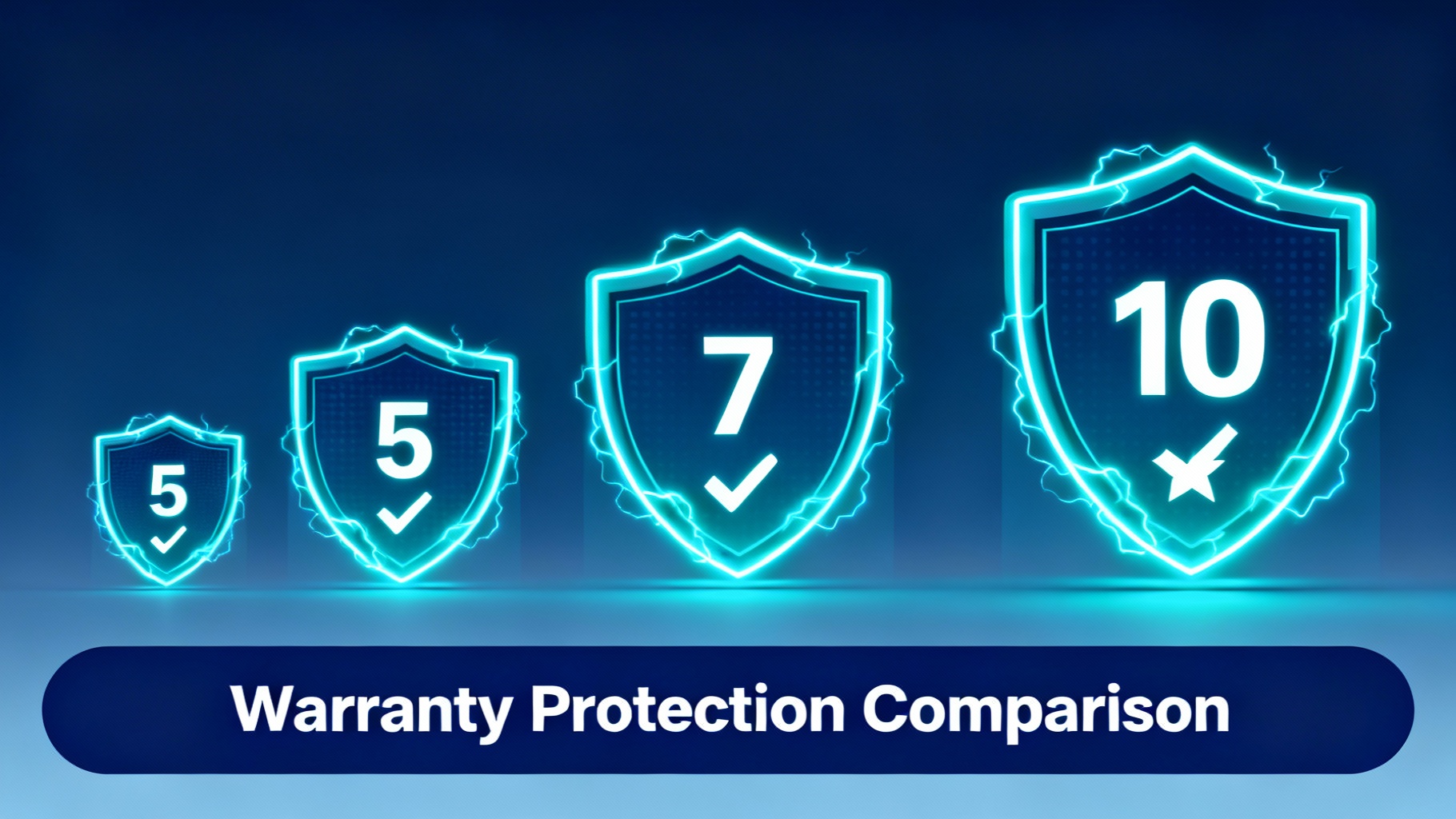
Spoiler: none of the popular models we checked carries a 10-year warranty. On current models, all four brands land at about five years, and where you buy can decide whether you get all of it.
⚡ Warranty Coverage at a Glance
Popular current models, checked on official product pages and warranty policies in October 2026. Terms vary by model and by where you buy.
Get our Black Friday alerts for power stations
We track live prices on 40+ models from Jackery, EcoFlow, BLUETTI and Anker SOLIX. When a deal beats the lowest price we've recorded, you'll hear from us. During Black Friday week, one short recap a day at most.
Unsubscribe in one click. We may earn a commission when you buy through our links, at no extra cost to you. Privacy Policy
Understanding Portable Power Station Warranties: The Basics
Before comparing specific brands, let’s establish what warranty coverage actually means for portable power stations, because not all warranties offer equal protection.
A warranty serves as your safety net against manufacturing defects and component failures. When a portable power station fails due to faulty materials or workmanship during the warranty period, the manufacturer commits to repairing or replacing your unit at no cost to you. That’s the promise. But the details determine whether that promise delivers real value or leaves you frustrated.
Most portable power station warranties fall into the “limited warranty” category. This means coverage includes specific types of failures while excluding others. Understanding these boundaries helps you evaluate what protection you’re actually getting when choosing a portable power station.
What’s Typically Covered
Manufacturing defects represent the core of warranty protection. If your inverter fails, your battery management system malfunctions, or output ports stop functioning due to factory defects, warranty coverage should apply. These failures stem from how the unit was built, not how you used it.
Component failures during normal use also fall under warranty protection. When parts like the cooling fan, display screen, or internal circuitry fail without any misuse on your part, manufacturers cover replacement or repair. Dead on arrival units (power stations that don’t work out of the box) count as defects too.
Battery capacity loss gets trickier. Every battery loses capacity as it ages, and policies tend to treat that as normal wear rather than a defect. Jackery’s paid extended warranty, for example, excludes “normal battery capacity degradation.” A battery that fails early because of a fault is a different story, so document any sudden drop as soon as you notice it.
✅ What’s Covered
- ✓
Manufacturing defects: Faulty components from factory - ✓
Component failures: Inverter, BMS, ports malfunction - ✓
Battery faults: Early failures from a defect, not normal wear - ✓
DOA units: Dead on arrival counts as a defect
❌ What’s NOT Covered
- ✗
Physical damage: Drops, water ingress, crushing - ✗
Misuse: Overloading, wrong voltage, extreme temps - ✗
Cosmetic issues: Scratches, dents (non-functional) - ✗
Unauthorized repairs: DIY modifications void warranty
What’s NOT Covered: Common Exclusions
Physical damage falls outside warranty protection across all brands. If you drop your power station, expose it to rain without proper waterproofing, or crush it under camping gear, you’re on your own for repair costs. These warranties protect against defects, not accidents.
Misuse represents another universal exclusion. Overloading your power station beyond its rated capacity, connecting incompatible solar panels with incorrect voltage, or operating in extreme temperatures outside manufacturer specifications voids warranty coverage. The fine print matters here: what counts as “normal use” varies by brand.
Cosmetic issues don’t qualify for warranty claims unless they affect functionality. Scratches, dents, or faded labels won’t get you a replacement unit. The warranty covers performance, not appearance.
Where you bought the unit can matter as much as what went wrong. Bluetti’s policy excludes products “purchased from unauthorized resellers,” and EcoFlow’s warranty covers products bought from EcoFlow or an authorized seller. A bargain from an unknown marketplace seller can come without brand coverage.
⚠️ Important: Unauthorized repairs immediately void most warranties. If you open the case, modify internal components, or have someone outside the manufacturer’s authorized service network attempt repairs, you forfeit warranty protection. This policy protects manufacturers from liability for amateur modifications, but it also means you can’t explore DIY fixes without risk. Follow our power station maintenance guide to keep your unit in warranty-compliant condition.
Battery Warranty versus Cycle Life: Key Difference
Here’s where many buyers get confused: cycle life ratings and warranty periods measure different things, and they don’t always align neatly.
Cycle life indicates how many full charge-discharge cycles a battery can handle before it drops to a set share of its original capacity. That share isn’t the same everywhere: Jackery rates the Explorer 1000 v2 for 4,000 cycles to 70% capacity, while Anker rates the C1000 for 3,000 cycles to 80%. Compare the threshold, not just the cycle count.
The warranty period measures calendar time: years of coverage regardless of how much you actually use the power station. A five-year warranty protects you for five years, whether you complete 50 cycles or 500 cycles in that time. Check when the clock starts, too: EcoFlow counts from the date the unit is delivered to the first buyer.
🔋 Cycle Life vs Warranty Period
What it means: Number of complete charge/discharge cycles until a set capacity (70% or 80%, by brand)
Example: 3,000 cycles to 80% (Anker SOLIX C1000)
Reality: Often outlasts the warranty with moderate use
What it means: Calendar time of protection from defects
Example: 5-year warranty = 5 years from purchase date
Reality: Expires regardless of cycles completed
💡 The gap between cycle life and warranty period determines your real protection
This creates an interesting mismatch. Take the Explorer 1000 v2: Jackery rates it for 4,000 cycles to 70% capacity and covers it for five years when you buy on jackery.com. One full cycle a week adds up to about 260 cycles in five years. The battery is rated to keep going long after the warranty window closes, and any failure after that is yours to fix.
The fine print on “normal use” matters too. EcoFlow, for example, covers defects when the product is used in accordance with its manuals and published specifications. If you plan to cycle your power station daily, read the terms for your exact model before you buy.
The 4 Major Brands: Warranty Breakdown
Let’s examine warranty offerings from each major brand in the best portable power stations category. Understanding the specifics, not just headline numbers, reveals where real protection lies.
JACKERY
Jackery Warranty: 3 + 2 Years When You Buy Direct


Jackery’s current product pages list the warranty as “3+2 Years.” The first three years are standard. The extra two depend on where you buy.
Orders placed on jackery.com get the extra two years automatically. The store advertises “Up to 5-year Warranty only at Jackery.com,” and Jackery’s support site says orders from its official website get an automatically extended warranty. That’s how the Explorer 1000 v2, Explorer 2000 v2 and HomePower 3000 reach five years. This matters most if you’re choosing reliable power for remote locations where service access is limited, as covered in our remote property power systems guide.
Bought from another retailer? Jackery’s warranty registration form lists Amazon, Walmart, The Home Depot, Costco and other channels for extending the warranty. It doesn’t say how many extra years each channel gets, so check before you buy if the full five years matters to you.
📋 Jackery Warranty Specs
- Standard warranty: 3 years
- Extra 2 years: Automatic on jackery.com orders (5 years total)
- Other retailers: Registration form to extend; check your channel
- Paid 2-year extension: Some large models (Explorer 5000 Plus, HomePower 3600 Plus); activate within 30 days
- Cycle life: 4,000 cycles to 70% (Explorer 1000 v2, Explorer 2000 v2, HomePower 3000)
- Paperwork: Order ID or proof of purchase, plus serial number
Jackery also sells a paid 2-year extension for some larger models, including the Explorer 5000 Plus, HomePower 3600 Plus and their battery packs. You have to activate it on Jackery’s website within 30 days of purchase.
Battery chemistry matters for longevity. The Explorer 1000 v2, Explorer 2000 v2 and HomePower 3000 use LiFePO4 cells rated for 4,000 cycles to 70% capacity. Jackery says the Explorer 1000 v2’s cells last 10+ years, backed by a 5-year warranty, so the battery is rated to outlast its coverage.
For occasional users who need reliable weekend camping power or emergency backup, Jackery’s five years are solid protection. Buy on jackery.com if you want the extra two years applied automatically.
BLUETTI
Bluetti Warranty: Set Model by Model, Strict on Sellers


Bluetti doesn’t use a single warranty length. Its warranty policy sets the term model by model.
For portable power stations, the policy says the warranty “varies from 24 months to 72 months.” Home backup systems get 48 to 60 months, and solar panels and accessories such as cables and chargers get 12 months. On the product pages we checked, the AC180, Elite 200 V2 and Apex 300 all list five years.
Cycle ratings on those models are high. Bluetti lists 3,500+ cycles for the AC180, and 6,000+ cycles to 80% for the Elite 200 V2 and Apex 300. With moderate use, the five-year warranty runs out long before those ratings do.
📋 Bluetti Warranty Specs
- Portable power stations: 24 to 72 months, by model
- AC180, Elite 200 V2, Apex 300: 5 years
- Home backup systems: 48 to 60 months
- Solar panels and accessories: 12 months
- Proof of purchase: Required (official store order, or an invoice showing product, price and sales channel)
- Coverage limits: Unauthorized resellers excluded; country of purchase only
Two more details are worth knowing. Bluetti may replace a faulty unit with a refurbished one of equivalent value, and the replacement keeps the remaining warranty period. Its warranty extension now applies only to a few older models (AC200MAX, AC200P and B230) bought on Bluetti’s official website.
For buyers who want five years without having to buy from one specific store, Bluetti is a good fit, as long as the seller is authorized and you keep the invoice.
ECOFLOW
EcoFlow Warranty: Five Years on Many Models, With Exceptions
EcoFlow publishes a warranty table that lists each product and its term. It’s worth a look, because the term changes from model to model.
Many current models get five years, including the DELTA 2, DELTA 2 Max, DELTA 3 Plus, DELTA Pro 3, DELTA Pro Ultra and RIVER 2. Others get less: the DELTA 3 1000 Air and 2000 Air are covered for two years. Some models need registration to reach five: the DELTA 3 Classic, DELTA 3 Max and DELTA 3 Ultra list “3+2 years (Subject to registration).”
Registration matters on older models too. The original DELTA Pro gets 24 months, or 24 plus 36 with registration. The DELTA Max (1600/2000) gets 24 months, plus 12 with registration.
Coverage starts on the date the unit is delivered to the first buyer. EcoFlow’s U.S. warranty covers products bought in the United States from EcoFlow or an authorized seller.
On a five-year model, EcoFlow matches the other three brands. Before you buy, look up the exact model in EcoFlow’s warranty table, and register the unit if the extra years depend on it.
ANKER SOLIX
Anker SOLIX Warranty: 5 Years, Plus a 10-Year Lifespan Claim
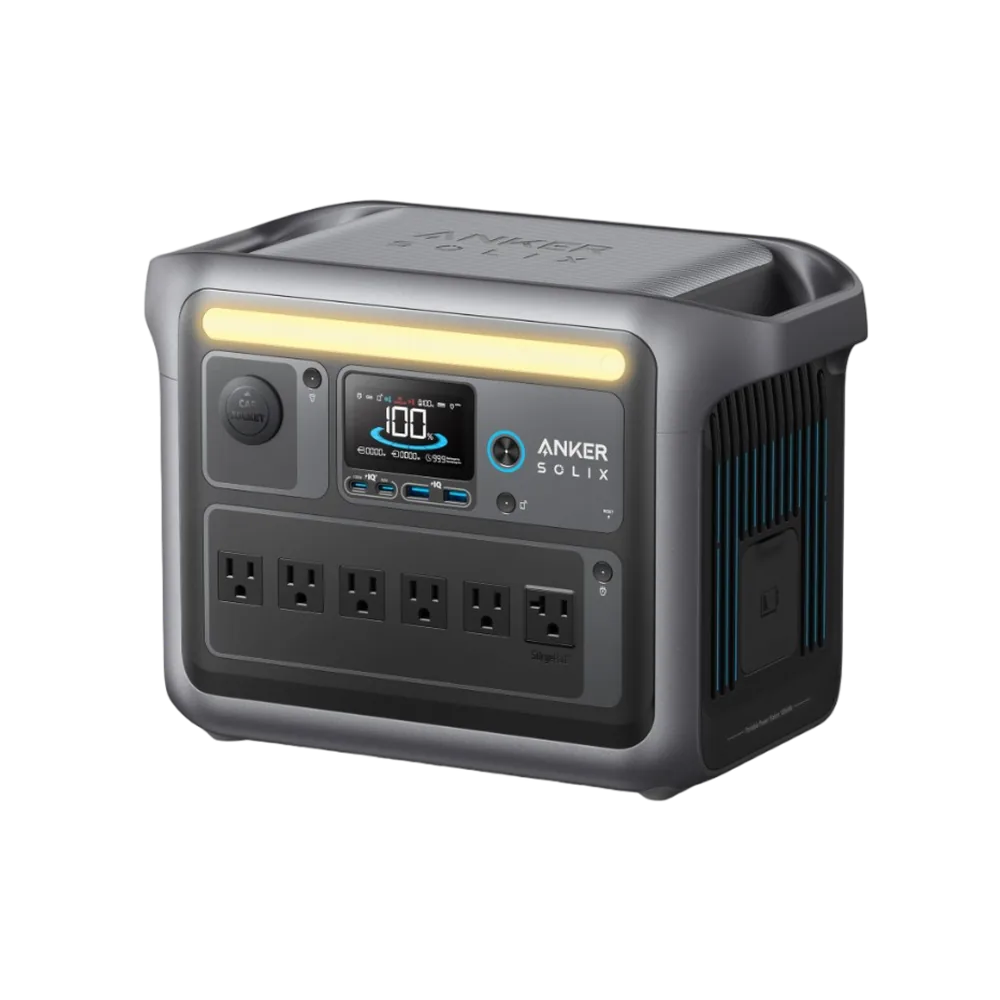
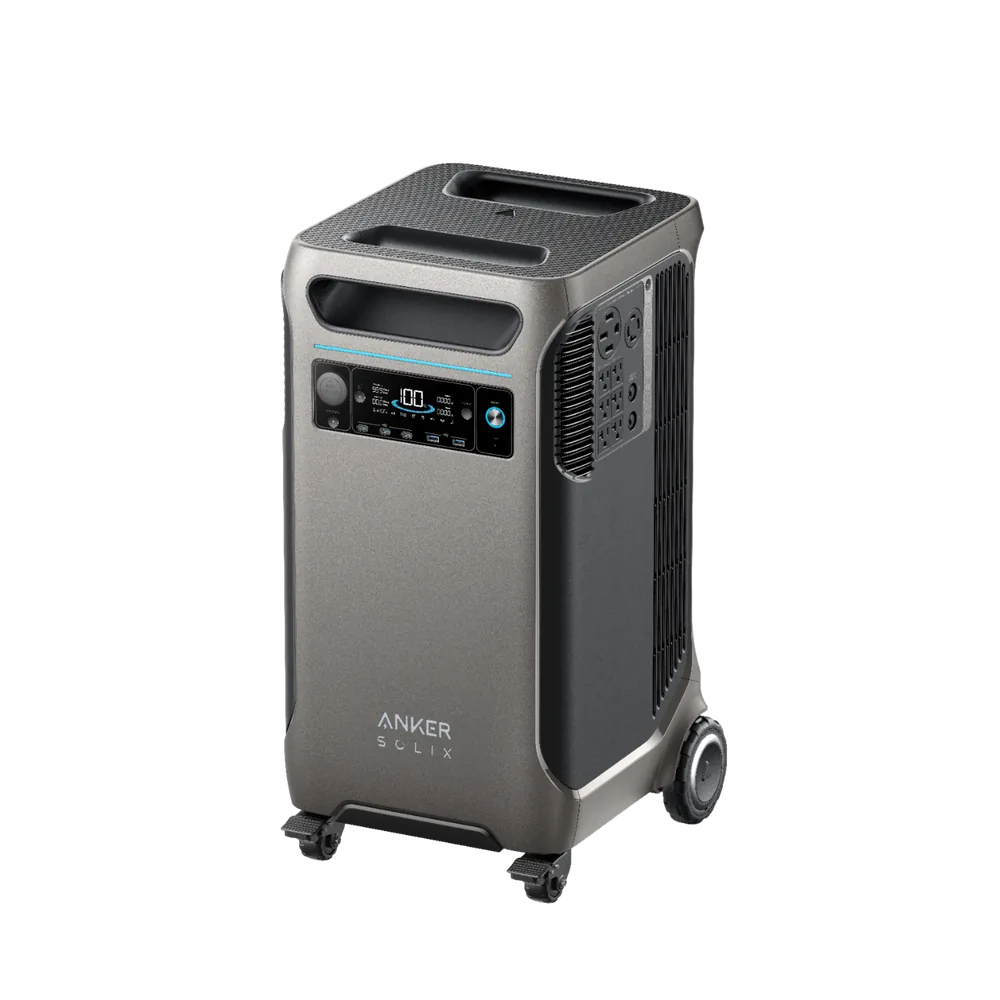
Anker SOLIX is easy to misread on warranty. The SOLIX power stations we checked, the C1000, F2600 and F3800, all list a 5-year warranty on their official product pages.
The “10 years” in Anker’s marketing is InfiniPower, Anker’s name for its long-life battery design. It describes expected lifespan, not coverage. The F3800 page says InfiniPower lasts “for 10 years, backed by a 5-year warranty,” and the F2600 page lists a “5-Year Warranty & 10-Year Lifespan.”
Doing your homework? Check our Anker SOLIX buying guide.
🔋 Anker SOLIX: Warranty vs. InfiniPower Lifespan
- ✓ LiFePO4 batteries on the C1000, F2600 and F3800
- ✓ 5-year warranty listed on each product page
- ✓ 10-year lifespan is a durability claim, not a warranty term
Anker’s lifespan claim reflects its confidence in LFP cells. It’s still a statement about how long the battery should last, not a promise to repair or replace the unit after year five.
Anker rates the C1000 and F2600 for 3,000 cycles to 80% capacity, and the F3800 for 3,000+ cycles. That’s far more than most owners use in five years, but it isn’t part of the warranty.
Bottom line: on warranty length, Anker SOLIX is level with the other three brands at five years. InfiniPower is a reason to expect a long battery life. After year five, though, repairs are on you.
Get our Black Friday alerts for power stations
We track live prices on 40+ models from Jackery, EcoFlow, BLUETTI and Anker SOLIX. When a deal beats the lowest price we've recorded, you'll hear from us. During Black Friday week, one short recap a day at most.
Unsubscribe in one click. We may earn a commission when you buy through our links, at no extra cost to you. Privacy Policy
Warranty Comparison: Side-by-Side Analysis
Looking at warranties in isolation tells part of the story. Comparing them directly in this portable power station comparison reveals where meaningful differences lie and which trade-offs matter most for different buyers.
Coverage Period Comparison
On current models, the headline number barely differs: about five years across all four brands. The differences are in the conditions, and in how long each battery is rated to last after coverage ends.
Jackery: three years standard, plus two more on jackery.com orders. Its LiFePO4 models are rated for 4,000 cycles to 70% capacity, far beyond what most owners use in five years.
Bluetti: five years on the AC180, Elite 200 V2 and Apex 300, within a policy range of 24 to 72 months for portable power stations. Cycle ratings run from 3,500+ (AC180) to 6,000+ to 80% (Elite 200 V2 and Apex 300).
EcoFlow: five years on many current models, two years on the DELTA 3 1000/2000 Air, and the full term on some models only after registration. Check the warranty table for your model.
Anker SOLIX: five years on the C1000, F2600 and F3800, with batteries rated for 3,000 cycles to 80% (3,000+ on the F3800). The 10-year InfiniPower figure is a lifespan claim, not coverage.
🔋 Rated Cycles vs. a 5-Year Warranty
Weekly use: about 260 full cycles in five years and 520 in ten. On all three, the warranty ends long before the rated cycle life.
What Each Warranty Actually Covers
The scope of coverage (what failures qualify for warranty claims) varies more subtly than coverage duration but matters equally for real-world protection.
All four brands cover manufacturing defects and component failures as their warranty baseline. When inverters fail, ports malfunction, or internal electronics break due to factory defects during the coverage period, every brand commits to repair or replacement.
Battery wear is the gray area. Cycle ratings such as “3,000 cycles to 80%” describe expected lifespan, not a capacity guarantee. Gradual capacity loss is usually treated as normal wear: Jackery’s paid extended warranty, for example, excludes “normal battery capacity degradation.”
What the policies do spell out is the remedy. EcoFlow may repair the unit, exchange it for a new or refurbished one, or refund part or all of the price, and repaired or replaced products stay covered for the rest of the original warranty period. Bluetti may also replace a faulty unit with a refurbished one of equivalent value.
5-Year Coverage, 1kWh Class: Anker SOLIX C1000
What you get:
- ✓ 5-year warranty: listed on Anker’s product page
- ✓ 3,000 cycles to 80%: LiFePO4 battery
- ✓ 1,056Wh capacity: sized for camping trips and short outages
- ✓ 1,800W output: pure sine wave AC
$469.99 | Free shipping | 5-year warranty included
How to Keep a Warranty Claim Simple
Warranty terms only help if you can use them. The policies we read ask for the same few things, and missing one can stall a claim or end it.
Before You Buy
- Buy from the brand or an authorized seller. Bluetti excludes units bought from unauthorized resellers, and EcoFlow’s warranty covers products bought from EcoFlow or an authorized seller.
- Buy in the country where you’ll use it. Bluetti limits coverage to the country of purchase, and EcoFlow’s U.S. warranty covers products bought in the United States.
- Know where the extra years come from. Jackery’s extra two years are automatic on jackery.com orders. Some EcoFlow models only reach their full term after registration.
- Activate paid extensions on time. Jackery’s paid 2-year extension has to be activated on its website within 30 days of purchase.
After You Buy
- Keep the receipt or order confirmation. Bluetti asks for an order from its official stores or an invoice that shows the product, price and sales channel. EcoFlow asks for the original proof of purchase or delivery.
- Write down the serial number. EcoFlow asks for it when you open a claim, and Jackery’s extension form asks for it too.
- Register the unit when the brand ties extra years to registration.
- Photograph the unit when you unpack it, and record any fault as soon as it appears.
- Don’t open the case. EcoFlow says warranty service can only be performed by an authorized service center.
- Report a defect promptly. EcoFlow expects notice within a reasonable time, and no later than the end of the warranty period.
- Wait for return instructions. Jackery asks owners not to send a product back before its customer team confirms how.
None of this guarantees approval. It does make sure paperwork is never the reason a claim stalls.
Solid Alternative: Jackery Explorer 1000 v2
1,070Wh | 1,500W output | 5-year warranty (3 + 2 on jackery.com orders) | $559
Calculating Warranty Value: Four 1kWh Models Compared
Since the four brands land on similar warranty lengths, the useful comparison is model by model. Here are four popular 1kWh-class stations, each with a five-year warranty, at today’s prices.
Four 1kWh Models, One 5-Year Term
Consider a weekend camper who uses a power station about 25 times a year. That’s about 125 cycles over five years, a small fraction of any cycle rating in this guide.
Jackery Explorer 1000 v2
1,070Wh | $559
5-year warranty
Another helpful resource: our best premium power stations.
3 + 2 years on jackery.com orders
Bluetti AC180
1,152Wh | $499
5-year warranty
Standard; keep your proof of purchase
Anker SOLIX C1000
1,056Wh | $469.99
5-year warranty
Standard; the InfiniPower lifespan claim is separate
EcoFlow DELTA 3 Plus
1,024Wh | $674
5-year warranty
Listed in EcoFlow’s warranty table
Warranty length doesn’t separate these four. Compare capacity, output and price, then make sure you get the full term: buy the Jackery on jackery.com, and keep proof of purchase whichever you choose.
The 10-Year Question: Who Covers Years 6 to 10?
A regular user who cycles a portable power station weekly completes about 520 cycles over 10 years. That’s well within every battery rating above. The warranty is a different story: none of these four models is covered past year five.
Over 10 years, the warranty covers the first half for every model here. For the second half, either set money aside for a repair, or treat a failure after year five as the point where you replace the unit.
5-Year Standard Warranty: Bluetti AC180
1,152Wh | 1,800W output | 5-year standard warranty | $499
The Intensive Use Scenario: Daily Cycler
Daily or near-daily users who complete 250-300 cycles yearly represent the most demanding use case: full-time RV living, off-grid homes, or work applications. For those relying on power off-grid long-term, pairing a solid warranty with good habits is key; see our guide on long-term off-grid power reliability.
At 300 cycles a year, you reach about 1,500 cycles in five years and 3,000 in ten. The first number sits well inside every rating quoted here: 4,000 cycles to 70% for Jackery’s Explorer 1000 v2, 3,500+ for Bluetti’s AC180 and 3,000 to 80% for Anker’s C1000. The second reaches the C1000’s full rating.
The warranty clock, though, stops after five years at most on all four 1kWh models, however many cycles you’ve used. Years six to ten are on you.
If you cycle daily, a higher cycle rating gives you more margin once coverage ends. Bluetti rates the Elite 200 V2 and Apex 300 for 6,000+ cycles to 80%, and both carry five-year warranties.
💡 Pro Tip for Daily Users: Warranty length won’t separate these brands, so compare the cycle rating and its threshold (70% or 80%). Then buy the way that secures the full term: jackery.com for Jackery, an authorized seller for Bluetti and EcoFlow, plus registration where EcoFlow’s table requires it.
How to Choose the Best Portable Power Station Based on Your Needs
Warranty coverage doesn’t exist in isolation: it intersects with usage patterns, budget constraints, and risk tolerance to determine the right choice for your situation. Here’s how to choose a portable power station based on warranty protection.
For Occasional Users and Weekend Campers
If you use your power station 10-30 times per year (occasional camping trips, tailgating, or emergency backup that sits idle most of the time), your failure risk runs lower than intensive users. Base warranty coverage from any brand should capture manufacturing defects that appear early.
Any of the five-year models in this guide covers this usage comfortably. At 10 to 30 uses a year, you’ll complete 50 to 150 cycles in five years, far below any cycle rating here.
If you shop Jackery, buying on jackery.com gets you the full five years automatically. Whatever the brand, buy from an authorized seller and save the receipt.
For occasional users, prioritize finding a unit with features and capacity matching your needs, then accept whatever warranty comes with that model. Don’t let warranty duration drive model selection when your low usage reduces the practical value of extended coverage.
For Regular Users and Van Lifers
Weekly or twice-weekly usage (van life, regular camping, or routine backup power) elevates failure risk compared to occasional use. You’ll complete 100-150 cycles yearly, putting meaningful wear on components over multi-year ownership.
At this pace, you’ll cycle your unit 500 to 750 times over five years. That’s well within the LiFePO4 ratings in this guide, but enough wear that the full five-year term is worth securing.
If you plan to keep the station for 10 years, no brand here covers the whole period. Pick a model with a high cycle rating, keep your paperwork, and plan for years six to ten as uncovered.
🏕️ Best for Van Life & Regular Use
For weekly cycling and long-term ownership, secure the full five years: buy Jackery on jackery.com, buy Bluetti and EcoFlow from authorized sellers, and register EcoFlow models whose extra years depend on it. Whatever the brand, keep your proof of purchase.
For Intensive Users and Off-Grid Living
Daily or near-daily cycling (off-grid homes, full-time RV living, or work applications) demands maximum durability and warranty protection. You’ll complete 250-365 cycles yearly, stressing components and batteries at rates most warranties don’t anticipate.
At this intensity, cycle life matters as much as the warranty. Over 10 years you’d complete 2,500 to 3,650 cycles. Bluetti’s 6,000+ cycle rating (to 80%) on the Elite 200 V2 and Apex 300 leaves room to spare. A 3,000-cycle rating, like the C1000’s, could run out before year ten at the top of that range.
The warranty picture is the same for every brand: about five years, then you’re on your own. For a system you depend on every day, budget for a possible out-of-warranty repair.
For home backup and off-grid systems, also check which category your product falls into: Bluetti gives its home backup systems 48 to 60 months. Learn more in our guide to home backup power stations.
🏡 For Large Home Backup: Anker SOLIX F3800
- ✓ 3,840Wh capacity: LFP battery
- ✓ 6,000W output: 120V and 240V from one unit
- ✓ 5-year warranty: InfiniPower is rated for a 10-year lifespan
- ✓ 3,000+ cycles: Anker’s battery rating
- ✓ Expandable to 26.9kWh: with up to six BP3800 batteries
$1,799.99 | Free shipping | 5-year warranty included | Expandable system
For Budget-Conscious Buyers
Limited budgets create tension between minimizing upfront cost and securing adequate protection. The calculation depends on how long you plan to own the unit and how much replacement risk you can absorb.
On a tight budget, the good news is that a five-year warranty doesn’t require a premium model: the 1kWh models compared above all carry one. Pick on capacity and price, then buy where the full term applies. Check out our best budget power stations under $500 for more affordable options.
Watch where a bargain comes from. Bluetti excludes units bought from unauthorized resellers, so a cheaper marketplace listing can cost you the warranty.
Also budget for life after year five. None of these warranties runs longer, so a repair fund, or a plan to replace the unit, is part of the real cost.
Frequently Asked Questions
Which portable power station has the longest warranty?
Among Jackery, Bluetti, Anker SOLIX and EcoFlow, the popular current models we checked carry about five years. Bluetti’s policy sets 24 to 72 months for portable power stations depending on the model, so check the product page for yours. Anker SOLIX’s “10 years” is the rated lifespan of its InfiniPower batteries. The warranty on the C1000, F2600 and F3800 is five years.
Is Anker SOLIX warranty better than Jackery?
On length, they’re level. Anker SOLIX lists a 5-year warranty on the C1000, F2600 and F3800. Jackery lists “3+2 Years” on the models we checked, and the extra two years are added automatically to orders placed on jackery.com. The real difference is where you buy: if you buy a Jackery elsewhere, check its registration form for the extension. Anker’s 10-year InfiniPower figure describes battery lifespan, not a longer warranty.
What voids a portable power station warranty?
Common ways to lose warranty coverage:
- Physical damage: Drops, water exposure, crushing
- Misuse: Overloading, wrong voltage solar input, extreme temperatures
- Unauthorized repairs: Opening case or DIY modifications
- Unauthorized sellers: Bluetti excludes units bought from unauthorized resellers
- Missing paperwork: Claims need proof of purchase, and EcoFlow also asks for the serial number
How long do portable power stations typically last?
It depends on battery chemistry and how hard you use the station. Current models carry high cycle ratings: 3,000 cycles to 80% for the Anker SOLIX C1000, 3,500+ for the Bluetti AC180, 4,000 cycles to 70% for the Jackery Explorer 1000 v2, and 6,000+ cycles to 80% for the Bluetti Elite 200 V2. Jackery says the Explorer 1000 v2’s cells last 10+ years, and Anker quotes a 10-year lifespan for models such as the F2600 and F3800. Warranties stop at about five years, so the battery is rated to outlast its coverage with moderate use.
Are extended warranties worth it for power stations?
Free extensions are always worth taking. Jackery adds two years automatically to jackery.com orders, and some EcoFlow models gain years when you register them: the original DELTA Pro goes from 24 months to 24 plus 36. Jackery also sells a paid 2-year extension for some large models, such as the Explorer 5000 Plus and HomePower 3600 Plus, which must be activated within 30 days of purchase. A paid extension makes most sense if you cycle heavily or rely on the unit for home backup.
Does Bluetti have better warranty than Jackery?
Not on length. The Bluetti AC180, Elite 200 V2 and Apex 300 list five years, and Jackery’s Explorer 1000 v2, Explorer 2000 v2 and HomePower 3000 list “3+2 Years,” which means five years on jackery.com orders. The difference is in the conditions. Bluetti’s five years apply through authorized sellers, with proof of purchase. Jackery’s extra two years are automatic only on jackery.com.
What is the best portable power station warranty for camping?
For camping, warranty length won’t decide it: popular 1kWh-class models from all four brands carry five years (Jackery’s when bought on jackery.com). Choose on capacity, weight and price, buy where the full term applies, and keep your receipt.
How do I file a warranty claim for my power station?
To file a portable power station warranty claim:
- Contact support via email/phone with purchase receipt and serial number
- Describe the issue clearly with photos/videos of the problem
- Complete troubleshooting steps requested by support team
- If the defect is confirmed, follow the brand’s return instructions (EcoFlow, for example, provides a prepaid return label within the contiguous U.S.)
- Ship the unit and receive a repair or a replacement, which may be new or refurbished
Keep your receipt, serial number and photos together to speed things up, and don’t send the unit back before support tells you how.
Does battery degradation count as warranty coverage?
Gradual capacity loss is usually treated as normal wear, not a defect. Jackery’s paid extended warranty, for example, excludes “normal battery capacity degradation.” Cycle ratings such as Anker’s 3,000 cycles to 80% describe expected battery life, not a warranty promise, so check your model’s terms before counting on capacity coverage. If capacity drops sharply early on, contact support with your purchase records and a note of when you first noticed it.
Which brand has the best customer service for warranty claims?
We don’t rank the brands on customer service, because we can’t verify response times or claim outcomes, and we don’t publish ratings we can’t back up. What we can compare is the paperwork that keeps a claim moving: proof of purchase, the serial number, an authorized seller, and registration when the brand ties extra years to it.
Conclusion: Making Your Warranty Decision
Warranty coverage represents more than fine print in the box: it determines whether your portable power station investment remains protected through years of ownership or leaves you exposed to replacement costs when failures occur.
The pattern is simpler than the marketing suggests. Jackery offers three years plus two more on jackery.com orders, so where you buy is the key decision.
Bluetti sets the term model by model, from 24 to 72 months for portable power stations, with five years on the AC180, Elite 200 V2 and Apex 300. It’s strict about proof of purchase and authorized sellers.
EcoFlow gives five years on many current models, two years on the DELTA 3 1000/2000 Air, and the full term on some other models only after registration.
Anker SOLIX lists five years on the C1000, F2600 and F3800. InfiniPower’s 10 years is a lifespan claim, not a longer warranty. Its LiFePO4 batteries are rated for 3,000 cycles or more, a good reason to expect a long life, but not something you can claim against after year five.
🎯 Final Verdict: What to Prioritize by Use Case
Your decision depends on your specific situation. Occasional users who cycle their power stations monthly need less warranty coverage than daily users cycling intensively. Buyers who upgrade equipment every few years value warranty differently than those who keep gear for decades.
But a few points hold across brands: the full five-year term is worth securing if you use your station often, cycle life matters more the harder you use it, and none of the models we checked is covered past year five.
For most buyers, the purchase matters more than the logo. Buy from the brand or an authorized seller, in the country where you’ll use the unit, and keep the receipt and serial number together.
If you’ll keep the unit for five years or less, any of the four can cover your whole ownership, as long as the full term applies to how you bought it.
If you plan to keep it longer, pick a model with a high cycle rating and treat the years after the warranty as self-insured.
The warranty comparison reveals a simple truth: the best warranty isn’t the biggest number in an ad. It’s the one you can actually claim. Match the model to your usage, check the exact term on the product page, and keep the paperwork that makes a claim possible.
Your portable power station is a significant investment in reliable portable power. Protect it with the full warranty term, and plan for the years after it ends.
Considering Anker SOLIX?
Anker SOLIX lists a 5-year warranty on both the C1000 and the F3800.
InfiniPower’s 10 years describes battery lifespan, not coverage.
✓ 5-year warranty | ✓ LiFePO4 batteries | ✓ Rated for 3,000 cycles or more | ✓ Free shipping
📚 Related Articles:
- Best Portable Power Stations 2026: Complete Buyer’s Guide
- Jackery Explorer Series Review: Which Model Is Right for You?
- Bluetti AC Series Review: Professional Off-Grid Power Solutions
- Anker SOLIX Review: InfiniPower Tech Explained
- How to Choose a Portable Power Station: Complete Decision Guide
- Portable Power Station Features Guide: What Actually Matters
Visit Buying Guides & Comparisons Hub →
Originally published: January 20, 2026