
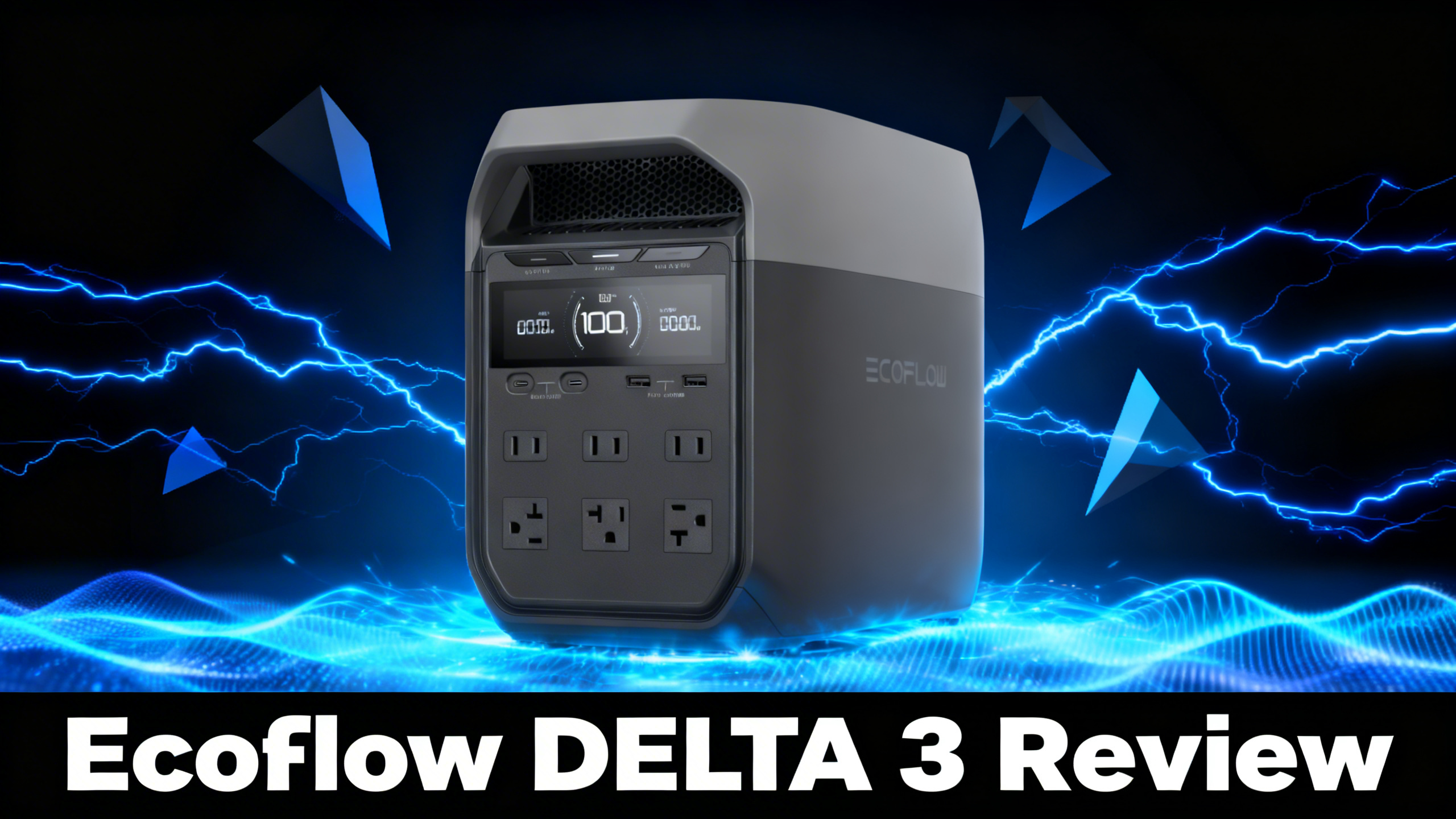
Looking for a portable power station that delivers serious capacity without a serious price tag? The EcoFlow DELTA 3 has been making waves in the mid-range segment since its release, sitting at a compelling $499 price point with 1,024Wh of LFP capacity and 1,800W of AC output. For buyers in the $400 to $600 range, the spec sheet reads like a category leader.
But specs only tell part of the story. The real question is whether EcoFlow’s combination of X-Stream fast charging, X-Boost technology, and expandable battery architecture actually delivers meaningful advantages over established competitors like the Jackery Explorer 1000 v2 and Bluetti AC180. Our analysis of the EcoFlow DELTA 3 reveals some clear strengths, a few notable limitations, and one feature that genuinely sets this unit apart from everything else at its price.
Here’s what the numbers tell us about the EcoFlow DELTA 3 portable power station, who should consider it, and who might be better served elsewhere.

Real-World Look: The EcoFlow Delta 3 in Use
Studio renders only tell part of the story. Here is the EcoFlow Delta 3 as it actually looks in a real owner’s hands, away from the polished marketing shots.
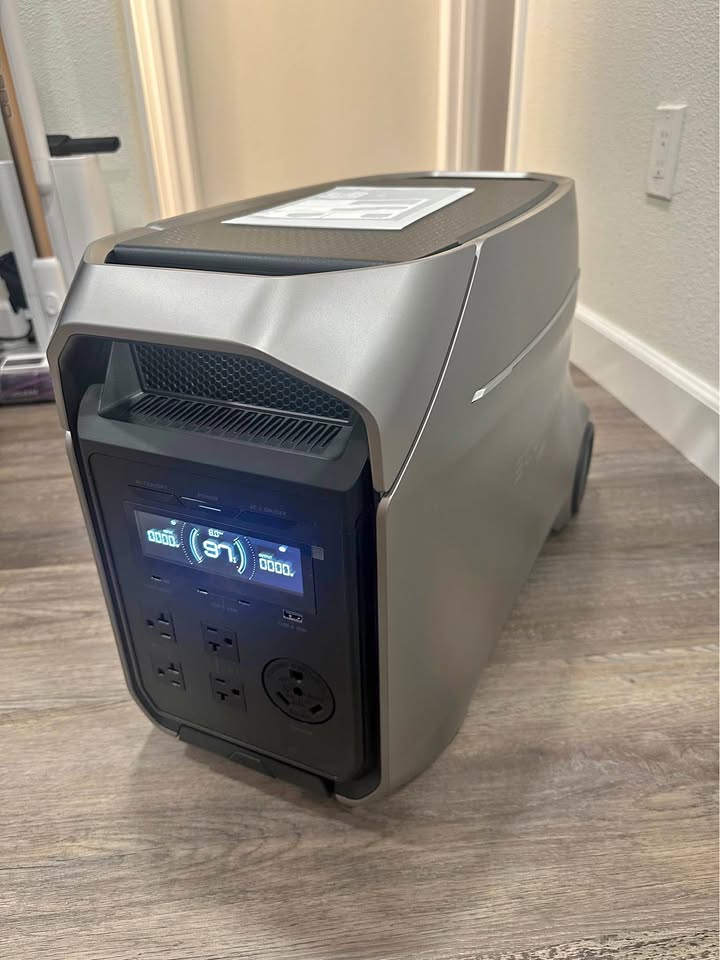
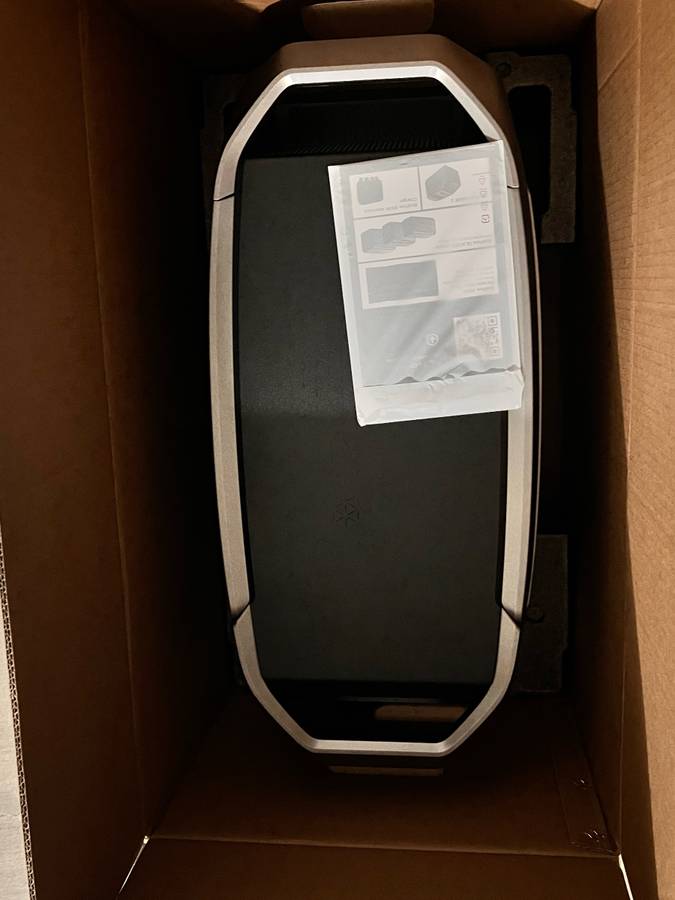
Real-world photos of the EcoFlow Delta 3.
⚡ EcoFlow DELTA 3: Current Best Price
$499
$699
-29% OFF
- ✅ 1,024Wh LFP battery, expandable to 5kWh
- ✅ 1,800W AC output (2,200W with X-Boost™)
- ✅ 0 to 80% in ~60 min, fastest charging at $499
Check Current Price on EcoFlow →
💡 Price checked March 2026 | Free shipping available
Quick Specs and Key Features
Before diving into this EcoFlow DELTA 3 review, here’s a complete look at the official EcoFlow DELTA 3 specifications. The numbers paint a clear picture of where this EcoFlow DELTA 3 series portable power station fits in the market.

Planning to pair the DELTA 3 with solar panels? Our solar panel compatibility checker confirms which panels work with EcoFlow’s MPPT input specifications.
What We Love About the EcoFlow DELTA 3
X-Stream Fast Charging Sets a New Standard at $499
Charging speed is where the DELTA 3 makes its strongest case. Verified specifications confirm this unit reaches 0 to 80% in approximately 60 minutes via standard AC wall outlet, with a full charge completing in roughly 1.5 hours. That’s a significant advantage for anyone who needs to top off quickly between uses or grab a charge before heading out for the weekend.
For context, a 1,024Wh battery reaching 80% in an hour means EcoFlow’s X-Stream technology is pulling substantial wattage during the fast-charge phase. The practical benefit is straightforward: plug in when you get home from work, and you have a fully charged unit before dinner.
X-Boost Unlocks Appliances Beyond the 1,800W Limit
The DELTA 3’s base output is 1,800W continuous, which already handles the vast majority of household appliances. X-Boost technology extends that ceiling to 2,200W by intelligently managing voltage delivery, allowing the unit to run appliances with slightly higher draws (like certain space heaters, small air conditioners, or high-wattage hair dryers) that would otherwise trip the overload protection.
It’s worth noting that X-Boost works by reducing voltage to the appliance, which means heating elements may not run at full intensity. A 2,000W space heater will run, but it may produce slightly less heat than when connected to a wall outlet. For most use cases, the difference is negligible.
1 to 5kWh Expandability With Plug-and-Play Extra Batteries
This is where the EcoFlow DELTA 3 extra battery ecosystem makes its long-term value clear. The unit supports expandable capacity from its base 1,024Wh all the way up to 5kWh via compatible extra batteries: the DELTA 3 Series Smart Extra Battery, DELTA 2 Extra Battery, DELTA 2 Max Extra Battery, and DELTA Pro 3 Extra Battery. The DELTA 3 Series Smart Extra Battery is priced at $389, making a 2,048Wh system available for under $900 total.

For households planning more extensive coverage, our home backup power station guide covers multi-unit setups and transfer switch options. The cross-compatibility with DELTA 2 batteries is a nice touch for owners upgrading from EcoFlow’s previous generation.
Five Recharging Methods for Every Scenario
The EcoFlow DELTA 3 series portable power station supports five distinct recharging methods: standard AC wall outlet, solar panels (up to 400W input), 800W Alternator Charger for vehicle charging, Smart Generator 3000 (Dual Fuel) for extended off-grid scenarios, and multicharging (combining AC and solar simultaneously). That’s more input flexibility than most competitors offer at this price tier.

The alternator charger option is particularly relevant for van lifers and overlanders. Being able to charge the DELTA 3 while driving eliminates the need to plan around campground electrical hookups, and the 800W input rate means meaningful charge accumulation even during shorter drives.
EcoFlow App Integration With WiFi and Bluetooth
The EcoFlow App provides real-time monitoring and control via both WiFi and Bluetooth connections. You can check charge levels, monitor input/output wattage, set charging parameters, and manage connected extra batteries from your phone. The EcoFlow App features include scheduling, firmware updates, and detailed usage analytics.
The Bluetooth fallback is a practical detail worth noting. WiFi connectivity requires a local network, which is unavailable in most off-grid scenarios. Having Bluetooth as a secondary control channel means full app functionality at camp, on the trail, or during a power outage when your home router is down.
What Could Be Better
1,800W Base Output Limits High-Draw Appliance Use
While X-Boost extends the effective ceiling to 2,200W, the DELTA 3’s base 1,800W output means certain high-draw appliances remain off-limits. Full-size air conditioning units, large table saws, and high-wattage electric heaters will either not run or will run at reduced efficiency. For buyers who need 2,400W+ continuous output, the EcoFlow DELTA 3 1500 ($599) or the step up to a 3,000W-class unit is the better path.
No Built-in Handle for Heavier Configurations (28.7 lbs)
At 28.7 lbs, the DELTA 3 is manageable for most adults, but it’s not light. The EcoFlow DELTA 3 dimensions place it in the mid-size category, and the unit’s design relies on integrated grip points rather than a traditional folding handle. This works fine for lifting in and out of a vehicle but becomes noticeable during longer carries. If you plan to add an extra battery (adding roughly 20+ lbs to the system), a cart or carrying solution becomes essentially mandatory.
AC-to-AC Charging Still Takes Approximately 1.5 Hours Full Cycle
The 0 to 80% in 60 minutes headline is impressive, but the full 0 to 100% cycle takes roughly 1.5 hours. The final 20% slows considerably due to the taper-charging phase inherent to LFP battery management. This is not unique to EcoFlow (all LFP units do this), but it’s worth factoring into your planning if you need a full charge on a tight timeline. For full details on charging procedures, the EcoFlow DELTA 3 manual is available on the product page.
Real-World Performance Analysis
AC Charging Speed
Charge time data confirms the DELTA 3 delivers on EcoFlow’s claims. The X-Stream technology pulls high wattage during the initial fast-charge phase, tapering as the battery approaches capacity. For practical purposes, the 0 to 80% benchmark is the relevant metric for most users, and 60 minutes is among the fastest in this capacity class.

The display provides real-time feedback on input wattage and estimated time to full, which takes the guesswork out of charging. What the data consistently shows is that the DELTA 3’s charging curve is aggressive through the first 80%, then follows the expected LFP taper pattern for the final stretch.
Solar Charging Performance
With 400W maximum solar input, the DELTA 3 can accept power from EcoFlow’s full range of portable panels (110W, 160W, 220W, and 400W). EcoFlow’s built-in MPPT controller operates at 99% conversion efficiency, meaning minimal energy loss between panel and battery. For optimal panel pairings and real-world charge times, see our DELTA 3 solar setup guide.


Solar charging speeds depend heavily on conditions, but under optimal full-sun scenarios, the data indicates the following approximate recharge times: with a 400W panel, approximately 2.5 to 3 hours for a full charge. With a 220W panel, expect roughly 4 to 5 hours. With a 110W panel, you’re looking at 8 to 10 hours, making it more of a maintenance charger for extended trips.
X-Boost in Practice: What It Actually Enables
Performance data indicates that X-Boost successfully manages appliances in the 1,800W to 2,200W range by reducing voltage delivery. In practice, this means a 1,500W microwave or a 2,000W space heater will operate, though heating appliances may see slightly reduced output. Devices that are sensitive to voltage drops (certain medical equipment, precision electronics) should be tested individually before relying on X-Boost in critical applications.

To model your exact scenario, use our portable power station runtime calculator with the DELTA 3’s 1,024Wh capacity.
What Can It Power? Runtime Analysis
Runtime calculations based on the DELTA 3’s 1,024Wh capacity at approximately 85% inverter efficiency paint a clear picture of what this unit can handle. The numbers below represent real-world estimates, not theoretical maximums.
What Can the EcoFlow DELTA 3 Power? (1,024Wh capacity)
❄️
Mini Fridge
~17 hrs
50W avg draw
💻
Laptop
~13 charges
65W draw
😴
CPAP Machine
~17 hrs
50W avg draw
📱
Smartphone
~48 charges
18W charge rate
💡
LED Lights (10W)
~87 hrs
10W draw
🌀
Small Fan
~25 hrs
35W avg draw
Runtime calculated at 1,024Wh x 85% efficiency. Actual results vary by appliance draw and temperature conditions.
The key takeaway: 1,024Wh is enough capacity for a full weekend of moderate camping use (lights, phone charging, laptop, small fan) without needing to recharge. To compare it against rival 1,000Wh-class units, see our best solar generators for camping roundup. For heavier use cases involving a mini-fridge or CPAP machine running overnight, you’ll want to plan for a solar or AC recharge each day, or consider adding an extra battery.
EcoFlow DELTA 3 vs. The Competition
At $499, the DELTA 3 sits at the top of the budget tier. See our full roundup of best budget power stations under $500 for the complete competitive landscape. Here’s how the EcoFlow DELTA 3 portable power station reviews stack up against the Anker SOLIX C1000 and other commonly compared alternatives:
The data tells a nuanced story. Comparing the EcoFlow DELTA 3 vs Delta 2 generation, the upgrade to LFP chemistry and faster charging alone justifies the move for anyone considering a new purchase. Against the Jackery Explorer 1000 v2, the DELTA 3 offers a $300 price advantage with expandability and a longer warranty. The Bluetti AC180 vs EcoFlow DELTA 3 comparison is tighter: Bluetti offers more raw capacity (1,152Wh) and a higher cycle count (3,500 vs 3,000+), but falls short on expandability range and warranty length.
Where the DELTA 3 separates itself: the combination of 5-year warranty, 5kWh expandability ceiling, and five recharging methods at $499 is unmatched. No other unit at this price offers that full package.
Who Should Buy the EcoFlow DELTA 3
Buy the DELTA 3 if…
- You need 1,000Wh+ capacity under $500
- Charging speed matters (0 to 80% in ~60 min)
- You want a 5-year warranty at this price tier
- You plan to expand capacity with extra batteries later
- App control and smart monitoring are important to you
Skip the DELTA 3 if…
- You need to run 2,000W+ appliances (get DELTA 3 Plus)
- Budget is under $400 (RIVER 3 at $199 is better value)
- You need more than 1,024Wh without buying extra batteries
- UPS functionality (10ms switching) is critical for your setup
If you’re still comparing options across brands, our guide on how to choose a portable power station outlines the key specs to prioritize. Weekend campers will also want to check our roundup of best power stations for camping to see how the DELTA 3 ranks against the full field.
The sweet spot for this unit is the buyer who wants serious capacity and fast charging at the $500 price point, with the option to grow the system later. If your power needs are modest today but might expand (moving from weekend camping to extended overlanding, adding a home backup layer), the DELTA 3’s expandable architecture is a genuine differentiator. You’re buying a platform, not just a battery. And for those wondering about the EcoFlow DELTA 3 Costco availability, pricing and stock can vary by location, so checking the EcoFlow direct store typically gives the most reliable pricing and warranty terms.
Where to Buy the EcoFlow DELTA 3: Current Price
⚡ Ready to Buy? Check Current Price
EcoFlow DELTA 3, Currently $499
$699
- ✅ 1,024Wh LFP battery, 3,000+ cycle lifespan
- ✅ 5 recharging methods including solar and alternator
- ✅ 5-year warranty, best-in-class for this price range
Check Latest Price on EcoFlow →
Or compare with:
Jackery Explorer 1000 v2 |
Bluetti AC180
Final Verdict
EcoFlow DELTA 3: Overall Rating
8.4/10
“The fastest-charging mid-range power station at this price point”
Performance 8.5/10
Value for Money 9.0/10
Design and Build 8.0/10
Charging Speed 9.0/10
Features and App 8.0/10
Warranty 8.5/10
Based on our analysis, the EcoFlow DELTA 3 earns a strong recommendation for mid-range buyers in 2026. The data points clearly to this unit as the best value proposition in the 1,000Wh class at $499: fast charging, long warranty, expandable architecture, and five recharging methods combine to create a package no single competitor fully matches.
The limitations are real but predictable: 1,800W base output won’t satisfy heavy power users, and the 28.7 lb weight means this is a “load in the car” unit rather than a backpacking companion. For buyers who understand those boundaries, the DELTA 3 delivers where it counts.
The bottom line: if you need reliable, expandable portable power under $500, the EcoFlow DELTA 3 is the unit to beat. According to LiFePO4 battery safety standards, the LFP chemistry in this unit represents the gold standard in safety and longevity for consumer portable power. The 5-year warranty and 3,000+ cycle lifespan mean this is an investment that should serve you well into the next decade.
Frequently Asked Questions
Is the EcoFlow DELTA 3 worth buying in 2026?
Analysis of the DELTA 3’s specifications confirms it remains one of the strongest value propositions in the $500 range. At $499 with 1,024Wh LFP capacity, 1,800W output (2,200W with X-Boost), fast charging to 80% in approximately 60 minutes, and a 5-year warranty, the data consistently points to this model outperforming comparably priced competitors on key metrics. For buyers who do not need more than 2,000W output, the DELTA 3 delivers exceptional value.
How long does the EcoFlow DELTA 3 take to charge?
Verified specifications confirm the DELTA 3 reaches 0 to 80% in approximately 60 minutes via AC wall outlet using EcoFlow’s X-Stream fast-charging technology. A full 0-100% charge takes approximately 1.5 hours under the same conditions. Solar charging speed depends on panel wattage: with 400W of solar input (the maximum supported), data indicates a recharge time of approximately 2.5 to 3 hours under optimal sun conditions.
What can the EcoFlow DELTA 3 power?
Runtime calculations based on the 1,024Wh capacity at approximately 85% efficiency confirm the following estimated runtimes: mini fridge (50W) for approximately 17 hours, CPAP machine (50W) for approximately 17 hours, laptop (65W) for approximately 13 charges, LED lighting (10W) for approximately 87 hours, smartphone (18W) for approximately 48 charges. High-draw appliances like a microwave (1,200W) can run for approximately 45 to 50 minutes.
Can the EcoFlow DELTA 3 be expanded?
Yes. The DELTA 3 supports expandable capacity from 1,024Wh up to 5kWh via compatible extra batteries: the DELTA 3 Series Smart Extra Battery, DELTA 2 Extra Battery, DELTA 2 Max Extra Battery, and DELTA Pro 3 Extra Battery. The expansion system is plug-and-play and manageable via the EcoFlow App. Each DELTA 3 Series extra battery adds 1,024Wh to the system.
How does the EcoFlow DELTA 3 compare to the DELTA 3 Plus?
Spec-for-spec data shows the DELTA 3 Plus ($599) adds broader bundle options and is the primary target for the 800W Alternator Charger ecosystem. The core performance specs (capacity, output, and charging speed) are largely identical between the two models. For most buyers without specific alternator or van-life charging needs, the DELTA 3 at $499 delivers equivalent performance at a $100 saving.
Does the EcoFlow DELTA 3 work with solar panels?
Yes. The DELTA 3 accepts up to 400W of solar input and is compatible with EcoFlow’s full range of portable solar panels (110W, 160W, 220W, 400W). Third-party solar panels within EcoFlow’s voltage input specifications also work. EcoFlow’s MPPT controller achieves 99% efficiency in converting solar energy. Compatible panels can be verified via our solar panel compatibility checker.
What warranty does the EcoFlow DELTA 3 come with?
EcoFlow includes a 5-year warranty with the DELTA 3, which is above the category standard (Jackery: 3 years base + 2-year extension, Bluetti AC180: 4 years). The warranty covers manufacturing defects and battery capacity degradation. Registration via the EcoFlow App is recommended to activate full coverage.
Is the EcoFlow DELTA 3 good for home backup power?
Data indicates the DELTA 3 can cover essential home devices during outages: refrigerator, lights, phone charging, and CPAP machines for approximately one to two days on a single charge. For multi-day outages or larger loads, the expandable system (up to 5kWh) and solar recharging capability make it more capable than standalone non-expandable competitors. Analysis of owner feedback confirms it is most effective as a partial home backup solution rather than a whole-home backup system.
Related Reads
Originally published: March 20, 2026