
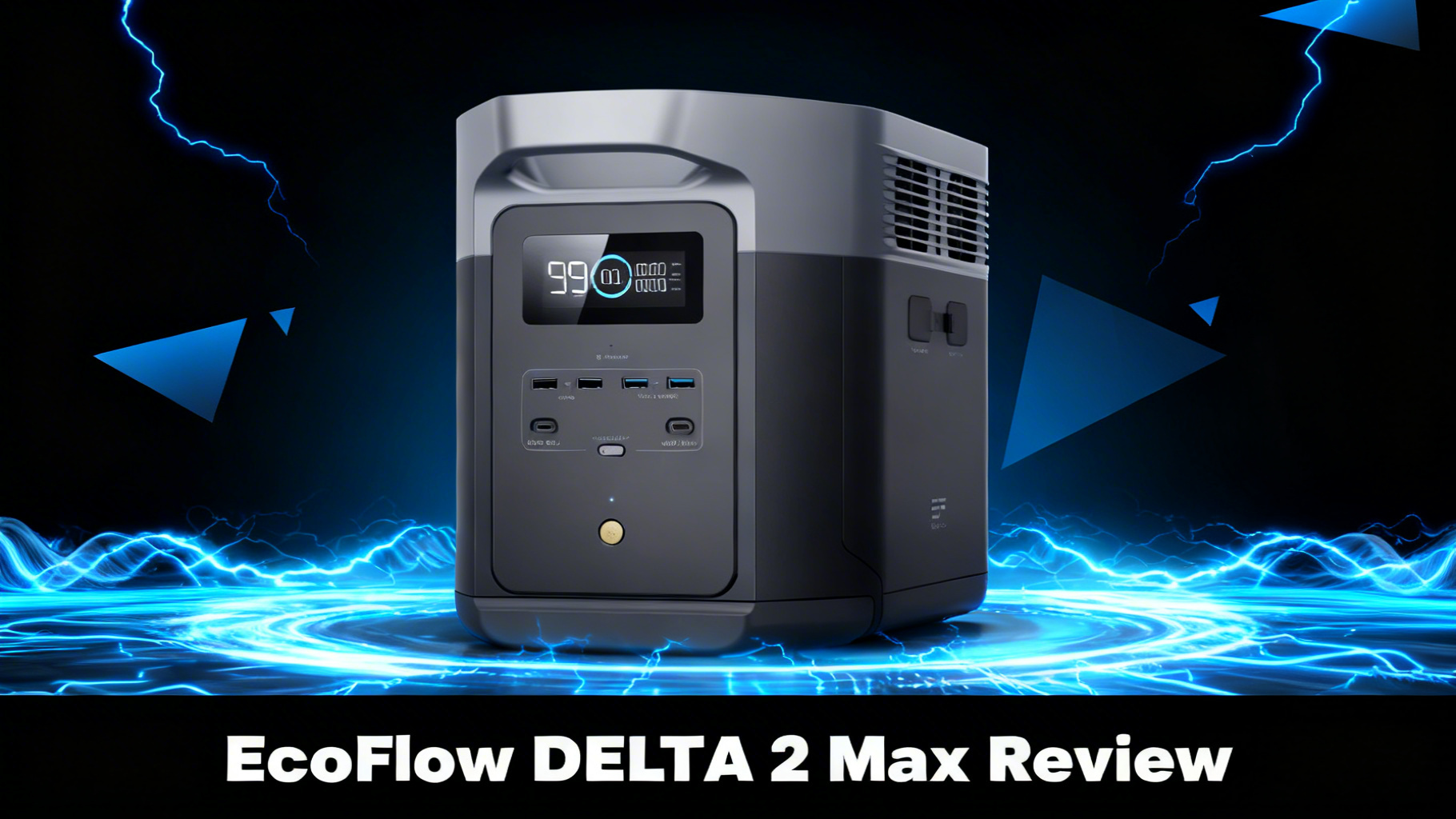
Looking for a high-capacity portable power station that can scale with your energy needs? The EcoFlow DELTA 2 Max has been one of the most popular choices in the 2,000Wh class since its mid-2023 launch. But with EcoFlow’s newer DELTA 3 lineup now hitting shelves at lower price points, the question every buyer is asking is simple: is the EcoFlow DELTA 2 Max still worth your money in 2026?
At $849 (down from its original $1,899 MSRP), the DELTA 2 Max portable power station packs 2,048Wh of LiFePO4 battery capacity, 2,400W of continuous AC output (with X-Boost pushing that to 3,400W), and an expandable ecosystem that can reach up to 6,144Wh with Smart Extra Batteries. Those are serious numbers for home backup, RV power, and off-grid setups.
In this review, we break down every spec, estimate real-world runtimes, evaluate charging performance across AC, solar, and car inputs, and compare the DELTA 2 Max head-to-head against its newer sibling, the DELTA 3 Max. We also look at the expansion ecosystem, smart app features, and which buyer profiles this unit fits best. By the end, you’ll know exactly whether this proven workhorse still deserves a spot on your shortlist, or whether the DELTA 3 series makes more sense for your situation.
⚠️ Update: The EcoFlow DELTA 2 Max has been discontinued
EcoFlow no longer sells the DELTA 2 Max. The closest current successor is the EcoFlow DELTA 3 Max, which delivers the same 2,048Wh LiFePO4 capacity with a higher 3,000W output (X-Boost to 3,800W) starting around $749. The product links in this review now point to the DELTA 3 Max. We keep this review live for existing owners and for comparison research.

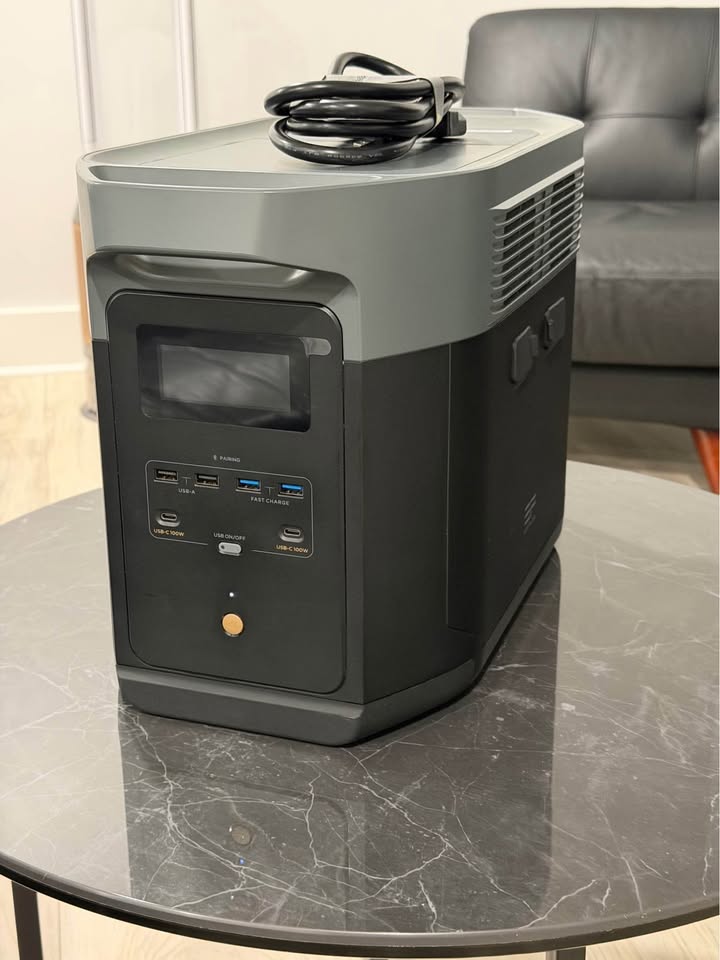
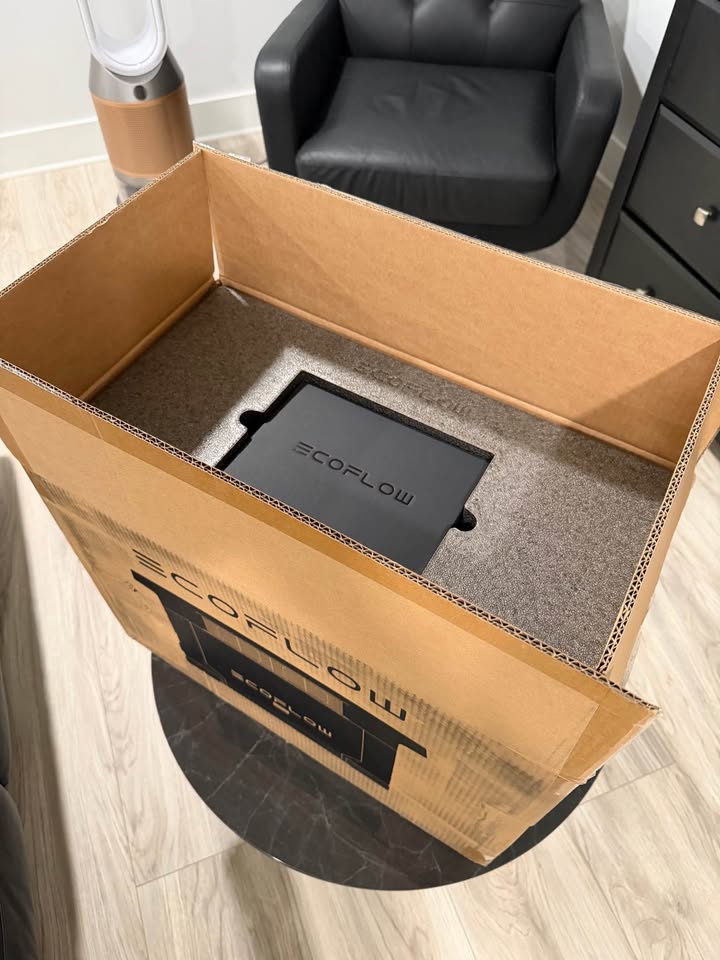
Real-World Look: The EcoFlow Delta 2 Max in Use
Studio renders only tell part of the story. Here is the EcoFlow Delta 2 Max as it actually looks in a real owner’s hands, away from the polished marketing shots.
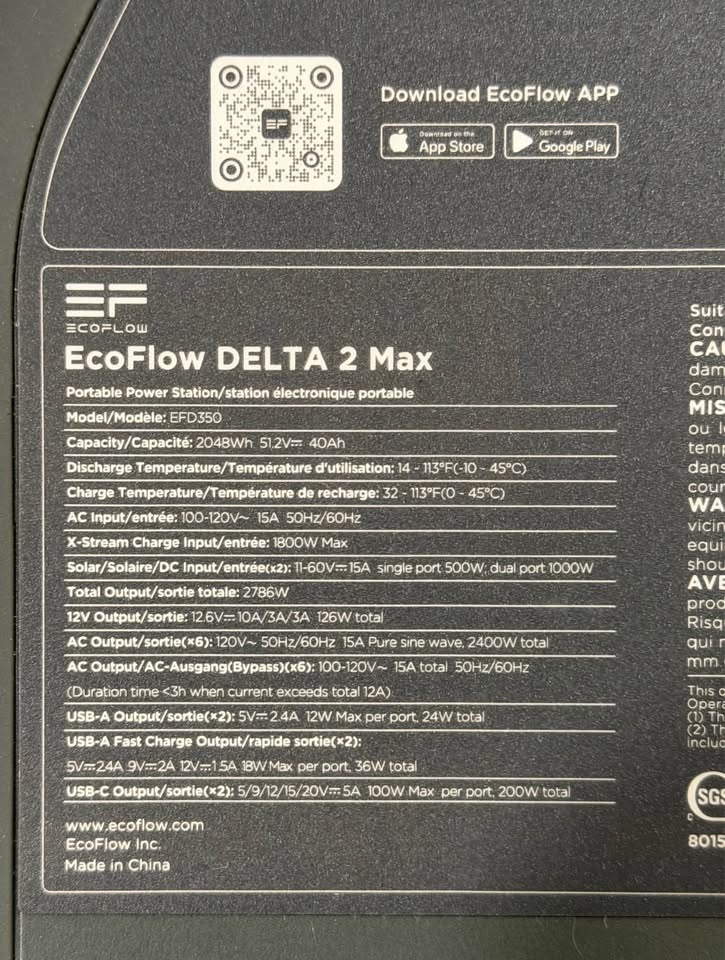
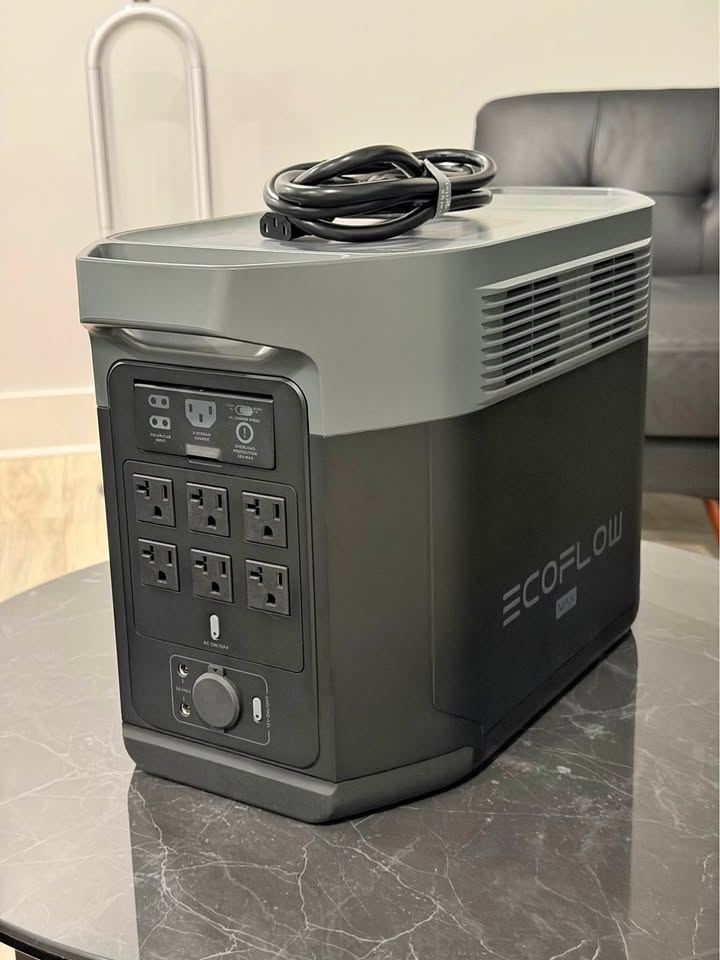
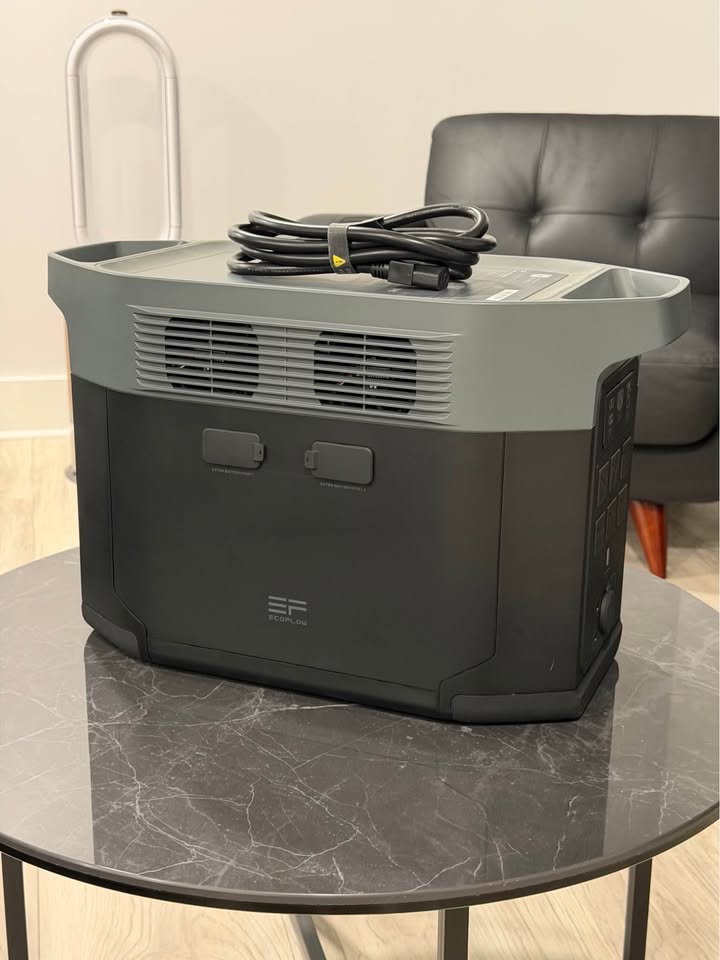
Real-world photos of the EcoFlow Delta 2 Max.
EcoFlow DELTA 2 Max: Overall Rating
8.5/10
“Proven 2048Wh workhorse with unmatched expandability”
Performance 8.5/10
Value 8/10
Portability 6.5/10
Charging Speed 9/10
Expandability 9.5/10
Features 8.5/10
⚡ EcoFlow DELTA 2 Max – Current Best Price
$849
$1,899
-55% OFF
- ✅ 2048Wh LFP battery, 3000+ cycles
- ✅ 2400W output (X-Boost 3400W)
- ✅ Expandable to 6144Wh with extra batteries
💡 Price verified March 2026 | Free shipping available
EcoFlow DELTA 2 Max Specifications at a Glance
Before diving into performance, let’s lay out the numbers. The EcoFlow DELTA 2 Max portable power station sits in EcoFlow’s mid-to-upper tier, positioned between the smaller DELTA 3 models and the larger DELTA Pro series. Here’s the full spec sheet.
A few EcoFlow DELTA 2 Max specs stand out immediately. The 2,048Wh capacity puts this unit in direct competition with units like the Bluetti AC200L and Jackery Explorer 2000 Plus. The LiFePO4 (LFP) battery chemistry is the gold standard for longevity, rated at 3,000+ cycles to 80% original capacity. That translates to roughly 10 years of daily use before meaningful degradation.
The 2,400W continuous AC output handles the vast majority of household appliances, and X-Boost mode extends that reach to 3,400W for high-draw devices that would normally be out of range. For a complete overview of the lineup, see our guide to the best EcoFlow power stations, but here we focus exclusively on the DELTA 2 Max.
Design & Build Quality
The EcoFlow DELTA 2 Max is not a unit you’ll casually toss in a daypack. At approximately 50 lbs (23 kg), it’s firmly in the “stationary portable” category. You can move it around your house, load it into an RV, or set it up at a campsite, but you’ll feel every pound doing it. The EcoFlow DELTA 2 Max dimensions make it comparable to a large microwave, so plan your storage accordingly.
Build quality is solid. The housing feels robust, with reinforced corners and recessed handles on both sides for two-handed carrying. The front panel is clean and logically organized, with clearly labeled output groups and a bright LCD display showing input/output wattage, remaining capacity, and estimated runtime.
Compared to the newer DELTA 3 Max, the DELTA 2 Max has a slightly bulkier footprint. EcoFlow has refined the industrial design in the DELTA 3 series, shaving weight and streamlining the form factor. If portability ranks high on your priority list, that’s worth noting. However, the DELTA 2 Max’s dimensions remain manageable for most RV compartments and home storage spaces.
Power Output & Ports
This is where the DELTA 2 Max earns its “Max” name. The 2,400W continuous AC output is enough to run most household appliances without breaking a sweat: refrigerators, microwaves, power tools, hair dryers, and space heaters all fall within range.
X-Boost technology pushes the effective output to 3,400W by intelligently reducing voltage to power-hungry devices that would otherwise trip the overload protection. It’s not magic (some appliances may run slightly less efficiently in X-Boost mode), but it dramatically expands what you can plug in.
The port layout includes 6 AC outlets, USB-A ports, USB-C ports, and a 12V car outlet. In total, the EcoFlow DELTA 2 Max supports 15 simultaneous devices. For RV users running a fridge, charging phones, powering a laptop, and keeping LED lights on, that’s more than enough connectivity.
Is 2,400W enough for your setup? For most home backup and camping scenarios, yes. The only time you’d genuinely need more is if you’re running multiple high-draw appliances simultaneously, like a space heater and a microwave at the same time. For RV users, 2,400W covers air conditioners, induction cooktops, and coffee makers without issue.
One practical note: the 6 AC outlets are standard 120V NEMA 5-15, which means compatibility with virtually every household plug. The USB-C ports support Power Delivery for fast-charging laptops and tablets, while the 12V car port handles accessories like tire inflators and portable coolers.
What Can It Power? Runtime Estimates
Raw specs only tell part of the story. What matters is how long the DELTA 2 Max can actually keep your devices running. Here are runtime estimates based on the 2,048Wh capacity and typical appliance power draws.
What Can It Power? (2048Wh)
🔌
Mini Fridge
~34 hrs
60W avg
💡
LED Lights (10x)
~170 hrs
12W each
❄️
Full-Size Fridge
~14 hrs
150W avg
📱
Phone Charges
~130x
15Wh each
Runtime calculations based on the 2,048Wh capacity show this unit can power a mini-fridge (averaging 60W) for approximately 34 hours. A full-size refrigerator (averaging 150W) runs for about 14 hours. You’re looking at roughly 130 phone charges or around 170 hours of LED lighting with ten 12W bulbs.
For CPAP users (a common use case for portable power stations), the DELTA 2 Max delivers roughly 25 to 30 nights of use depending on your machine’s draw and humidifier settings. That’s a solid margin for extended camping trips or power outage preparedness.
Keep in mind that these are estimates based on nominal capacity and average appliance draws. Real-world results vary with ambient temperature, battery age, and inverter efficiency losses (typically 10-15%). Want precise numbers for your specific appliances? Use our runtime calculator to see exactly how long the DELTA 2 Max will power your setup.
More Real-World Angles
Charging: AC, Solar, and Car
Charging speed is one of the EcoFlow DELTA 2 Max’s strongest selling points. EcoFlow’s proprietary X-Stream technology pushes AC wall charging to a remarkably fast ~2.3 hours from 0 to 100%. For a 2,048Wh unit, that’s genuinely impressive and competitive with anything else on the market.
The EcoFlow DELTA 2 Max solar input capacity is equally capable. With up to 1,000W of solar input and 99% MPPT efficiency, the DELTA 2 Max can recharge in as little as 2.3 hours with optimal panel placement (see our guide to solar panel angle optimization for maximum charging speed). Even with a more modest 400W panel setup, you’re looking at roughly 5 to 6 hours. The high MPPT efficiency means the unit squeezes nearly every available watt from your panels, even during partial shade or cloudy conditions.
Dual AC+Solar charging combines both inputs simultaneously for even faster recharge times, a feature that’s especially useful for RV users who want to top up from shore power while their rooftop panels contribute. This flexibility makes the EcoFlow DELTA 2 Max with solar panel setups one of the more versatile charging solutions in this capacity class. For panel pairing details, see our DELTA 2 Max solar setup guide.
The 12V car charger option is the slowest method, but it’s a useful backup for road trips. Expect a full charge to take significantly longer via this route.
Expandable Capacity: The DELTA 2 Max Ecosystem
This is where the DELTA 2 Max genuinely separates itself from much of the competition, and where it still holds a clear advantage over the newer DELTA 3 models. The EcoFlow DELTA 2 Max extra battery ecosystem is mature, proven, and flexible.
Each DELTA 2 Max Smart Extra Battery adds another 2,048Wh of capacity. You can connect up to two, bringing the total system capacity to a massive 6,144Wh. That’s enough to run a full-size refrigerator for over 40 hours, or power essential home circuits through an extended outage. The extra batteries connect seamlessly and are managed through the same app interface, so monitoring your total system capacity is straightforward.
Beyond extra batteries, the DELTA 2 Max works with EcoFlow’s 800W Alternator Charger for vehicle-based charging on the go, and the Transfer Switch for seamless home backup integration. This accessory ecosystem has been on the market long enough that compatibility issues have been ironed out, and user feedback across these peripherals is well documented.
The DELTA 3 series will eventually build out a similar ecosystem, but as of early 2026, the DELTA 2 Max’s expansion options are more established and battle-tested. If you’re building a scalable power system rather than buying a standalone unit, this matters.
Smart Features & App Control
The DELTA 2 Max connects to the EcoFlow app via WiFi and Bluetooth, giving you remote monitoring and control from your phone. You can check real-time input/output power, battery levels, and remaining runtime without walking over to the unit.
The app also lets you prioritize charging sources (solar vs AC), set custom charge limits to extend battery lifespan, and receive firmware updates that occasionally unlock new features or improve performance. It’s a polished experience that adds genuine convenience, especially for home backup scenarios where the unit might be tucked away in a garage or utility closet. You can also monitor energy usage patterns over time, which helps optimize your power consumption for off-grid setups.
That said, the app isn’t essential. Everything critical can be managed via the onboard display and physical buttons. The app is a nice-to-have, not a dependency. Some owners report occasional Bluetooth connectivity hiccups, but WiFi connections tend to be more reliable for ongoing monitoring. If you prefer a more hands-on approach, the EcoFlow DELTA 2 Max manual covers all controls and settings in detail.
DELTA 2 Max vs DELTA 3 Series: Should You Wait?
This is the question at the heart of this EcoFlow DELTA 2 Max review. The EcoFlow DELTA 2 Max price currently sits at $849, while EcoFlow’s DELTA 3 Max offers the same 2,048Wh capacity at $749, a full $100 less. Our DELTA 3 Max vs DELTA 2 Max comparison covers every trade-off. The DELTA 3 Max features an updated design, reduced weight, and some refinements to the user interface.
So why would anyone still choose the DELTA 2 Max? A few reasons.
First, the expansion ecosystem. The DELTA 2 Max Smart Extra Batteries, 800W Alternator Charger, and Transfer Switch are proven products with extensive owner feedback. The DELTA 3 ecosystem is still ramping up. If you need expandable capacity right now, the DELTA 2 Max is the safer bet.
Second, track record. The DELTA 2 Max has been on the market since mid-2023. Firmware is mature, edge cases are documented, and you can find thousands of real owner reviews. With any new product line, early adopters sometimes encounter teething issues.
On the other hand, if you don’t need expansion batteries, the DELTA 3 Max gives you comparable core specs at a lower price with a more modern design. And if you need UPS functionality for sensitive electronics, the DELTA 3 1000 Air offers a 10ms switchover that the DELTA 2 Max simply doesn’t match.
The bottom line: the DELTA 2 Max wins on ecosystem maturity and expandability. The DELTA 3 wins on price, portability, and newer features. Neither is universally better. For the full EcoFlow DELTA 2 Max specifications compared side by side with the DELTA 3 Max, check the EcoFlow DELTA 2 Max official page.
Who Is the EcoFlow DELTA 2 Max For?
Not every power station fits every buyer. Here’s where the DELTA 2 Max makes the most sense, and where it doesn’t.
✅ Buy this if…
- You need expandable capacity (2-6kWh) for home backup or RV
- You want proven LFP technology with 3000+ cycle lifespan
- You need 2400W continuous output for large appliances
- You want up to 1000W solar input for off-grid setups
❌ Skip this if…
- You prioritize ultra-portability (it weighs ~50 lbs)
- You need UPS functionality (consider the DELTA 3 1000 Air)
- Your budget is under $700 (look at the DELTA 3 or DELTA 3 Plus)
- You want the latest DELTA 3 series features at a lower price
The ideal buyer is someone building a scalable power system. If you’re an RV owner who might add extra batteries down the road, or a homeowner who wants a backup solution that can grow with your needs, the DELTA 2 Max’s expansion options are its biggest asset.
It’s also a strong choice for anyone who values proven reliability over bleeding-edge features. The DELTA 2 Max has years of real-world owner data behind it. You know exactly what you’re getting.
If home backup is your primary use case, our home backup power stations guide compares the DELTA 2 Max against other top contenders.
On the flip side, if you prioritize ultra-portability, the EcoFlow DELTA 2 Max weight of 50 lbs is a lot. If your budget is under $700, the DELTA 3 or DELTA 3 Plus offer better value. And if UPS functionality is critical (for medical equipment or servers), look at the DELTA 3 1000 Air instead. Some shoppers search for the EcoFlow DELTA 2 Max at Costco or other retailers for bundle deals, so it’s worth comparing prices across platforms before committing.
Our Verdict
The EcoFlow DELTA 2 Max scores an 8.5/10 in our analysis. It’s a capable, well-built, high-capacity portable power station with the best expansion ecosystem in the EcoFlow lineup. The LFP battery’s 3,000+ cycle lifespan provides long-term value, and the 2,400W output (3,400W with X-Boost) handles virtually any household appliance.
Where it falls short is portability (50 lbs is heavy for anything beyond stationary use), the lack of true UPS functionality, and the $100 price premium over the newer DELTA 3 Max. For some buyers, the absence of the latest DELTA 3 features at a higher price will be a hard sell. These aren’t dealbreakers, they’re context-dependent trade-offs that depend entirely on your use case.
The DELTA 2 Max earns its place among the best portable power stations of 2026, particularly for buyers who prioritize expandable capacity. If you’re building a power system rather than buying a standalone box, this is the EcoFlow to get. If you just need a single, self-contained unit at the best price, the DELTA 3 Max deserves a hard look.
EcoFlow DELTA 2 Max
$849
Proven 2048Wh workhorse for home backup and RV power
See Successor: EcoFlow DELTA 3 Max →
Price verified March 2026 – Free shipping available
Frequently Asked Questions
How much does the EcoFlow DELTA 2 Max weigh?
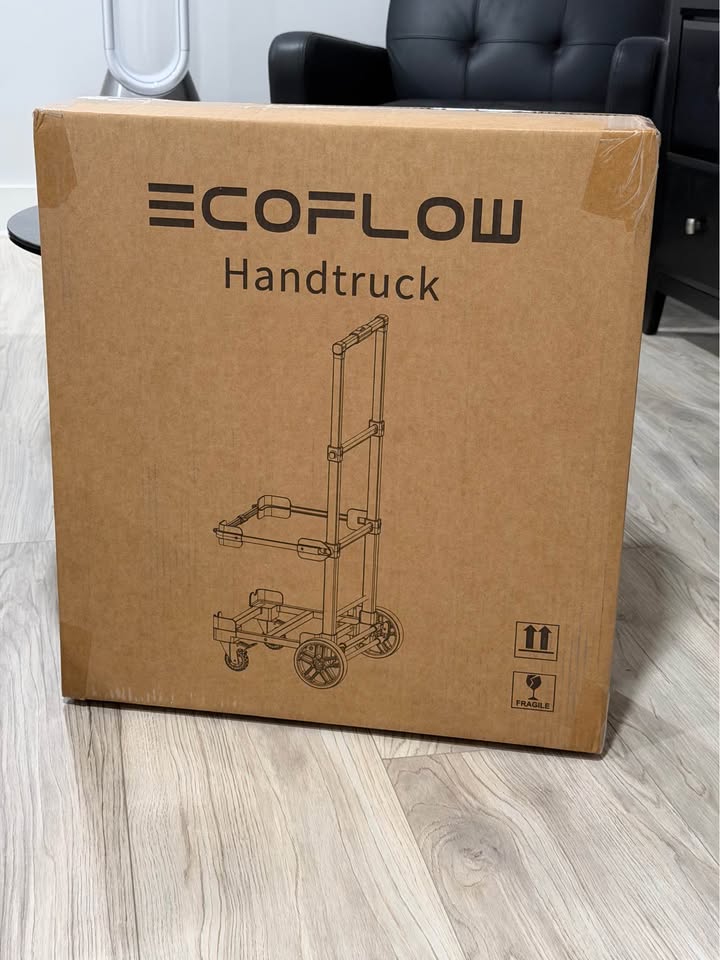
The EcoFlow DELTA 2 Max weighs approximately 50 lbs (23 kg), placing it firmly in the home backup and RV category rather than the ultraportable camping segment. EcoFlow offers an optional carrying bag and foldable hand truck for easier transport, but this is a unit you’ll want to set in one spot and leave there.
Can the EcoFlow DELTA 2 Max power a full-size refrigerator?
Yes. Runtime calculations based on the 2,048Wh capacity indicate it can power a typical full-size refrigerator (averaging 150W) for approximately 14 hours. With two Smart Extra Batteries expanding capacity to 6,144Wh, that runtime extends to roughly 41 hours, enough to cover most power outages.
How long does it take to charge the EcoFlow DELTA 2 Max?
Via AC wall outlet with X-Stream charging, the DELTA 2 Max charges from 0 to 100% in approximately 2.3 hours. Solar charging with 1,000W input takes about 2.3 hours as well, while dual AC+Solar charging is even faster. The 12V car charger is the slowest option, best used as a backup on road trips.
Is the EcoFlow DELTA 2 Max compatible with solar panels?
Yes. It accepts up to 1,000W of solar input with 99% MPPT efficiency. The DELTA 2 Max is compatible with EcoFlow’s own 160W, 220W, and 400W solar panels, as well as third-party panels with compatible connectors. For off-grid setups, the high solar input ceiling is one of its strongest features.
What is the difference between the DELTA 2 Max and DELTA 3 Max?
The DELTA 3 Max (2048Wh, $749) is the newer model with a lower price and updated design. The DELTA 2 Max ($849) offers a more mature ecosystem with proven Smart Extra Battery expansion (up to 6,144Wh), an established 800W Alternator Charger, and extensive real-world owner data. Choose the DELTA 2 Max for expandability, the DELTA 3 Max for value and portability.
Does the DELTA 2 Max have a UPS function?
The DELTA 2 Max can serve as a basic emergency power backup, but it does not feature the 10ms UPS switchover found in the newer DELTA 3 1000 Air. For critical medical or computing equipment requiring true UPS protection with near-instant failover, the DELTA 3 1000 Air is the better choice.
How many cycles does the EcoFlow DELTA 2 Max battery last?
The LiFePO4 battery is rated for 3,000+ cycles to 80% original capacity. According to EcoFlow’s specifications, that translates to approximately 10 years of daily use. LFP chemistry is inherently more stable and longer-lasting than standard lithium-ion, which is why most premium power stations have adopted it.
Can I use the DELTA 2 Max for whole-home backup?
With the Transfer Switch accessory and up to two Smart Extra Batteries (6,144Wh total), the DELTA 2 Max can provide partial home backup for essential circuits: lights, refrigerator, phone chargers, WiFi router. It is not designed for whole-home backup of high-draw appliances like central HVAC systems or electric water heaters.
Related Reads
Originally published: March 22, 2026