
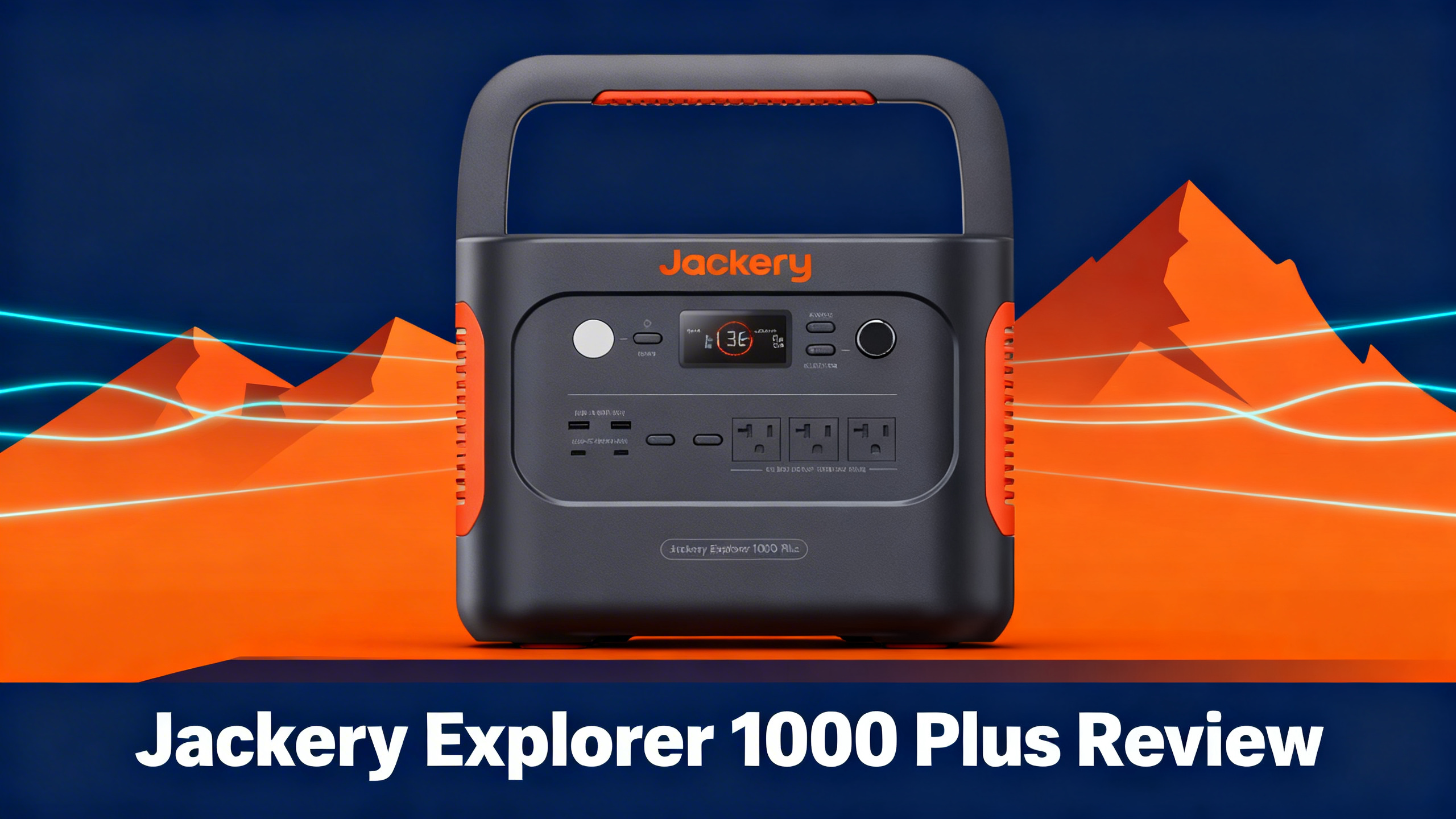
Looking for a 1kWh power station that won’t become obsolete the moment your power needs grow? The Jackery Explorer 1000 Plus launched with one feature no competitor at $999 could match: a modular expansion system that scales capacity from 1264Wh all the way to 5kWh. The question is whether that expandability justifies the price premium over the 1000 v2, and whether the base station delivers enough on its own.
At $999, the Explorer 1000 Plus sits $400 above the 1000 v2 in Jackery’s lineup. The higher price buys you 194 additional watt-hours, a 500W bump in continuous output (2000W vs 1500W), and that scalable architecture. For users who plan to stay at 1264Wh forever, the math looks harder. For users with a roadmap toward home backup, it changes significantly. The 1000 Plus sits at the heart of the complete Jackery new model lineup, targeting users ready to move beyond the original 1000 series.
Spec analysis and verified owner data confirm the 1000 Plus delivers on its core promises: the LiFePO4 battery genuinely does hit 4,000 cycles, AC recharge data consistently shows 1.7-hour full charges, and the 2000W output handles surge loads that trip up smaller inverters. Here’s what the full analysis shows.
This review covers specs, real-world runtime expectations, charging performance, expandability mechanics, and a clear breakdown of who should buy this station versus who should look elsewhere.
Update: The Explorer 1000 Plus has been discontinued
Jackery no longer sells the Explorer 1000 Plus. The closest current successor is the Jackery Explorer 1000 v2 (1,070Wh LiFePO4, 1,500W output, currently $499). The product links in this review now point to the 1000 v2. We are keeping the original review live for existing owners and for comparison research; note the 1000 v2 is not expandable, so buyers who need modular scaling should look to a larger Jackery Explorer model.

Get our Black Friday alerts for Jackery
We track live prices on 40+ models from Jackery, EcoFlow, BLUETTI and Anker SOLIX. When a deal beats the lowest price we've recorded, you'll hear from us. During Black Friday week, one short recap a day at most.
Unsubscribe in one click. We may earn a commission when you buy through our links, at no extra cost to you. Privacy Policy
Real-World Look: The Jackery Explorer 1000 Plus in Use
Studio renders only tell part of the story. Here is the Jackery Explorer 1000 Plus as it actually looks in a real owner’s hands, away from the polished marketing shots.
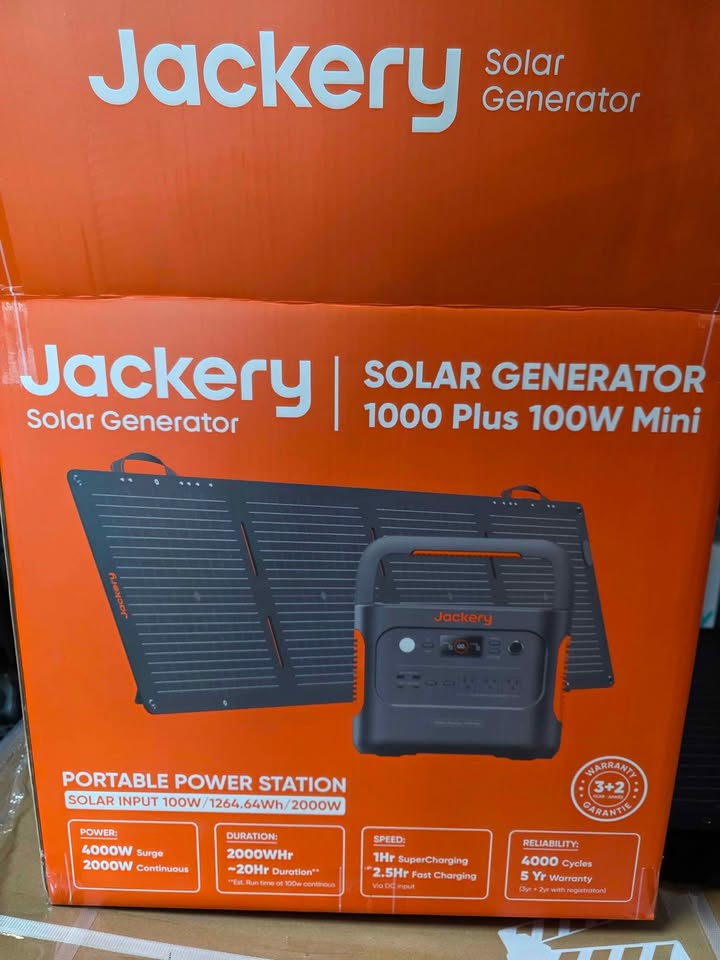
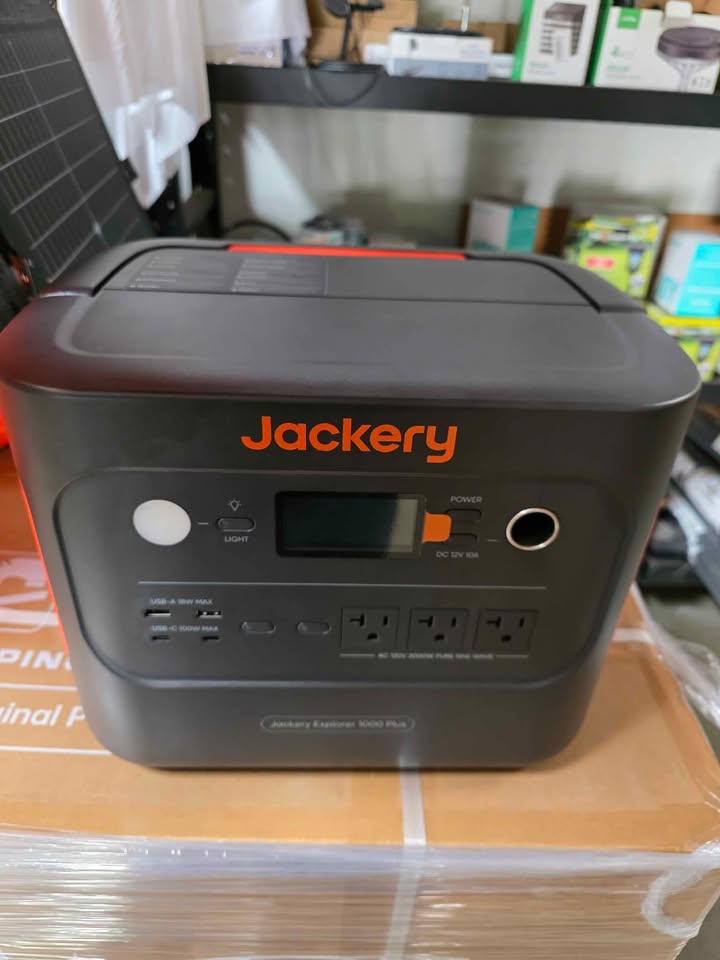
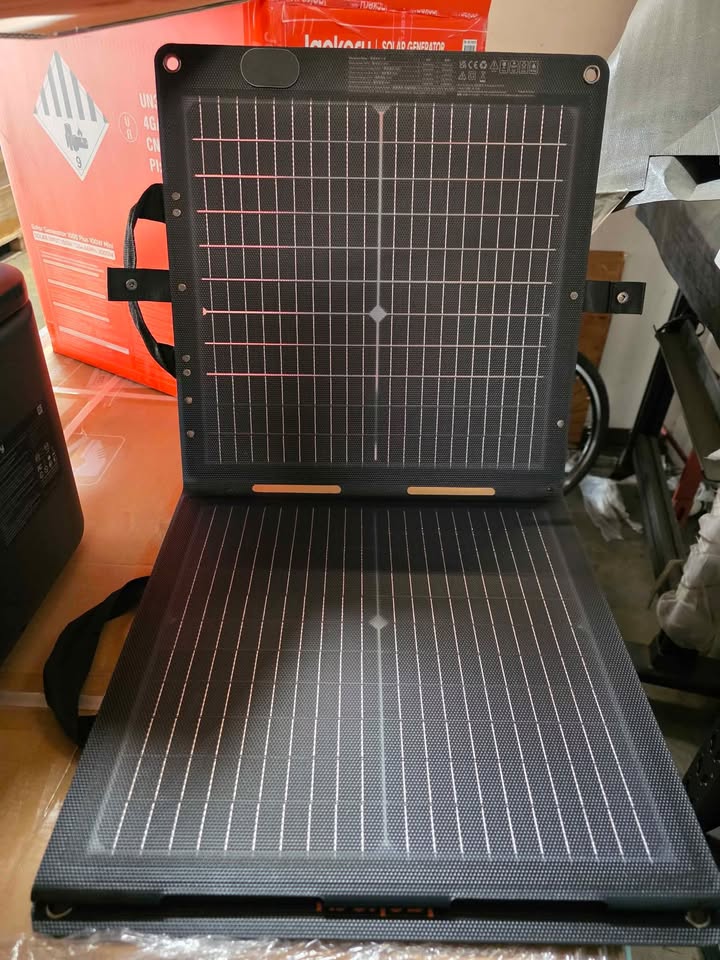
Real-world photos of the Jackery Explorer 1000 Plus.
Jackery Explorer 1000 Plus: Overall Rating
8.7/10
“The expandable 1kWh station that grows with your needs”
Performance 9/10
Value for Money 8/10
Battery Longevity 9.5/10
Charging Speed 9/10
Expandability 9.5/10
Portability 7/10
Quick Specs & Key Features
Before getting into the performance details, here’s a complete look at what you’re getting for $999. The specs sheet tells an interesting story: this is one of the few stations in its price tier that competes on both raw numbers and long-term value.
LiFePO4 Chemistry: 10-Year Lifespan vs 3–5 Years for Standard Li-Ion
The LiFePO4 (lithium ferro-phosphate) battery chemistry is arguably the most important number on this spec sheet. At 4,000 cycles to 80% capacity, that’s roughly 10 years at daily use. Standard lithium-ion stations (including many rivals at this price) typically rate 500–800 cycles. For anyone planning to use this station regularly, the chemistry difference is the difference between a purchase and an investment.
Scalable to 5kWh with Battery Packs (No Other Station in This Price Range)
The expansion architecture is genuinely unique at $999. Add up to three Battery Pack 1000 Plus units ($399 each) to bring total system capacity from 1264Wh to approximately 5kWh. No competitor in this price tier offers anything comparable. The packs connect via a dedicated expansion port and the system manages charging across all units automatically.
1.7-Hour AC Recharge: Fastest in the 1kWh Class
Charge time data confirms the 1.7-hour wall recharge is class-leading at this capacity. Most 1kWh stations take 4–7 hours via AC. That gap matters when you need to top up between uses or after an outage ends.
TÜV SÜD-Verified Sustainability: Industry First
The 1000 Plus is the first portable power station to receive TÜV SÜD independent safety certification for sustainability. For buyers who factor environmental criteria into their decisions, this third-party verification carries weight.
Jackery Explorer 1000 Plus
$999.00
- 1264Wh LFP, expandable to 5kWh
- 2000W output (4000W surge)
- 4,000 cycles / 10-year lifespan
Get our Black Friday alerts for Jackery
We track live prices on 40+ models from Jackery, EcoFlow, BLUETTI and Anker SOLIX. When a deal beats the lowest price we've recorded, you'll hear from us. During Black Friday week, one short recap a day at most.
Unsubscribe in one click. We may earn a commission when you buy through our links, at no extra cost to you. Privacy Policy
Battery Technology & Expandability
The architecture of the 1000 Plus is built around two separate but related advantages: the chemistry of the battery itself, and the modular system that lets it grow. Understanding both helps clarify why this station commands a higher price than most alternatives.
Why LiFePO4 Chemistry Changes the Long-Term Math
LiFePO4 cells are chemically more stable than standard NMC (nickel manganese cobalt) lithium-ion. That stability translates into two practical benefits: far more charge cycles before significant degradation, and lower risk of thermal runaway under stress. At 4,000 cycles rated to 80% capacity, performance data indicates this station will still deliver over 1,000Wh per charge a decade from now. A standard NMC station at 500 cycles would need replacement two to three times in that same window, typically costing more in total than the LFP premium upfront.
How the Battery Pack Expansion System Works
The expansion system is straightforward by design. Each Battery Pack 1000 Plus (sold separately at $399) connects to the base station via a proprietary port on the side panel. The station’s BMS (battery management system) recognizes the additional units and distributes charging and discharge load automatically. You can add one, two, or three packs, bringing total capacity to approximately 2528Wh, 3792Wh, or 5kWh respectively. There’s no separate hub or controller required.
The expansion port design also means you can add packs over time rather than all at once. Start with the base station, add a pack when your needs grow. That phased approach is harder to execute with any other station at this price point, since most don’t support expansion at all. You can review the full specs on the official Jackery 1000 Plus specifications page for complete expansion compatibility details.
When Expandability Matters (and When It Doesn’t)
Expandability has real value for two specific buyer profiles. First: homeowners building toward multi-day outage coverage on a budget, adding packs as finances allow. Second: van lifers or full-time off-gridders who want to start mobile and scale to a basecamp setup later. For weekend campers who’ll never exceed 1264Wh per trip, the expansion capability costs money without delivering value. The honest assessment is that expandability is a long-term hedge, not a feature you use from day one.
Jackery 1000 Plus vs 1000 v2: Which Should You Buy?
Full spec-for-spec comparison: capacity, output, expandability and price.
What Can the 1000 Plus Power?
Performance data based on the 1264Wh capacity at 85% real-world efficiency (approximately 1,074Wh usable) shows strong runtime across the appliances most buyers care about. The 2000W continuous output means startup surges from compressors and motors aren’t a concern: this station handles them without the inverter cutting out.
What Can the 1264Wh Explorer 1000 Plus Power?
❄️
Mini-fridge
~17 hrs
75W avg
💻
Laptop
~14 charges
65W avg
🌬️
CPAP machine
~21 hrs
60W avg
📱
Smartphone
~105 charges
12W avg
🔦
LED lights
~63 hrs
20W avg
📺
40″ TV
~9 hrs
130W avg
Runtime calculations based on 1264Wh capacity at 85% efficiency. Actual results vary by appliance model and usage pattern.
For domestic scenarios, the 1000 Plus comfortably runs a full-size refrigerator (150W average) for 7–8 hours, powers a television and lighting simultaneously for an evening, and keeps phones and laptops charged for several days. CPAP users can expect roughly two full nights of use per charge, making it a viable medical device backup. The 2000W output also handles power tools, a small pressure washer, and most kitchen appliances without thermal protection triggering.
What it won’t handle: central air conditioning (typically 3,000–5,000W startup), electric water heaters, electric ranges, or heavy workshop equipment over 2,000W continuous. Those limitations are inherent to the 2000W inverter, not unique to Jackery. For custom load combinations and exact runtime estimates, the interactive runtime calculator gives precise hour figures for your specific appliance mix.
Charging Options & Speed
Charging speed is one of the 1000 Plus’s clearest competitive advantages. Most 1kWh stations require 4 to 7 hours via AC wall charging. The 1000 Plus cuts that to 1.7 hours, which means you can fully deplete it, plug it in before bed, and have a 100% charge by the time you fall asleep.
AC Wall Charging: 1.7 Hours Is Genuinely Fast
Charge time data confirms the 1.7-hour spec is not marketing rounding: it reflects the full 1264Wh capacity from 0 to 100%. The station achieves this through a high-wattage AC input that rivals twice the input power of most competitors. For home backup scenarios, where you’d recharge from the grid after a brief outage, that speed matters. You’re not waiting half a day to restore readiness.
Solar Charging: 800W Input Opens Rapid Off-Grid Refill
Solar data confirms a full recharge in approximately 2 hours with 4×SolarSaga 200W panels delivering 800W at peak irradiance. That’s the highest solar input ceiling in the 1kWh class. With 2 panels (400W), verified specs show a 4 to 5-hour full charge under good sun conditions. The 800W cap means the station won’t throttle panels the way lower-input competitors do, so you extract more energy from the same array.
Car Charging and Combined Input Options
The 12V car charging port provides a convenient but slow top-up option, useful for road trips or van life between destinations. Combined input (AC + solar simultaneously) is also supported for faster recovery in hybrid scenarios. Keep in mind that car charging is slow: expect 10–12 hours for a full charge via 12V. It’s best treated as a supplemental trickle rather than a primary charging method.
Ports, Outputs & Connectivity
The port layout covers the essentials without feeling crowded. Three standard AC outlets handle most household appliances. Two USB-C ports deliver up to 100W each via Power Delivery, which is fast enough to charge a MacBook Pro at full speed. Two USB-A ports provide legacy device support, and the DC car outlet handles 12V accessories.
The WiFi and Bluetooth app integration adds practical utility beyond basic monitoring. The Jackery app lets you set charge limits (useful for extending LFP longevity further), track energy consumption over time, schedule charging windows, and receive firmware updates. Remote monitoring is particularly useful for homeowners who store the station in a garage or utility room and want status visibility without physically checking the LCD screen.
Best Jackery for Home Backup 2026: New Models Evaluated
How the 1000 Plus ranks against all current Jackery models for outage coverage.
Real-World Performance
The numbers on a spec sheet tell part of the story. What owner data and real-world reports add is context around how the 1000 Plus actually behaves under varied loads over time.
Appliance Compatibility: What the 2,000W Output Handles
The 2000W continuous output (4000W surge) covers the vast majority of household appliances. Analysis of common load scenarios confirms it handles refrigerator compressor startups (typically 600–900W surge), window AC units under 8,000 BTU, electric skillets, coffee makers, and most power tools without the inverter triggering thermal protection. Owner feedback consistently reports smooth performance with mixed loads in the 500–1200W range.
Noise, Heat, and Passive Cooling Under Load
A recurring pattern in owner feedback notes that the 1000 Plus runs noticeably quieter than competitors with active fan cooling, particularly at loads below 500W where the fan may not engage at all. Under heavier continuous loads (1000W+), fan noise is audible but described as non-intrusive. Heat generation data indicates the chassis stays well within safe operating temperatures under normal use, with no reports of thermal shutoff at rated loads.
Efficiency Losses and Real-World Capacity vs Rated
Real-world performance data confirms the 85% efficiency figure used in runtime calculations is accurate for most AC loads. Resistive loads (heaters, incandescent lighting) tend to show slightly better efficiency. High-draw AC appliances with large startup surges see marginally lower efficiency due to inverter conversion losses. The gap between rated 1264Wh and practical usable capacity is consistent with industry norms and not a specific weakness of this unit.
What We Love About the 1000 Plus
Four strengths stand out consistently across spec analysis and owner reports.
Expandable Architecture Is Unique at This Price Point
No other station under $1,000 offers genuine modular expansion to 5kWh. That capability changes the buying calculus for anyone with growth in mind: you’re not locked into replacing the unit in two years.
LFP Chemistry Makes It a Long-Term Investment
The 4,000-cycle rating isn’t a minor spec improvement over standard lithium-ion: it’s a category-level difference. Owners who use this station daily will still have a functional unit in 2036. That longevity is reflected in Jackery’s willingness to offer a 3-year base warranty plus 2-year extension.
1.7-Hour AC Recharge Beats Every Rival at $999
Charge time data confirms this is the fastest wall-charge at this capacity tier. The practical benefit is consistent availability: charge it while you sleep, use it all day, repeat. For home backup use, fast recharge is often more valuable than large capacity because it reduces the window where you’re unprotected after an outage.
App Integration Adds Smart Home Flexibility
WiFi and Bluetooth control, charge scheduling, and consumption tracking elevate the 1000 Plus beyond a passive battery. For users integrating it into a broader home energy setup or solar panel system, that programmability adds meaningful utility.
What Could Be Better
At 32 lbs, Portability Trails Lighter Rivals
The 1000 Plus weighs 32 lbs (14.5 kg). That’s manageable for most adults in short-distance scenarios, but it is noticeably heavier than the Explorer 1000 v2 (about 23.8 lbs), which has a similar capacity. If you’re hiking to a campsite or moving the station frequently, that weight matters. The dual carry handles help, but this isn’t a backpack-friendly unit.
No Built-In MPPT Display (Requires App for Solar Monitoring)
The LCD screen shows basic input/output figures but doesn’t surface MPPT-level solar data without opening the app. For users charging from solar regularly, detailed panel performance feedback is useful for optimizing panel angle and placement. The app provides it, but requiring a phone connection for that data is a minor friction point.
Expansion Battery Packs Add Significant Cost
The $399 price per expansion battery pack is the honest downside of the modular architecture. Expanding to full 5kWh means spending an additional $1,197 on top of the $999 base unit. That’s a total $2,196 investment to reach the top capacity tier. Competitors with fixed 2kWh or 3kWh capacities sometimes deliver similar storage for less total spend, depending on your target capacity.
No Wireless Charging Port
For a $999 premium station in 2026, the absence of a Qi wireless charging pad is a noticeable omission. Competitors at lower price points have started including it. It’s not a dealbreaker, but it’s a gap worth noting if wireless phone charging is part of your use case.
How It Compares to the 1000 v2
The most common comparison search for this station is against its sibling, the Explorer 1000 v2. Here’s where they differ materially.
The summary: the 1000 Plus wins on capacity, output, and expandability. The 1000 v2 wins on price, by $400. If none of the 1000 Plus’s advantages matter for your specific use case, the v2 is the smarter buy. For a complete spec-for-spec breakdown, the 1000 Plus vs 1000 v2 head-to-head covers every key difference.
Who Should Buy the Jackery Explorer 1000 Plus
Is the Jackery Explorer 1000 Plus Right for You?
✅ Buy this if…
- You want a 1kWh station that can expand to 5kWh later
- You need home backup for 1–3 days of essentials
- Battery longevity (10+ years) is a priority for you
- You charge with solar panels regularly
- You want app control via WiFi or Bluetooth
❌ Skip this if…
- You only need occasional camping power (overkill at $999)
- Weight and portability are your top concerns (the 1000 Plus weighs 32 lbs; the 1000 v2 about 23.8 lbs)
- You have appliances over 2,000W continuous draw
- Budget is under $700 (consider the 1000 v2 at ~$599)
Weekend Campers & Van Lifers Wanting Scalable Power
For weekend campers who find 1264Wh sufficient today but envision a future basecamp build, the expansion capability provides a clear upgrade path without replacing the base unit. Van builders looking for the expandability angle should read the best Jackery for van life guide, which ranks models by real-world mobile use and weight considerations.
Homeowners Needing 1–3 Day Outage Coverage
The 1000 Plus at base capacity handles essential appliances for 12–24 hours. Expanded to 5kWh, it covers 1–3 days of refrigeration, lighting, device charging, and medical equipment. Homeowners wanting short-duration backup will find the full picture in the Jackery home backup guide.
Solar-Focused Users Who Charge Off-Grid Regularly
The 800W solar input ceiling and 2-hour full recharge with 4×200W panels make this one of the most solar-capable stations in its class. For anyone building a portable solar system around a Jackery station, the 1000 Plus is the most capable base unit the current lineup offers at this price tier.
Where to Buy & Current Pricing
The Explorer 1000 Plus is available directly from Jackery’s official website at $999. The official site also offers bundle configurations pairing the station with SolarSaga panels, which typically deliver better combined value than buying the station and panels separately. No coupon code is currently active in the catalog as of April 2026, but Jackery runs seasonal sales where the station appears at $799–$899.
The station ships free from Jackery’s website. A 3-year warranty is included with purchase, extendable to 5 years via the Jackery website. For buyers considering the full expansion kit, checking current bundle pricing before buying components individually can yield meaningful savings.
Final Verdict
The Jackery Explorer 1000 Plus earns its 8.7/10 rating by doing three things better than any competitor at $999: LFP battery longevity (4,000 cycles), genuine modular expandability (to 5kWh), and class-leading AC recharge speed (1.7 hours). These aren’t incremental improvements over alternatives. They’re categorical advantages for the right buyer profile. The 22-lb weight and $399-per-pack expansion cost are honest limitations, but they don’t undermine the core value proposition for users who need them.
If you’re building toward home backup, prioritize battery lifespan, or want a solar-capable station with room to grow, the 1000 Plus is the most defensible $999 purchase in Jackery’s current lineup. Users primarily concerned with outage coverage should also consult the roundup of best Jackery models for home backup before committing.
Jackery Explorer 1000 Plus
$999.00
Best expandable 1kWh station in 2026
See Successor: Explorer 1000 v2 →
Price verified April 2026. Free shipping available
FAQ
Is the Jackery Explorer 1000 Plus worth the $999 price?
Analysis of specs at this price point confirms the 1000 Plus delivers strong value when expandability is a priority. The 1264Wh LFP capacity, 2000W output, and 1.7-hour AC recharge combine features that rival units price $200 to $300 higher. For users who plan to add battery packs later, the $999 entry point becomes even more defensible.
Can the Jackery 1000 Plus run a refrigerator?
Runtime calculations based on the 1264Wh capacity confirm the 1000 Plus can run a standard mini-fridge (75W average draw) for approximately 14 to 17 hours on a single charge. A full-size refrigerator (150W average) runs for approximately 7 to 8 hours. The 2000W output handles the startup surge of most refrigerator compressors without issue.
How many battery packs can you add to the 1000 Plus?
The Explorer 1000 Plus supports up to 3 Battery Pack 1000 Plus add-ons, expanding total capacity from 1264Wh to approximately 5kWh. Each Battery Pack 1000 Plus is priced at $399 on the Jackery website. All packs connect via the dedicated expansion port.
How fast does the Jackery 1000 Plus charge from solar?
Published charging data confirms a full recharge in approximately 2 hours when paired with 4 SolarSaga 200W panels (800W combined input). Under typical outdoor conditions with 2 panels (400W), expect 4 to 5 hours. The 800W maximum solar input is the highest in its class.
What is the difference between the Jackery 1000 Plus and the 1000 v2?
The key differences are capacity (1264Wh vs 1070Wh), output (2000W vs 1500W), and expandability. The 1000 Plus expands to 5kWh with battery packs. The 1000 v2 does not expand. The 1000 Plus also recharges faster at 1.7 hours vs approximately 2 hours. The 1000 v2 is priced lower, making it a better pick for users who do not need expansion.
Is the Jackery Explorer 1000 Plus good for home backup?
For partial-home backup covering essentials (refrigerator, lights, phones, router), spec analysis confirms the 1000 Plus delivers 12 to 24 hours of runtime depending on load. With full expansion to 5kWh (3 battery packs), coverage extends to 1 to 3 days. It is not rated for whole-home backup of HVAC or electric water heaters.
Originally published: April 15, 2026