
Power outages are not an inconvenience for the millions of Americans who depend on home medical equipment. They are a safety event. CPAP machines, oxygen concentrators, home dialysis units, powered hospital beds, and refrigerated medications all share one unforgiving requirement: continuous, clean electricity. Federal grid reliability data shows outages have grown longer and more frequent over the past decade, which means backup power is no longer optional for medically dependent households.
This guide identifies the five strongest power stations for home medical use in 2026, ranked across capacity, AC output, UPS function, battery chemistry, and warranty length. The picks span four major brands (EcoFlow, Anker SOLIX, Jackery) and cover every major medical use case: full-home backup, CPAP and BiPAP therapy, oxygen concentrators, mid-range home care, and portable travel needs. Each selection is supported by published spec data and the FDA emergency preparedness guidelines for home medical devices.

🏆 Best Overall, Medical Backup
EcoFlow DELTA Pro 3
$2,799 $3,699
- UPS <30ms: protects CPAP, oxygen, dialysis from interruptions
- 4,096Wh LFP, runs CPAP for 3,000+ nights
- UL9540 certified for residential home installation
Get the 1-page outage plan
What to plug in first, how long a fridge really runs on a battery, and the 3 safety rules for connecting a power station to your home. Printable, sent by email.
About one email a week. Unsubscribe in one click. We may earn a commission when you buy through our links, at no extra cost to you. Privacy Policy
Quick Picks: Best Power Stations for Home Medical Use
Five picks cover the spectrum of home medical needs, from whole-home dialysis backup down to CPAP travel. The table below summarizes the core specifications that matter most when matching a power station to medical equipment: capacity, AC output, UPS switchover, warranty, and price.
How These Power Stations Were Evaluated for Medical Use
Selecting backup power for medical equipment is fundamentally different from selecting a power station for camping or jobsite use. The risk profile is higher, the failure modes are clinical, and the spec hierarchy shifts. Five evaluation criteria drove the rankings on this page.
UPS Function: the Critical Feature Most Buyers Miss
A standard power station, when mains power fails, takes between 20 and 500 milliseconds to switch the load over to its internal battery. For most appliances that gap is invisible. For a CPAP machine in the middle of a treatment cycle, it is enough to trigger a reset, kick the user out of REM, and require manual restart. For sensitive medical electronics, repeated brownouts also accelerate compressor wear.
UPS-equipped models like the EcoFlow DELTA Pro 3 and DELTA 3 Max switch in under 30 milliseconds, which is below the threshold that causes most therapy devices to register an interruption. Spec analysis confirms this is the single highest-impact feature for CPAP, BiPAP, and ventilator backup. Power stations without UPS function are still useful for oxygen concentrators, hospital beds, and refrigerators, where switchover speed is less critical.
Capacity (Wh) and Runtime Calculations
Watt-hours (Wh) measure total stored energy, like the size of your fuel tank. The relevant calculation for medical use is total runtime against the device’s draw, expressed simply as: Wh capacity divided by device wattage equals approximate runtime in hours, with a 10-15% efficiency loss factored in for inverter conversion.
A 1,000Wh unit running a 10W CPAP in eco mode delivers approximately 80-90 hours of therapy. The same unit running a 600W oxygen concentrator delivers closer to 1.4 hours. Capacity needs to match the highest-draw device on your medical inventory, multiplied by your minimum acceptable backup window.
Output Wattage: Matching Your Device’s Draw
Continuous AC output determines what the unit can run at all. A power station rated for 1,000W cannot run a 1,200W oxygen concentrator, regardless of how much capacity it has. Surge output matters too, since many medical compressors draw 1.5-2x their continuous rating during startup.
For oxygen concentrators, electric hospital beds, and home dialysis machines, a minimum of 2,000W continuous output is the safe floor. CPAP, BiPAP, nebulizers, and medication refrigerators are all comfortable on 1,000W or less.
Battery Chemistry and Long-Term Reliability
Every pick on this list uses lithium iron phosphate (LiFePO4 or LFP) chemistry. Why does that matter for medical use? LFP cells are non-toxic, non-flammable under normal conditions, and rated for 3,000 to 4,000+ charge cycles to 80% capacity, compared to roughly 500-1,000 cycles for older NMC chemistry. For a household running nightly CPAP backup for years, that difference is the gap between five years of service and fifteen.
Warranty Length
Anker SOLIX leads the category with a 10-year InfiniPower warranty on both the C1000 and F2000. EcoFlow covers the DELTA series for 5 years. Jackery offers 3 years on the Explorer 1000 v2. For life-sustaining equipment, longer warranty coverage is not a marketing feature, it is a meaningful reliability signal because the manufacturer is willing to stand behind its hardware for the full medical-use lifespan.
Power Station Consumption Calculator
Run the numbers for your specific medical devices and get exact runtime estimates.
Get the 1-page outage plan
What to plug in first, how long a fridge really runs on a battery, and the 3 safety rules for connecting a power station to your home. Printable, sent by email.
About one email a week. Unsubscribe in one click. We may earn a commission when you buy through our links, at no extra cost to you. Privacy Policy
🏆 Best Overall: EcoFlow DELTA Pro 3
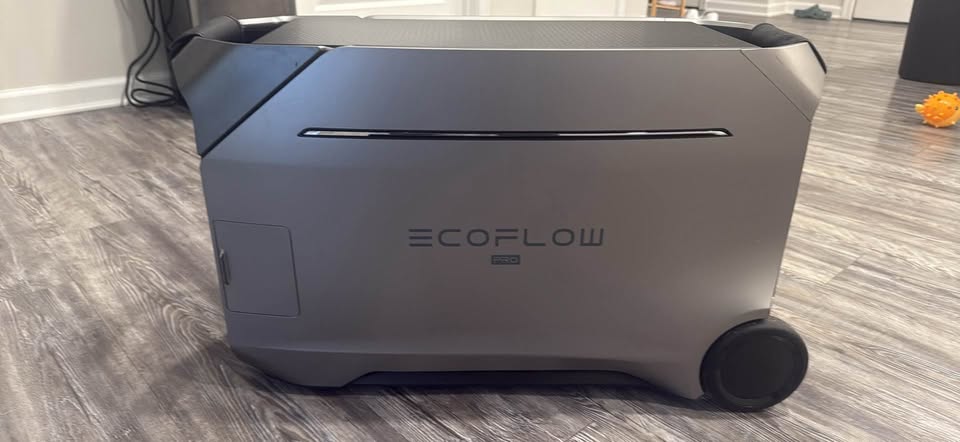
The DELTA Pro 3 is the strongest single-unit choice for households with multiple medical devices, high-draw equipment, or extended outage exposure. At 4,096Wh capacity and 3,600W AC output, it covers everything from CPAP backup to whole-circuit dialysis support, and its UL9540 certification means it can be permanently installed in residential settings without inspector friction. The under-30ms UPS switchover puts it in the same response class as commercial medical UPS units that cost far more.
X-Boost technology pushes peak output to 4,500W surge, which is enough to start large compressor-based oxygen concentrators or run a kitchen full of medical refrigeration alongside therapy devices. The dual-voltage capability (120V/240V) also pairs with a transfer switch for a true whole-home medical circuit, something only the DELTA Pro 3 and a handful of competing flagships can do at this price point.
| Specification | Detail |
|---|---|
| Capacity | 4,096Wh LFP |
| AC Output | 3,600W continuous, 7,200W surge (X-Boost to 4,500W) |
| UPS Switchover | <30ms (medical-grade response) |
| Recharge (0-80%) | ~1.9 hours via AC |
| Solar Input | 1,600W max MPPT |
| Certification | UL9540 residential |
| Weight | 80.5 lbs |
| Warranty | 5 years |

Runtime calculations based on the 4,096Wh capacity show what this kind of headroom translates to in practice. The DELTA Pro 3 is the only unit on this list that delivers multi-day backup for a typical home medical inventory without external battery expansion or solar input. The card grid below shows estimated runtimes for the most common medical devices.
Estimated Runtime, EcoFlow DELTA Pro 3 (4,096Wh)
😴
CPAP (no humidifier)
300+ nights
~10W eco mode
💨
Oxygen Concentrator (5L)
~7 hours
~600W continuous
🛏️
Hospital Bed (electric)
~10 hours
~400W avg draw
💊
Medication Fridge (compact)
~40 hours
~100W avg
🩺
Nebulizer
~20+ hours
~200W avg
* Runtime calculations based on published Wh capacity and typical appliance draws. Actual results vary by device model, settings, and ambient conditions.
Who It’s For
The DELTA Pro 3 makes sense for homes with two or more medical devices running simultaneously, households with high-draw equipment like home dialysis or 5L oxygen concentrators, and anyone in a hurricane or wildfire zone where multi-day outages are not hypothetical. It is also the right pick if a transfer switch installation is on the table, since the dual-voltage support and UL9540 certification clear most local code requirements.
Who Should Skip It
If your medical setup is a single CPAP and a charging station for a hearing aid, the DELTA Pro 3 is overkill. The DELTA 3 Max or Anker SOLIX C1000 deliver the same UPS protection (in EcoFlow’s case) at a fraction of the cost. The 80.5 lb weight also rules it out for travel or for users who need to reposition the unit between rooms.
💤 Best for CPAP and BiPAP: EcoFlow DELTA 3 Max
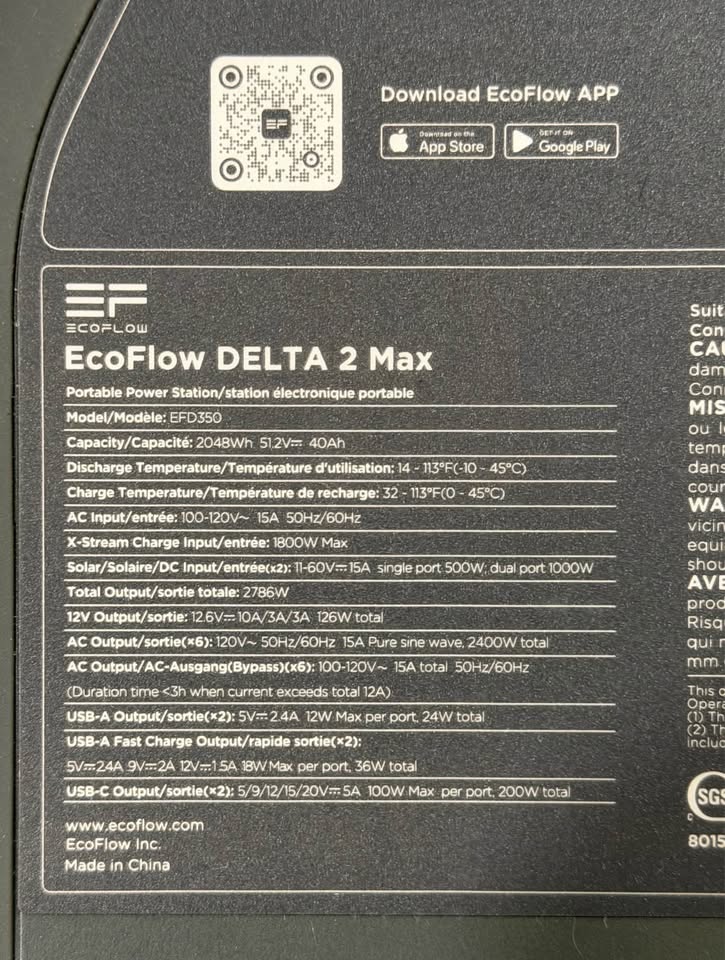

For households whose primary medical concern is overnight CPAP or BiPAP therapy, the DELTA 3 Max is the sharpest fit on the market in 2026. It pairs the same under-30ms UPS function as the DELTA Pro 3 with a much lower price tag, and the 2,048Wh LFP capacity covers approximately 40 nights of CPAP use in eco mode without humidification. That is enough to span any realistic single outage window, with margin.
The unit’s expandability is its second key advantage. With add-on batteries, total capacity scales all the way up to 10kWh, which translates to many months of CPAP backup or many hours of continuous oxygen concentrator operation. For households whose medical needs grow over time, that future-proofing matters.
BiPAP users in particular benefit from the under-30ms UPS, since BiPAP machines tend to be even more sensitive to power interruptions than standard CPAP units. A consistent strength reported across the owner community is that the DELTA 3 Max handles brief grid flickers without triggering therapy reset, and the LFP chemistry rated for 3,000+ cycles holds up to nightly use over many years.
For a deeper breakdown of CPAP-specific power requirements and runtime data across multiple models, our complete CPAP backup power solution walks through the math device by device. BiPAP users should also reference our dedicated BiPAP power solutions guide, which covers the higher-draw differences.
CPAP Machine Backup Power: Complete Solution
Device-specific runtime tables and UPS compatibility for every major CPAP model.
🌬️ Best for Oxygen Concentrators: Anker SOLIX F2000
Oxygen concentrators are the most demanding common medical load in the home. A standard 5L unit draws 300-600W continuously, with startup surge that can briefly hit 1,200W. The Anker SOLIX F2000 delivers 2,400W continuous output and a 4,800W surge, which gives meaningful headroom for the highest-output medical concentrators on the market. More importantly, Anker backs the unit with a 10-year InfiniPower warranty, the longest in the category, which is a genuine reliability standard for life-sustaining equipment.
The 2,048Wh LFP capacity translates to roughly 3-4 hours of runtime on a 500W continuous concentrator draw, accounting for inverter efficiency. That window is short, which is why oxygen-dependent users should pair the F2000 with solar panels, a second unit, or a generator for any planned outage longer than a few hours. The 1,000W solar input on the F2000 means a sunny afternoon can fully recharge the unit while it powers the concentrator, which is the practical workaround for extended events.

The F2000 lacks the under-30ms UPS function of the EcoFlow units, which is a deliberate engineering tradeoff and not a meaningful drawback for oxygen use. Concentrators do not lose therapy progress on a brief power gap the way CPAP machines do. The primary concern for concentrators is sustained high wattage and clean output, both of which the F2000 delivers reliably.
Oxygen Concentrator Backup Power Guide
Concentrators draw 300-600W continuously. Here’s exactly what you need.
For households running both a concentrator and other respiratory equipment, the F2000’s USB-C 100W output handles simultaneous charging of nebulizers, hearing aid chargers, tablets, and medical monitors. That multi-device flexibility is something the F2000 does noticeably better than the comparable EcoFlow DELTA 3 Max, which has fewer high-output USB-C ports.
🏠 Best Mid-Range: Anker SOLIX C1000

The C1000 is the strongest pick under $1,000 for households with moderate medical power needs. 1,056Wh capacity, 1,800W AC output, a 10-year warranty, and a 26.9 lb chassis with an integrated handle make it the most repositionable mid-range unit on this list. It runs a standard CPAP without humidification for approximately 90+ hours, handles a powered hospital bed and nebulizer simultaneously, and recharges to 80% in about 57 minutes.
What makes the C1000 the right mid-range medical pick rather than just a good general-purpose power station? Two things. First, the 10-year InfiniPower warranty matches the F2000’s coverage at a lower price, which is the longest-warranty unit in the under-$1,000 segment. Second, the 1,800W output is enough headroom to run a small electric hospital bed (300-500W during movement) alongside a nebulizer (100-300W) and a CPAP machine simultaneously, which mirrors a realistic in-home care setup.
The C1000 is expandable through Anker’s BP1000 expansion battery, which doubles total capacity to roughly 2,100Wh. That is the practical upgrade path for households that start with the C1000 and later add a second medical device. Where the data shows a clear advantage over the Jackery 1000 v2 is in output ceiling: 1,800W versus 1,500W, plus surge capacity for compressor-driven equipment.
Limitations to keep in mind: the C1000 lacks a true under-30ms UPS function, so it is not the best fit if your primary use case is a sleep-disordered-breathing patient with a hyper-sensitive CPAP. For that profile, the EcoFlow DELTA 3 Max is the better match despite the shorter warranty.
🎒 Best Portable and Budget: Jackery Explorer 1000 v2
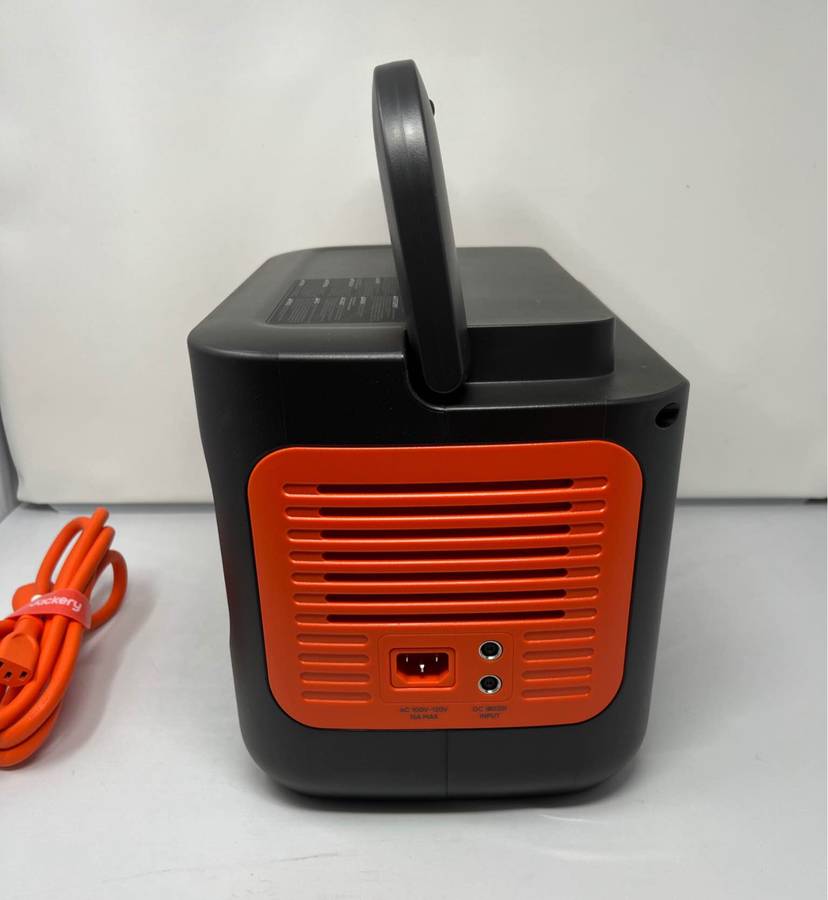

For users who need backup power that travels with them or who have a tight budget, the Jackery Explorer 1000 v2 is the strongest low-cost option. 1,070Wh LFP capacity, 1,500W AC output, about 23.8 lbs, and operation under 30dB make it the only unit on this list quiet enough to run on a nightstand without disrupting sleep. It is not a flying battery, though: at 1,070Wh it is far above the 100Wh carry-on limit (160Wh with airline approval), so it suits road trips, RVs and hotel stays reached by car.
Runtime calculations based on the 1,070Wh capacity show approximately 90+ hours of CPAP use in eco mode (10W draw), which is enough for nearly two weeks of nightly therapy on a single charge. For travel use, that translates to “one charge per trip” for nearly any week-long itinerary. The LFP battery is rated for 2,000+ cycles, which holds up to nightly cycling for several years before any meaningful capacity degradation.
Medical Device Power for Travel
FAA rules, hotel use, RV setups, and car-cabin charging for medical patients.
The Jackery’s 1,500W output handles CPAP, BiPAP, nebulizers, and hearing aid chargers comfortably. It does not have the headroom to run a 5L oxygen concentrator drawing 600W+ for any extended period, and it lacks under-30ms UPS function, which means it is not the right choice for primary in-home medical backup if your priority is therapy continuity. But as a second unit dedicated to travel, or as a primary unit for users with CPAP-only medical needs and a tight budget, it delivers exceptional value.
Use case fit is what makes this pick: at about 23.8 lbs, it is the easiest unit on this list to move between home, car and hotel room. For nebulizer users and others who need portable options, our nebulizer power backup solutions guide covers the same lightweight philosophy across the broader category.
How to Size Your Backup Power for Medical Equipment
Sizing is where most medical backup decisions go wrong. A 1,000Wh power station is plenty for one type of patient and dangerously inadequate for another, depending entirely on the medical device wattage and the minimum acceptable backup window. The four-step process below produces a defensible answer for any home medical setup.
Step 1: Find Your Device’s Wattage
Start with the nameplate label on each medical device, usually on the bottom or back. The relevant numbers are the running wattage (sometimes labeled “input power”) and the surge wattage if listed. If only volts and amps are shown, multiply them together to get watts (V × A = W). For CPAP and BiPAP machines, also note whether you use the heated humidifier, since that single feature roughly triples power draw from 10W to 50-60W.
Step 2: Determine Your Minimum Hours of Backup
How long do you actually need to run on battery? In most U.S. metro areas, average outage duration is 2-4 hours, but storm events routinely produce 24-72 hour outages. For life-sustaining equipment, plan for the longest realistic outage in your region, not the average. Patients on home dialysis or full-time oxygen therapy should plan for 48+ hours minimum. CPAP-dependent users typically plan for one to two nights of coverage.
Step 3: Apply the Runtime Formula
Multiply your device wattage by the hours of backup you need, then add 15% for inverter efficiency loss. The result is your minimum capacity in watt-hours.
Example: A 5L oxygen concentrator draws 500W continuously. You need 6 hours of backup. (500W × 6 hours) × 1.15 = 3,450Wh minimum. Only the DELTA Pro 3 (4,096Wh) meets this requirement out of the box.
Example: A CPAP draws 10W in eco mode. You need 2 nights (16 hours total). (10W × 16) × 1.15 = 184Wh minimum. Any unit on this list is sufficient.
Step 4: Add a Safety Margin
Round up by 25-30% from the calculated minimum. Battery capacity degrades over time (LFP retains 80% capacity after 3,000 cycles), and you may add medical devices later. A 30% margin protects against both factors and against the simple reality that real-world wattage often exceeds nameplate ratings.
Calculate Your Medical Device Runtime
Plug in your specific wattage and hours, get an exact capacity recommendation.
Not sure which power station will work with your specific medical device? Our check device compatibility tool matches device model numbers against confirmed power station compatibility data, including UPS function presence and surge handling.
Respiratory Devices (CPAP, BiPAP, Oxygen, Nebulizer)
Respiratory equipment is the most common category of home medical device that runs on backup power, and the requirements vary substantially within the category. CPAP machines draw 10-25W in eco mode and 50-60W with a heated humidifier, and they are highly sensitive to power interruptions. The under-30ms UPS function on the EcoFlow DELTA 3 Max is the strongest single feature for CPAP backup. For a full breakdown of CPAP-specific runtime data and UPS compatibility, see our complete CPAP backup power solution.
BiPAP machines draw similar wattage to CPAP but with steeper inhale/exhale pressure transitions, which means surge handling matters more. BiPAP users face higher peak draws than standard CPAP, and our BiPAP power solutions guide covers the differences in detail.
Oxygen concentrators are at the high-draw end of the respiratory category. A standard 5L unit pulls 300-600W continuously, and pulse-dose units can spike higher during demand cycles. Concentrators draw 300-600W continuously, and our oxygen concentrator backup power guide covers exactly what you need depending on flow rate and duty cycle.
Nebulizers sit at the lighter end: 100-300W during a 10-minute treatment cycle, run two to four times daily for most patients. Any unit on this list handles nebulizer use easily, alongside nebulizer users who need portable options, covered fully in our nebulizer power backup solutions guide.
Critical In-Home Devices (Dialysis, Hospital Beds, Medication Fridges)
Home dialysis is the most demanding load any household can run on backup power. A peritoneal dialysis cycler draws 200-300W continuously over an 8-10 hour overnight session, while hemodialysis units can pull 500W+ during active treatment. Home dialysis users have the highest power demands of any common medical setup. Our dedicated home dialysis backup power article covers sizing guidance, machine-specific requirements, and the case for dual-unit setups.
Adjustable electric hospital beds pull 300-500W during movement cycles and effectively zero in standby. Total daily energy consumption is usually under 100Wh, even with frequent positional adjustments. Our hospital bed backup power guide covers compatible power stations and the question of whether to put the bed on a separate UPS circuit.
Insulin-dependent patients face a different challenge: not power output, but temperature stability. Insulin must stay between 36 and 46°F, and even brief warming events compromise medication effectiveness. Our medication fridge backup power guide addresses temperature-critical storage, including which compact medical refrigerators draw the least power and pair best with the C1000 or DELTA 3 Max for multi-day coverage.
Standard compact refrigerators follow the same logic as medical fridges, covered in our refrigerator backup power options guide for households that need both medication and food cold storage on backup.
Match Your Medical Equipment to the Right Power Station
💤 CPAP / BiPAP Users
- Need UPS function (<30ms) to prevent therapy reset
- Best picks: EcoFlow DELTA 3 Max, DELTA Pro 3
- 1,000Wh+ covers 60-90 nights in eco mode
🌬️ Oxygen Concentrator Users
- Require 2,000W+ AC output for 5L concentrators
- Best picks: Anker SOLIX F2000, DELTA Pro 3
- 10-year warranty (Anker) is a critical reliability standard
🏠 Home Caregivers (general)
- Nebulizer, hospital bed, medication fridge
- Best picks: Anker SOLIX C1000, Jackery 1000 v2
- 1,000Wh covers most home care scenarios
🎒 Travel / Portable Need
- Road trips and hotel stays, <30dB silent operation
- Best pick: Jackery Explorer 1000 v2 (about 23.8 lbs)
- Suitable for hotel use, car, RV travel with medical devices
Travel and Mobility Considerations
Medical patients who travel face a layered set of constraints: airline lithium battery limits (100Wh per battery in carry-on, 160Wh with airline approval), hotel outlet reliability, and the practical question of weight. Every power station on this list exceeds those limits, the Jackery Explorer 1000 v2 included, so for flights a dedicated CPAP battery under 100Wh is the practical option. For road travel, the 1000 v2’s weight of about 23.8 lbs makes it the top choice for medical device power for travel.
Road travel is more flexible. A vehicle’s 12V outlet can charge most power stations during the drive, which means a CPAP user on a multi-day road trip can essentially refill the battery between hotel stops. RV travelers benefit from solar-pairing options on all units listed here, which let the power station serve double duty as the RV’s overnight medical backup and a daytime topup source.
Emergency Planning for Medical Patients

For patients on life-sustaining equipment, multi-day outage planning is not optional. It is a safety necessity. Multi-day events caused by hurricanes, ice storms, wildfires, and grid failures regularly exceed 72 hours, and any household running CPAP, oxygen, or dialysis needs a written plan that covers the full window. Proactive preparation is critical, and our complete guide to emergency medical power planning covers multi-day outage strategies, redundancy planning, and family coordination.
Storm-prone regions (Gulf Coast, southeastern U.S., wildfire-exposed western states) need a specialized prep checklist. Our published playbook for hurricane preparedness for medical patients covers utility registration, shelter-in-place protocols, and pre-storm equipment staging.
Beyond equipment, two administrative steps make a real difference during outages. First, contact your utility provider and request enrollment in the Medical Baseline or Life Support Registry, which flags your account for priority restoration. Second, register with local emergency services through their special-needs registry, which prioritizes welfare checks if shelter relocation becomes necessary. The medical baseline electricity rate programs page covers federal-level utility coordination for medically dependent households.
⚠️ Important: A power station is one layer of redundancy, not a complete plan. Patients on continuous oxygen, home dialysis, or ventilator support should also have a relocation plan to a hospital or shelter for outages exceeding the unit’s expected runtime.
Frequently Asked Questions
What is the most important feature in a power station for medical equipment?
The UPS (Uninterruptible Power Supply) function is the single most critical feature for CPAP, BiPAP, and other therapy devices. A standard power station cuts power for 20-500ms when switching from grid to battery. UPS-equipped models like the EcoFlow DELTA series switch in under 30ms, which is below the threshold that causes most medical device resets or therapy interruptions. For oxygen concentrators and dialysis machines, output wattage and total capacity take precedence over UPS since those devices are typically not sensitive to brief switchover delays.
How long will a power station run a CPAP machine?
Runtime depends on CPAP mode and humidifier use. In eco mode without a heated humidifier, a standard CPAP draws approximately 10-25W. A 1,056Wh power station (Anker SOLIX C1000) provides approximately 40-80 hours in those conditions. With full humidification at 50-60W, that drops to 17-20 hours. The EcoFlow DELTA Pro 3 at 4,096Wh extends those figures proportionally. Use our runtime calculator to enter your specific device wattage.
Can a portable power station run a home oxygen concentrator?
Yes, but the power station must output at least 600W continuously for a standard 5-liter concentrator, and account for startup surge (up to 1,200W on some models). The Anker SOLIX F2000 (2,400W output) and EcoFlow DELTA Pro 3 (3,600W) both handle these draws comfortably. A 2,048Wh unit running a 600W concentrator provides approximately 2.7-3 hours of runtime, accounting for inverter efficiency. For extended outages, a solar panel input or generator pairing is recommended.
Do I need a UPS function for an oxygen concentrator?
Generally no. Oxygen concentrators do not lose therapy progress on a power gap the way CPAP machines do. The primary concern for concentrators is sustained high wattage output, not switchover speed. That said, sudden power interruption can stress compressor motors. A UPS function adds protection against unnecessary wear, but it is not the primary selection criterion for concentrator backup.
What wattage power station do I need for a hospital bed?
Adjustable electric hospital beds typically draw 300-500W during movement cycles, with standby draw near 0W. A power station with at least 1,000W AC output handles most electric hospital beds. The Anker SOLIX C1000 (1,800W) and Jackery Explorer 1000 v2 (1,500W) both exceed this requirement with headroom. Total runtime depends on how frequently the bed is adjusted: occasional adjustments over 24 hours consume far less than continuous operation.
How do I register my medical device with my utility company for priority power restoration?
Most U.S. utilities maintain a Medical Baseline or Life Support Registry that flags accounts with medically dependent residents for priority restoration after outages. Requirements and benefits vary by state. Patients or caregivers should contact their utility provider directly and request enrollment in their medical baseline or life support program. This does not guarantee uninterrupted power but can prioritize restoration and sometimes provide rate discounts.
Conclusion: Choosing the Right Medical Backup Power Station
The right pick depends on three things: which medical devices you run, how long you need to keep them running, and how sensitive each device is to power transitions. For most households with serious medical needs and the budget to match, the EcoFlow DELTA Pro 3 covers every scenario in this guide with headroom to spare. For CPAP-focused households, the DELTA 3 Max delivers the same UPS protection at a much lower price. Oxygen-dependent patients should prioritize the Anker SOLIX F2000 for its 10-year warranty and 2,400W output. Mid-range general home care fits the C1000, and travel-focused users will be best served by the Jackery Explorer 1000 v2.
Before making the final decision, run your specific device wattages through the sizing formula in this guide, and confirm UPS compatibility for any sleep therapy equipment. Backup power is one of the few household purchases where overspending modestly is far better than underspending, since the cost of a single missed therapy night or a spoiled vial of insulin can dwarf the price difference between picks.
EcoFlow DELTA Pro 3
$2,799
Best overall medical backup power station 2026
Price checked automatically on EcoFlow’s US store, free shipping available
Originally published: April 30, 2026