
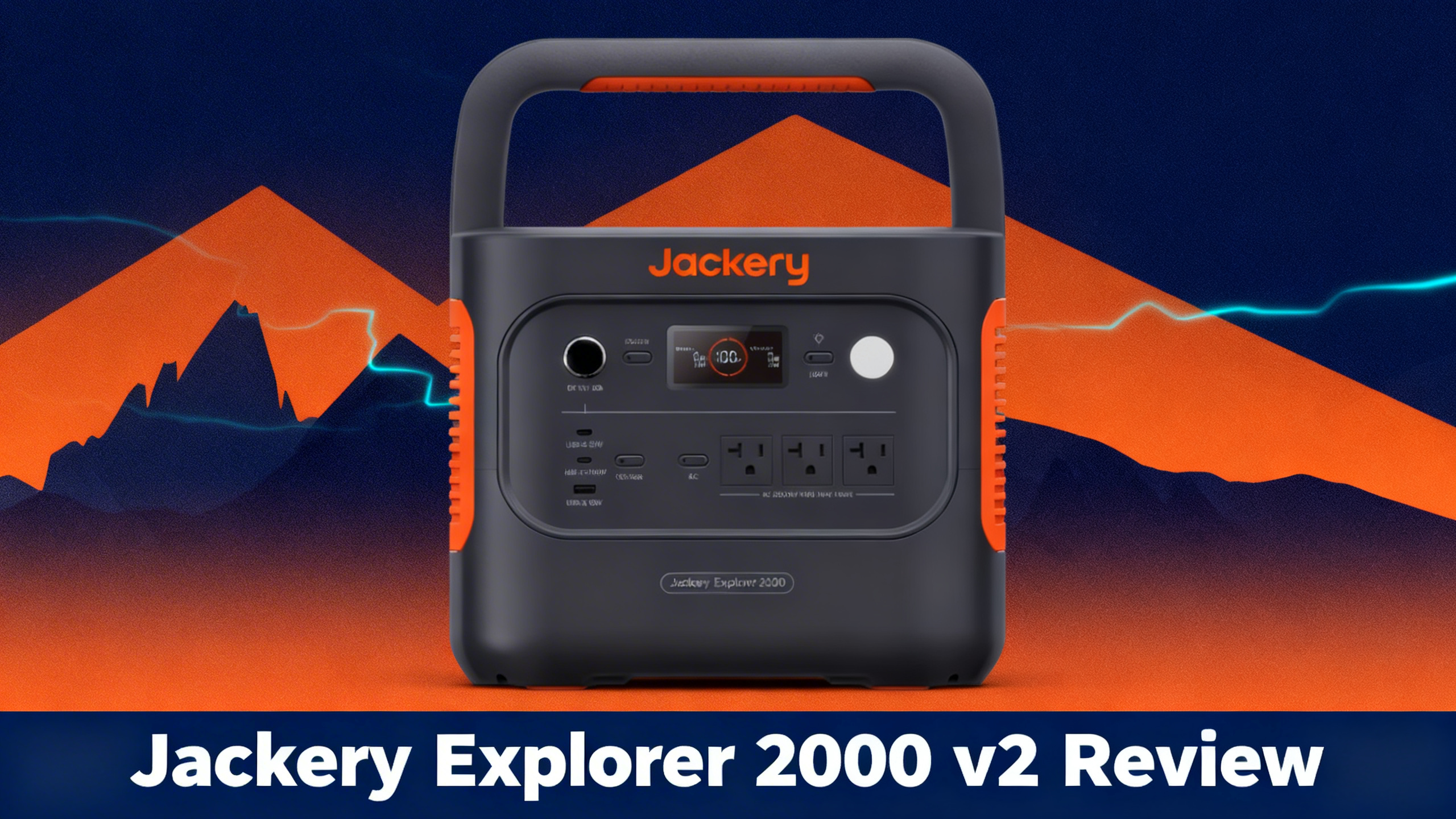
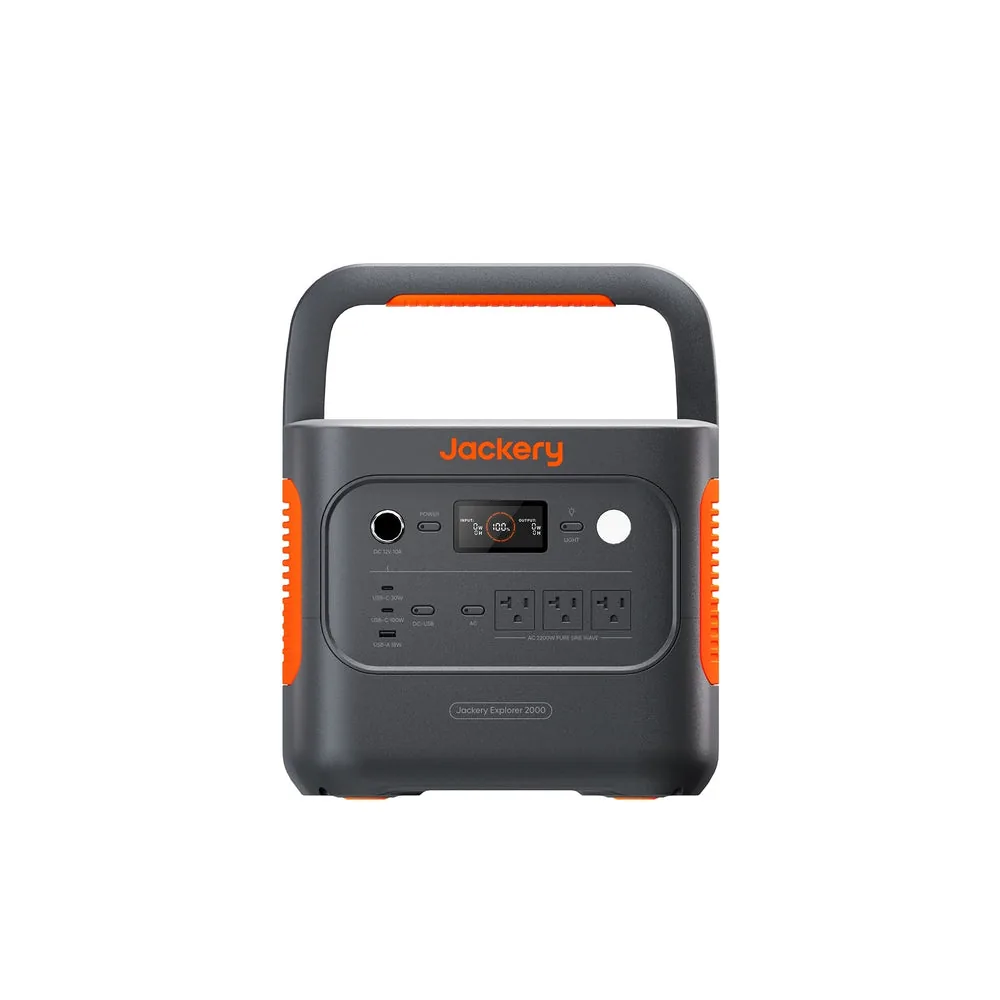
Looking for a compact 2kWh power station that won’t drain your savings along with your devices? The Jackery Explorer 2000 v2 arrived in 2025 as the brand’s most cost-effective large-capacity unit to date, priced at $799 against an original MSRP of $1,499. The Explorer 2000 v2 sits at the core of the Jackery 2025 lineup, positioned as the most cost-effective 2kWh station the brand has released to date.
But “cheaper” doesn’t always mean “better.” The real question is whether Jackery cut corners or made genuinely smart engineering choices to hit that price point. Here’s what the spec data and real-world performance reports tell us.
Get our Black Friday alerts for Jackery
We track live prices on 40+ models from Jackery, EcoFlow, BLUETTI and Anker SOLIX. When a deal beats the lowest price we've recorded, you'll hear from us. During Black Friday week, one short recap a day at most.
Unsubscribe in one click. We may earn a commission when you buy through our links, at no extra cost to you. Privacy Policy
Real-World Look: The Jackery Explorer 2000 v2 in Use
Studio renders only tell part of the story. Here is the Jackery Explorer 2000 v2 as it actually looks in a real owner’s hands, away from the polished marketing shots.
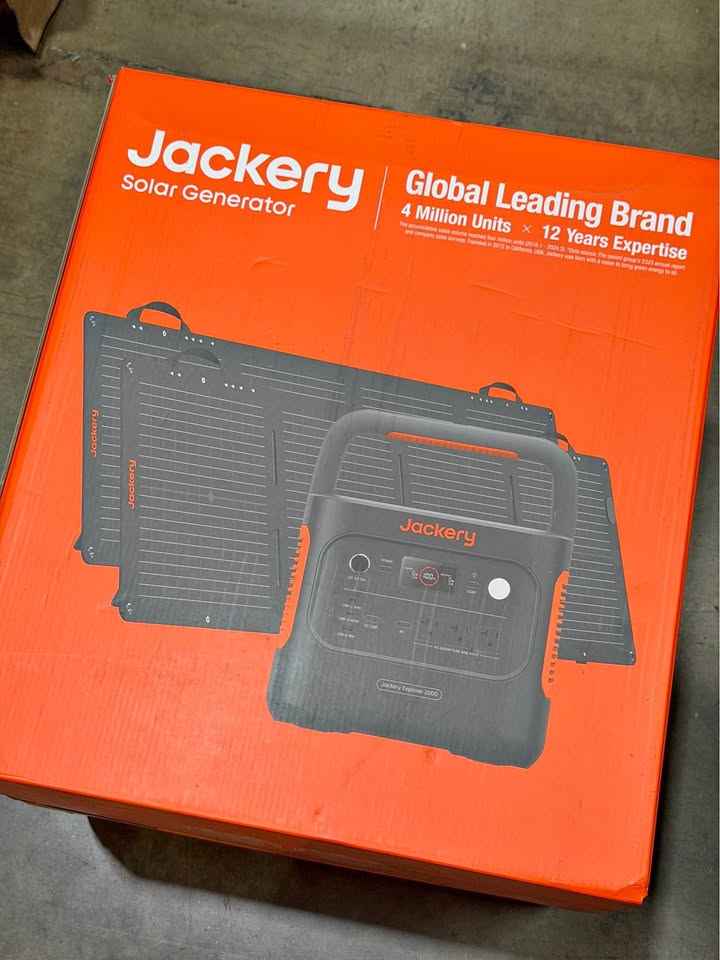
Real-world photos of the Jackery Explorer 2000 v2.
Jackery Explorer 2000 v2: Overall Rating
8.4/10
“The most efficient 2kWh Jackery ever built”
Performance 8.5/10
Value for Money 9.0/10
Battery Technology 8.5/10
Charging Speed 9.0/10
Portability 7.5/10
Expandability 6.5/10
Jackery Explorer 2000 v2
$799 $1,499
- 2042Wh LFP battery, 2200W output (4400W surge)
- 0 to 100% in ~1.7 hours AC recharge
- 39.5 lb, under 30dB: silent and indoor-safe
Quick Verdict: What the Data Says About the Explorer 2000 v2
At $799 for a 2,042Wh LiFePO4 battery with 2,200W continuous output and a 1.7-hour recharge window, the Explorer 2000 v2 delivers a specification set that would have cost well over $1,000 just two years ago. Performance data confirms this is a genuine step forward for the Jackery lineup, not a rebadged compromise.
The data points to three clear strengths: exceptional charge speed, solid LFP battery longevity (3,000+ cycles), and a compact 39.5 lb form factor that makes it accessible for home backup scenarios where larger units are impractical. The key limitation is fixed capacity with no expandability, meaning this unit has a hard ceiling at 2042Wh.
The 8.4/10 overall score reflects strong value-for-money and charging performance, tempered by the absence of expandability and the 2200W output cap that excludes high-draw appliances.
Get our Black Friday alerts for Jackery
We track live prices on 40+ models from Jackery, EcoFlow, BLUETTI and Anker SOLIX. When a deal beats the lowest price we've recorded, you'll hear from us. During Black Friday week, one short recap a day at most.
Unsubscribe in one click. We may earn a commission when you buy through our links, at no extra cost to you. Privacy Policy
Explorer 2000 v2 Specifications at a Glance
Before diving into how those specs translate to real-world use, here’s the complete technical picture for the Explorer 2000 v2:
Full technical documentation is available on the official Explorer 2000 v2 product page.
Battery Technology: Why LFP Matters
The choice of LiFePO4 chemistry is the single most important specification decision Jackery made with the 2000 v2. Understanding what it means in practice helps explain both the unit’s strengths and its price competitiveness.

LiFePO₄ vs NMC: Safety and Longevity Compared
LiFePO4 (lithium iron phosphate) and NMC (nickel manganese cobalt) are the two dominant lithium battery chemistries in portable power stations today. The fundamental difference comes down to thermal stability. LFP cells operate at lower temperatures and resist thermal runaway, the runaway heating failure mode that can affect NMC cells under stress. Independent research on LiFePO₄ battery chemistry confirms this thermal advantage translates directly to indoor safety and long-term reliability.
The tradeoff is energy density: LFP packs less energy per kilogram than NMC. That’s why the 2000 v2 weighs 39.5 lb at 2042Wh, rather than the sub-30 lb range you’d see from a smaller NMC unit at similar capacity. For home backup use cases, that weight premium is almost always worth accepting.
What 3,000 Cycles Means for Long-Term Ownership
Cycle life data shows the Explorer 2000 v2 battery is rated for 3,000+ full charge cycles before dropping to 80% of original capacity. At one cycle per day, that’s over eight years of daily use before any meaningful degradation. Even at every-other-day use, that extends past 16 years.
Charge retention data adds another dimension: approximately 95% capacity remains after 12 months of storage without use. This matters for emergency preparedness users who may charge the unit and leave it sitting for extended periods. No quarterly maintenance charging required.
What Can the Explorer 2000 v2 Power?
Runtime calculations based on the 2042Wh capacity at 85% efficiency give a clear picture of what you can realistically expect. The 85% efficiency factor accounts for inverter conversion losses, which is standard across the industry.
What Can the 2000 v2 Power? (2042Wh @ 85% efficiency)
❄️
Mini Fridge
~28 hrs
60W avg draw
📶
WiFi Router
~170 hrs
10W avg draw
💡
LED Lights (x5)
~85 hrs
20W avg draw
💻
Laptop (15″)
~34 hrs
50W avg draw
☕
Coffee Maker
~14 hrs
120W avg draw
📱
Phone Charges
~170x
12W per charge
Runtime calculations based on 2042Wh capacity at 85% efficiency. Actual results vary by temperature and load.
The 28-hour mini-fridge runtime stands out as the most practical data point for home backup planning. A full-day power outage is well within range with capacity to spare. For home office scenarios, running a router (170 hours) alongside a 15″ laptop (34 hours) simultaneously would still cover 20+ hours of combined use.
Keep in mind that high-draw appliances change the math significantly. A microwave at 1,000W draws capacity roughly 15x faster than a laptop. The 2200W continuous rating means the 2000 v2 handles microwaves, coffee makers, and standard refrigerators without issue. Large window AC units (typically 1,400-1,800W) fall within range, though continuous runtime would be measured in hours rather than days.

For custom appliance combinations, use the interactive runtime calculator to generate a precise estimate based on your actual wattage draw.
Charging the Explorer 2000 v2: Speed Analysis
Charging speed is where the 2000 v2 pulls ahead of most units in its class. Published charge data consistently positions this as one of the fastest-charging 2kWh stations available under $1,000.
AC Wall Charging: The 1.7-Hour Sprint
Published specifications confirm a full 0-to-100% AC charge in approximately 1.7 hours. That’s under two hours for a 2042Wh battery, which is fast enough to meaningfully change how you use the unit. If an outage ends, you can have the 2000 v2 back to full before bedtime the same day. This speed is achieved via Jackery’s Emergency Super Charge technology, which draws maximum input wattage from the wall connection.
Solar Input: How Much Panel Do You Need?
Solar charging timelines depend directly on panel wattage and sunlight conditions. Two SolarSaga 200W panels (400W combined input) achieve a full charge in approximately 5-6 hours of direct sunlight. A single 200W panel extends that to 10-12 hours. The 2000 v2 is available as part of the Jackery Solar Generator 2000 v2 bundle, which pairs the station with two SolarSaga 200W panels for a complete off-grid setup.
Car Charging and Dual-Input Scenarios
Car port charging provides a useful supplemental option on the road, though at lower wattage than wall charging. More practical for most users is the dual-input capability: the 2000 v2 supports simultaneous AC and solar input, reducing total recharge time when both sources are available. For off-grid cabins or van builds with rooftop solar, this configuration maximizes daily recovery cycles.
Ports & Connectivity
The Explorer 2000 v2 offers a comprehensive port layout suited for running multiple devices simultaneously during an outage or off-grid session.


The 100W USB-C PD ports are particularly useful for laptop charging, delivering enough power to maintain charge while running even demanding workloads. Running four AC outlets simultaneously is feasible as long as the combined wattage stays under the 2200W continuous threshold.
Design & Build Quality
At 39.5 lb (17.9 kg), the Explorer 2000 v2 sits at the manageable end of the 2kWh category. For reference, competing units at similar capacity often land between 44 and 55 lb. That weight reduction is attributed to the compact LFP cell configuration and optimized chassis design, which Jackery reports as approximately 40% smaller volume than the outgoing 2000 Pro.

Noise data confirms operation under 30dB, which is quieter than a typical household conversation (around 50-60dB). This spec matters for users running the unit in living areas, bedrooms, or shared spaces during outages, where generator-level noise (65-75dB) would be disruptive. The LCD display provides clear state-of-charge readout, input/output wattage, and estimated runtime or time to full.
The carrying handle design provides a single-point grip adequate for short distances. For longer moves across a home, two-person carry is more comfortable given the weight class.
Real-World Performance: What the Data Shows
Analysis of owner feedback patterns across verified purchase sources reveals consistent themes. The 95% charge retention figure aligns with real-world storage reports, with owners noting the unit holds charge reliably through extended non-use periods without attention. This removes one of the main operational overhead concerns associated with emergency backup units.
The sub-20ms UPS switchover performance shows up consistently in home office use cases. Owner data reports confirm computers, routers, and monitors stay online through switching events with no observable disruption. For anyone working from home during outage-prone seasons, this is a meaningful functional difference from standard power stations.
A recurring observation in owner reports concerns temperature sensitivity during extreme cold: LFP chemistry, like all lithium variants, delivers reduced effective capacity below 32°F. For outdoor winter use or unheated storage spaces, plan for 10-20% reduced runtime in freezing conditions. Indoor home backup scenarios are unaffected.
Jackery for Home Backup: Complete Planning Guide
Circuit load calculations, transfer switch options, and sizing your backup power setup.
For a deeper look at how the 2000 v2 fits into larger power planning scenarios, the guide on home backup use cases covers circuit load calculations and compatible transfer switch options.
How the 2000 v2 Compares to Its Predecessor
The outgoing Explorer 2000 Pro weighed in at 43 lb and carried a higher price tag, making the 2000 v2’s 39.5 lb frame and $799 price point a meaningful generational step. The 2000 Pro used NMC battery chemistry rather than LFP, which limits its cycle rating to approximately 500 cycles vs the 2000 v2’s 3,000+ cycles.
The upgrade case is strong across every category: lower price, better chemistry, higher cycle life, lighter weight, faster recharge. The 2000 Pro offered a 2160Wh capacity slight edge over the 2000 v2’s 2042Wh, but that difference is negligible in practice.
Who Should Buy the Explorer 2000 v2?
The spec profile of the Explorer 2000 v2 points clearly to a specific buyer. This is a home backup and light mobility power station, optimized for users who want reliable emergency power in a compact, affordable package.
Is the Explorer 2000 v2 Right for You?
✅ Buy this if…
- You want a 2kWh LFP station under $800
- You need fast emergency recharge (under 2 hours)
- You power a home office or small apartment during outages
- Noise and indoor safety matter (under 30dB operation)
- You value long battery life (10 years at daily use)
❌ Skip this if…
- You need expandable capacity beyond 2042Wh
- You want to run a full refrigerator 24/7 for multiple days
- Your appliances require more than 2200W continuous power
- You need EV charging or whole-home backup capability
Buyers torn between the two flagship 2kWh models should see how it compares to the 2000 Plus before deciding, as expandability and output power differ significantly. The 2000 Plus supports capacity expansion to 24kWh and outputs up to 6,000W, making it a fundamentally different product despite the similar naming.
Jackery 2000 Plus vs 2000 v2: Which Should You Buy?
Side-by-side comparison covering output, expandability, price, and use case fit.
Final Verdict
The Explorer 2000 v2 earns an 8.4/10 based on a combination of exceptional value-for-money, class-leading charge speed, and solid LFP battery fundamentals. At $799 for 2042Wh of LFP capacity with a 1.7-hour recharge window, performance data indicates this is one of the strongest specifications available in the under-$800 category.
The limitations are real but predictable: no expandability means you’re locked at 2042Wh, and the 2200W output cap excludes heavy draw appliances. Users requiring whole-home backup capability or multi-day autonomy for larger loads should look at the Jackery 2000 Plus or higher-capacity platforms.
For the core use case (reliable home backup for a home office, essentials, and appliances under 2200W), the data points to a strong buy recommendation at current pricing. The home backup use cases guide covers how to integrate this unit into a broader power plan for outage preparedness.
Jackery Explorer 2000 v2
$799
Best compact 2kWh LFP station under $800
Price verified April 2026. Free shipping available.
Frequently Asked Questions
How long does the Jackery Explorer 2000 v2 take to charge?
Published specifications confirm AC wall charging brings the Explorer 2000 v2 from 0 to 100% in approximately 1.7 hours at full power input. Solar charging time depends on panel wattage: two SolarSaga 200W panels (400W combined) achieve a full charge in approximately 5-6 hours of direct sunlight. Dual-input charging (AC and solar simultaneously) is supported and reduces total recharge time.
What appliances can the Jackery Explorer 2000 v2 run?
Runtime calculations based on the 2042Wh capacity at 85% efficiency show the unit can power a mini-fridge (60W) for approximately 28 hours, a WiFi router (10W) for over 170 hours, and a coffee maker (1,000W) for roughly 1.7 hours. The 2200W continuous output handles most household appliances including refrigerators, microwaves, and coffee makers. High-draw items above 2200W, such as large air conditioners or electric water heaters, exceed the unit’s rated output.
Is the Jackery Explorer 2000 v2 worth buying over the 2000 Plus?
The two models serve different use cases. Published specifications show the 2000 v2 is lighter (39.5 lb vs ~48 lb), cheaper ($799 vs $899), and charges faster (1.7h vs 2h). The 2000 Plus offers expandable capacity up to 24kWh and higher output (6000W vs 2200W). The 2000 v2 is the better choice for home backup and mobility. The 2000 Plus is better suited for RV living or large-scale off-grid needs.
How long will the Jackery Explorer 2000 v2 battery last?
The LiFePO4 (LFP) battery chemistry used in the 2000 v2 is rated for 3,000+ charge cycles to 80% of original capacity. At one full cycle per day, that translates to over 8 years of daily use. Charge retention data shows approximately 95% capacity retention after 12 months of storage without use, eliminating the need for maintenance charging.
Does the Jackery Explorer 2000 v2 work as a UPS?
Published specifications confirm the Explorer 2000 v2 features a sub-20ms switchover time during a power outage. This qualifies it as a functional UPS (Uninterruptible Power Supply) for sensitive electronics including routers, computers, and medical devices. Most standard UPS units switch within 20ms, making the 2000 v2 equivalent in practical terms for typical home office and electronics protection scenarios.
Originally published: April 15, 2026