
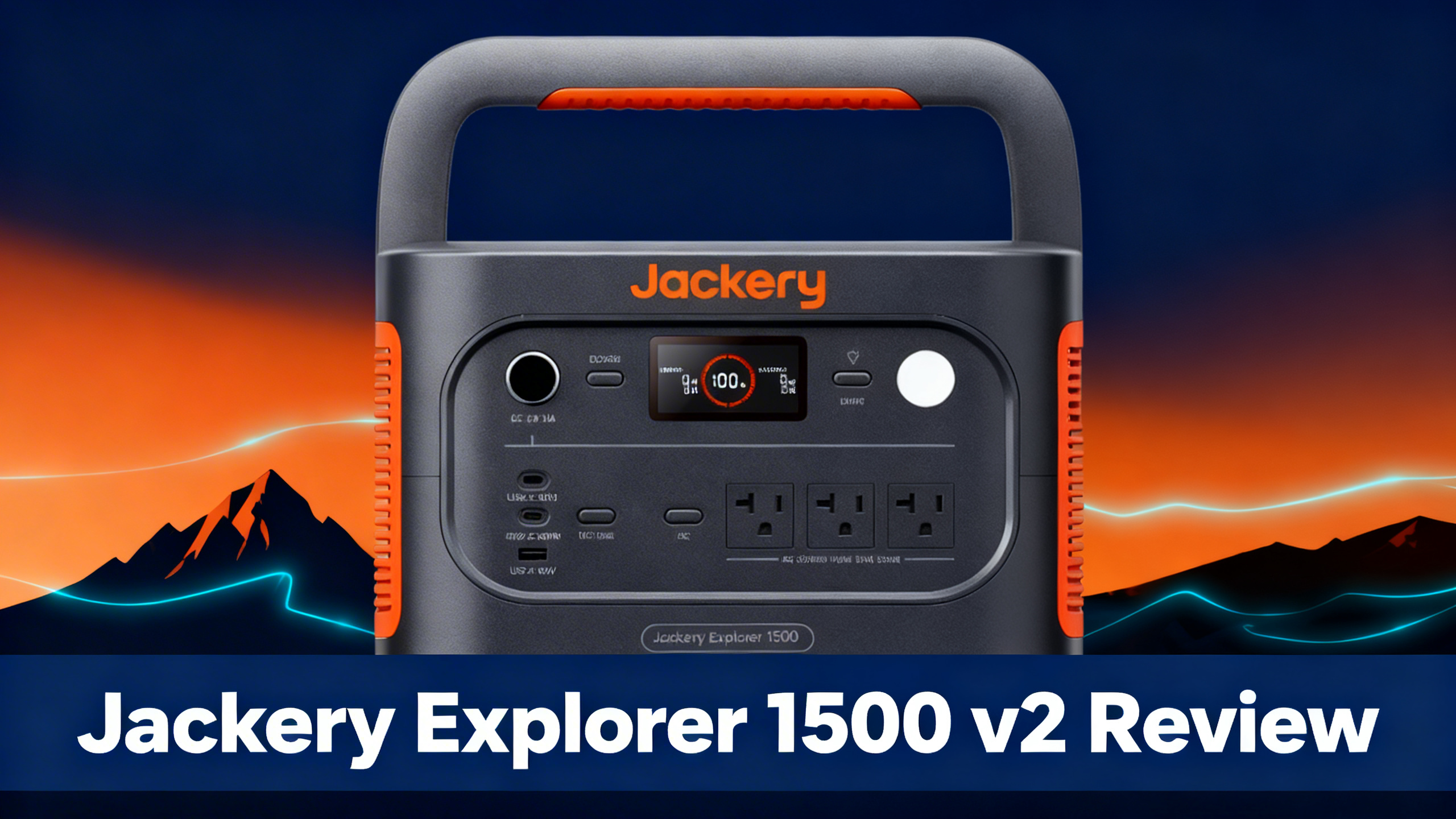
Looking for a 1.5kWh power station that doesn’t ask you to choose between price and performance? The Jackery Explorer 1500 v2 launched in 2025 with a specific claim: the lowest cost per watt-hour in its class, a 64-minute wall charge, and LiFePO4 chemistry that most competitors charge a premium for. At $699 (down from $999), the data case for it is compelling. But does the spec sheet hold up under scrutiny?
The 1500 v2 sits between the Explorer 1000 v2 and the 2000 v2 in Jackery’s 2025 refresh lineup. It’s aimed squarely at van lifers, weekend campers, and light home backup users who need real 1.5kWh capacity without paying for ruggedness features they’ll never use. The 1500 v2 is part of Jackery’s 2025 refresh; for an overview of all Jackery new models, the complete lineup guide covers each tier.
Here’s what the performance data, verified specifications, and owner-reported results tell us about whether this unit earns its place at $699.

Shopping around Black Friday? Our Jackery Black Friday sale page tracks live prices on the current lineup, including the Explorer 1500 Ultra, next to last year’s Black Friday lows.
Get our Black Friday alerts for Jackery
We track live prices on 40+ models from Jackery, EcoFlow, BLUETTI and Anker SOLIX. When a deal beats the lowest price we've recorded, you'll hear from us. During Black Friday week, one short recap a day at most.
Unsubscribe in one click. We may earn a commission when you buy through our links, at no extra cost to you. Privacy Policy
Real-World Look: The Jackery Explorer 1500 in Use
Studio renders only tell part of the story. Here is the Jackery Explorer 1500 as it actually looks in a real owner’s hands, away from the polished marketing shots.
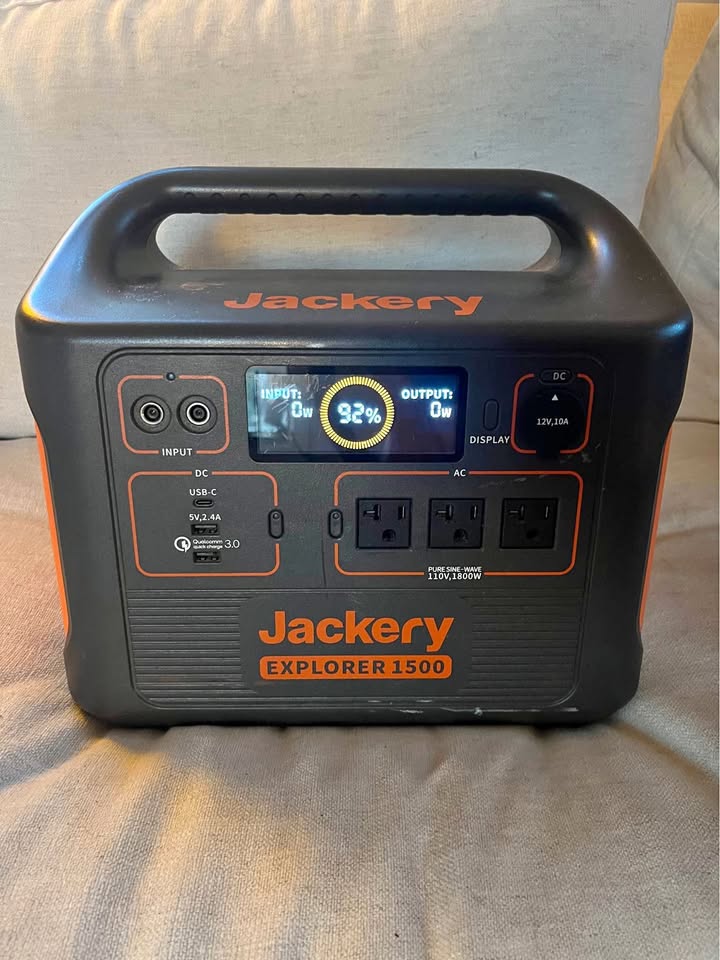
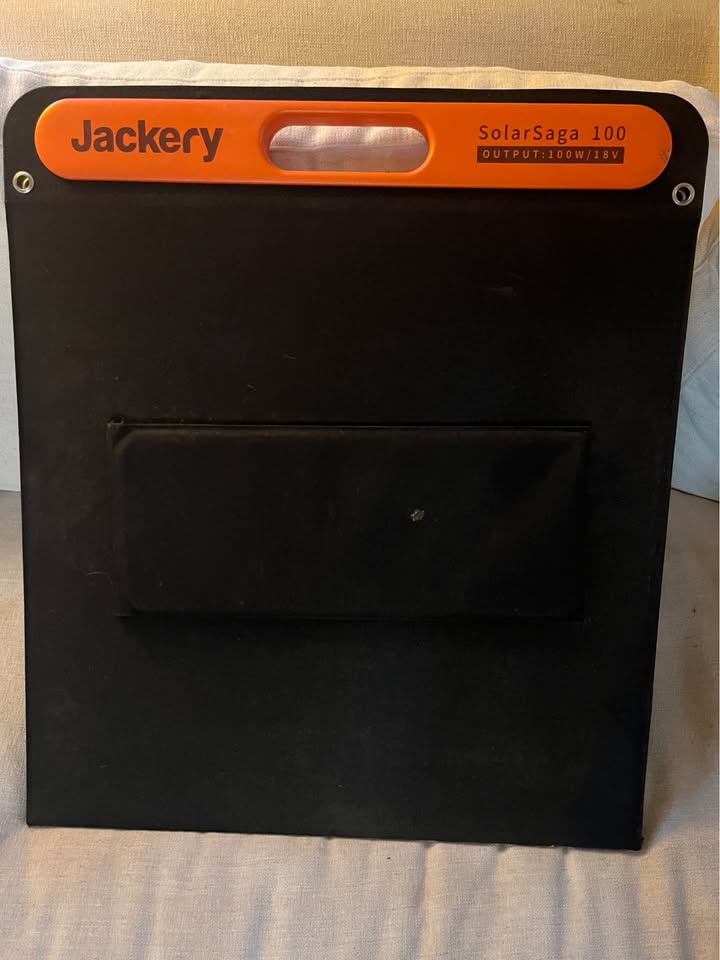
Real-world photos of the Jackery Explorer 1500.
Jackery Explorer 1500 v2
$699 $999
- 1536Wh LFP | 2000W output (4000W surge)
- 64-minute fast charge (0 to 100%)
- 6,000+ cycle lifespan, 10-year battery life
Price verified April 2026. Free shipping available
Quick Specs: What You Get for $699
The 1500 v2 enters the 1.5kWh category at a price point that undercuts most comparable LFP units by a meaningful margin. Jackery’s published claim: 9% lower cost per watt-hour than competing 1.5kWh stations. The four features that define this unit are its LFP chemistry, 64-minute charge capability, 7-port output layout, and class-leading weight.
For the full official Jackery Explorer 1500 v2 specifications, here’s how the key numbers break down:
| Specification | Jackery Explorer 1500 v2 |
|---|---|
| Battery Capacity | 1,536Wh |
| Battery Chemistry | LiFePO4 (LFP), 6,000+ cycles |
| AC Output | 2,000W continuous (4,000W surge) |
| Output Ports | 3× AC, 2× USB-C (fast charge), 2× USB-A, 1× DC car |
| Wall Charge Time (0-100%) | 64 minutes (Fast Charging Mode) |
| Solar Input | Up to 400W (MPPT) |
| Weight | 31.97 lbs (14.5 kg) |
| Lifespan | 6,000+ cycles to 80%, approx. 10 years |
| Price (April 2026) | $699 (orig. $999) |
| Warranty | 3 years (standard Jackery) |
The port layout deserves a mention here. Seven simultaneous outputs is genuinely useful: three AC outlets cover the larger appliances, the dual USB-C ports support fast charging for phones and laptops, and the DC car output handles cooler boxes and 12V accessories without burning an AC outlet.

Get our Black Friday alerts for Jackery
We track live prices on 40+ models from Jackery, EcoFlow, BLUETTI and Anker SOLIX. When a deal beats the lowest price we've recorded, you'll hear from us. During Black Friday week, one short recap a day at most.
Unsubscribe in one click. We may earn a commission when you buy through our links, at no extra cost to you. Privacy Policy
LFP Battery Technology: Why It Matters at $699
LFP (LiFePO4, or lithium iron phosphate) is a battery chemistry that prioritizes longevity and thermal stability over raw energy density. In practical terms, an LFP unit like the 1500 v2 is rated for 6,000+ cycles to 80% capacity, compared to approximately 500 cycles for older NMC (nickel manganese cobalt) units that dominated the market through 2022-2023. For the full science behind this, LiFePO4 battery chemistry explained by the U.S. Department of Energy covers the fundamentals.
What does 6,000 cycles mean in practice? If you cycle the 1500 v2 once per day, the battery retains 80% of its rated capacity for over 16 years. For weekly users, that’s a multi-decade lifespan. The NMC units it competes against historically needed replacement within 3 to 5 years of regular use.
At $699, the 1500 v2 is the first time LFP chemistry has appeared at this price point in the 1.5kWh category. The total cost of ownership calculation is straightforward: a $300 cheaper NMC unit that needs replacing every 4 years costs more over a 10-year horizon than the 1500 v2’s single purchase.
Jackery Explorer 1500 v2: Right Fit?
✅ Buy this if…
- You need 1.5kWh at the lowest cost per watt available
- Speed matters: 64-minute full charge from wall
- Van life or camping with moderate loads (fridge, laptops)
- You want 10-year LFP longevity without paying for ruggedness
- Weight is a concern (lightest in its class at 31.97 lbs)
❌ Skip this if…
- You need IP65 waterproofing for extreme outdoor conditions
- Your loads exceed 2000W continuously (no high-draw appliances)
- You want expandable capacity beyond 1536Wh (no battery pack support)
- Budget is tight: the 1000 Plus at $999 adds expandability
Charging Performance: The 64-Minute Wall Charge
Published specifications confirm 64 minutes from 0% to 100% using Fast Charging Mode on wall power. That’s not a typical “fast charge” label: most 1.5kWh competitors require 1.5 to 2.5 hours for a full wall charge. For context, a 1.5kWh station reaching full in one hour means sustained input somewhere above 1,400W, a meaningful engineering achievement at this price point.
Without Fast Charging Mode, standard wall input runs approximately 1.8 hours to full. That’s still competitive, and relevant for users who want to reduce heat cycling over long-term ownership.
Solar input maxes at 400W via MPPT (Maximum Power Point Tracking) controller. MPPT optimizes energy harvest by continuously adjusting the electrical operating point of the panels, typically recovering 15-30% more energy than cheaper PWM alternatives. With four SolarSaga 100W panels in ideal conditions, the 1500 v2 reaches full charge in approximately 4 to 5 hours. Pairing the 1500 v2 with SolarSaga panels is straightforward; the Jackery solar charging setup guide covers optimal panel configurations for this capacity range.
Jackery Explorer 1500 v2
$699 $999
World’s lightest 1.5kWh LFP station, 31.97 lbs
What Can It Power? Real-World Runtime Data
The 1536Wh capacity is the core number here: watt-hours (Wh) represent the total energy available, like the size of a fuel tank. Divide it by any appliance’s wattage draw and you get runtime, adjusted for the typical 85% inverter efficiency common to this class of station.
Runtime calculations based on the 1536Wh capacity and standard appliance draws show what this unit can realistically sustain:
What Can the 1536Wh Power?
❄️
Mini Fridge
~20 hrs
60–80W
💻
Laptop (65W)
~20 charges
65W
😴
CPAP (without heat)
~30 hrs
40–50W
📱
Smartphone
~130 charges
12Wh/charge
💡
LED Lights (20W)
~65 hrs
20W
🌀
Box Fan
~25 hrs
55–60W
Runtime calculations based on 1536Wh capacity at ~85% efficiency. Actual results vary by load and temperature.
One boundary worth understanding: the 2000W continuous output handles most common appliances comfortably, but electric stoves, central air conditioning units, and high-draw power tools that push past 2000W are outside its rated output. For those use cases, you’d need to step up to the Explorer 2000 v2. Use the site’s runtime calculator to model your specific device draw against the 1536Wh capacity.
Portability: The Lightest 1.5kWh Station Claim Analyzed
At 31.97 lbs (14.5 kg), the 1500 v2 holds the record for lightest 1.5kWh LFP portable power station currently on the market according to published spec sheets across the category. Jackery describes it as “approximately the weight of one bucket of water,” which maps to roughly 3.5 gallons, manageable for most adults carrying it from vehicle to campsite.
The compact footprint also matters here. LFP cells are inherently less energy-dense than NMC, which traditionally meant larger physical units at the same watt-hour rating. The engineering work Jackery put into the 1500 v2 chassis is what makes the weight record notable: it’s not just lighter than older NMC units, it’s lighter than other LFP units in the 1.5kWh tier.

What We Love
64-Minute Full Charge Sets a Category Benchmark
A 64-minute charge from flat to full is genuinely unusual for a 1.5kWh station. The practical implication: if you arrive at a campsite with a depleted unit, you’re back to full before dinner. For emergency home backup scenarios, it means a fully charged station from a morning power outage warning rather than an overnight wait.
9% Lower Cost Per Wh Than Comparable Stations
Jackery’s published cost-per-watt-hour comparison puts the 1500 v2 at 9% below competing 1.5kWh portable power stations. At $699 for 1,536Wh, that works out to approximately $0.45 per watt-hour, a figure that compares favorably against the $0.49-$0.65 range typical of LFP competitors in this capacity tier.
6,000-Cycle LFP Longevity Eliminates Replacement Anxiety
The over 10 safety protocols and 6,000-cycle battery design mean you’re buying a station that won’t require replacement within the typical product lifecycle. Owners who cycle it daily would theoretically still have functional capacity past 16 years. For the vast majority of weekend campers and backup users, that’s effectively a permanent purchase.
7 Ports Cover Simultaneous Multi-Device Scenarios
The port layout supports genuine multi-device use: running a car fridge via DC output, charging two laptops over USB-C, and powering a lamp through an AC outlet simultaneously without routing everything through one port type. Owner-reported data consistently highlights the dual USB-C fast charge ports as particularly useful for modern device ecosystems. For larger parties needing multiple loads at the campsite, see our group camping high-capacity systems roundup.


What Could Be Better
No Expandability: 1536Wh Is the Ceiling
Unlike the Explorer 1000 Plus or 2000 Plus, the 1500 v2 doesn’t support external battery expansion packs. What you buy is what you get: 1536Wh, fixed. For users who might need more capacity down the line, that’s a genuine limitation. The 1000 Plus at $999 offers expandability to 5kWh as your needs grow, which is a different value proposition entirely.
2000W Output Excludes High-Draw Appliances
The 2000W continuous output is sufficient for most camping and light home backup scenarios. But it excludes central air conditioning units (typically 1,500 to 3,500W), electric stoves (2,000 to 5,000W), and some power tools. The 4,000W surge handles motor start-up spikes, but sustained draws above 2,000W will trigger the protection circuitry.
No IP Rating for Rugged Outdoor Use
The 1500 v2 isn’t waterproofed or drop-tested to any published IP standard. For users who plan to take their station into serious weather conditions or rough terrain, this matters. The Explorer 1500 Ultra at $999 offers IP65 waterproofing and level-9 seismic protection at the cost of a $300 premium and the same 1536Wh capacity.
How It Compares: 1500 v2 vs Key Alternatives
The three most relevant comparison points at this capacity range are the Explorer 1000 Plus (expandability at a higher price), the Explorer 1500 Ultra (same capacity with ruggedization), and the Explorer 1000 v2 (lower capacity at a significantly lower price).
Buyers choosing between 1kWh and 1.5kWh should note that the Explorer 1000 v2 costs roughly $300 less but gives up 534Wh and the faster charge system. For occasional weekenders, that tradeoff may favor the 1000 v2. For anyone running a fridge consistently or powering multiple devices overnight, the 1500 v2’s capacity advantage justifies the price difference.
| Model | Capacity | Price | Key Differentiator |
|---|---|---|---|
| Explorer 1500 v2 ✓ | 1,536Wh | $699 | Lightest 1.5kWh, fastest charge |
| Explorer 1000 Plus | 1,264Wh | $999 | Expandable to 5kWh |
| Explorer 1500 Ultra | 1,536Wh | $999 | IP65 rated, 1m drop-resistant |
Buyers who need IP65 waterproofing and 1m drop resistance at the same price point should compare with the rugged 1500 Ultra before committing. The spec overlap is significant, but the use-case divergence is equally significant.
Jackery 1500 v2 vs 1500 Ultra: Full Comparison
Side-by-side breakdown of every spec difference between the value and rugged variants.
Charging Setup: Pairing With Solar
The 1500 v2 accepts up to 400W of solar input through its MPPT controller. In practical terms, that means two SolarSaga 200W panels or four SolarSaga 100W panels running in parallel can fill the 1536Wh battery in approximately 4 to 5 hours under strong sunlight conditions.
Keep in mind that solar yield depends heavily on panel angle, shading, and ambient temperature. Real-world solar charge times frequently run 20 to 30% longer than ideal-conditions calculations suggest. Pairing the 1500 v2 with SolarSaga panels is straightforward; the Jackery solar charging setup guide covers optimal panel configurations for this capacity range.
Who Should Buy the Jackery Explorer 1500 v2?

Van Lifers and Weekend Campers
The combination of 1536Wh capacity, sub-32 lb weight, and 64-minute recharge from any AC source makes the 1500 v2 well-suited to van life and weekend camping. A full charge covers a 12V fridge running overnight, several laptop charges, phone charging for multiple people, and camp lighting, with capacity left over for the next morning. The wall charge speed means a quick top-up at a campground power hookup restores full capacity faster than any comparable unit in this class.
Home Emergency Backup for Essential Circuits
For home backup, 1536Wh at 2000W output covers the essential circuit load most users need during a power outage: refrigerator, lighting, phone charging, and medical devices like CPAP machines. The LFP chemistry means the battery stays healthy through years of occasional charge cycles, unlike NMC units that degrade even during storage if not maintained at optimal charge levels.
Frequent Travelers Needing Quick Recharge
Anyone whose use pattern involves regularly depleting and recharging the station: frequent road trippers, film crews on location, mobile work setups, benefits most from the 64-minute charge speed. The faster your turnaround time between uses, the more that speed advantage compounds over ownership.
Final Verdict
The Jackery Explorer 1500 v2 earns an 8.7/10 on the data available. The case for it at $699 is direct: it’s the lightest, fastest-charging, and lowest cost-per-watt 1.5kWh LFP station currently on the market. The LFP chemistry alone justifies a premium over NMC alternatives, and this unit delivers it below the typical LFP price floor.
The limitations are real and worth naming clearly. No expandability means 1536Wh is your permanent ceiling with this unit. No IP rating means you shouldn’t leave it exposed to heavy rain. And the 2000W output, while generous for most use cases, excludes the heaviest appliances. For buyers who don’t need those features, the 1500 v2 is the most cost-efficient path to serious LFP capacity in 2026.
Jackery Explorer 1500 v2: Overall Rating
8.7/10
“Best value-per-watt in the 1.5kWh category, 2026.”
Capacity/Price Ratio 9.5/10
Output Power 8.5/10
Charge Speed 9.5/10
Portability 8.5/10
Battery Longevity 9.0/10
Features/Ports 8.0/10
Bottom line: For buyers who need 1.5kWh without paying for ruggedness features they don’t need, performance data confirms the 1500 v2 delivers the strongest cost-per-watt ratio in its class.
Jackery Explorer 1500 v2
$699
Best value 1.5kWh LFP power station in 2026
Price verified April 2026. Free shipping available
Frequently Asked Questions
How long does the Jackery Explorer 1500 v2 take to charge from a wall outlet?
Published data confirms 64 minutes from 0 to 100% using Fast Charging Mode. Without Fast Mode, standard wall charge time runs approximately 1.8 hours. This is one of the fastest charge cycles in the 1.5kWh category and a significant advantage for users who need quick turnaround between discharge and deployment.
Will the Jackery Explorer 1500 v2 run a refrigerator?
Runtime calculations based on the 1536Wh capacity and a typical mini-fridge draw of 60 to 80W indicate approximately 16 to 20 hours of operation. Standard kitchen refrigerators averaging 150 to 200W would yield 7 to 10 hours. The 2000W output handles both comfortably, and the answer to “will the Jackery 1500 v2 power a refrigerator” is yes for virtually every residential refrigerator type.
Is the Explorer 1500 v2 expandable with battery packs?
No. Unlike the 1000 Plus or 2000 Plus models, the Explorer 1500 v2 does not support external battery expansion. The 1536Wh is the fixed capacity. Buyers who anticipate needing more capacity in the future should consider the expandable models before committing to the 1500 v2.
What is LFP and why does it matter?
LFP (LiFePO4, or lithium iron phosphate) is a battery chemistry known for thermal stability, longer cycle life (6,000+ cycles for the 1500 v2 versus approximately 500 for older NMC units), and a longer effective lifespan of approximately 10 years. For a $699 purchase, this significantly reduces total cost of ownership compared to stations requiring replacement within 3 to 5 years of regular use.
How does the Jackery 1500 v2 compare to the 1500 Ultra?
Both share 1536Wh capacity. The 1500 v2 is priced at $699 and prioritizes value: lightest weight in class, fastest charge speed, lowest cost per watt-hour. The 1500 Ultra targets outdoor adventurers who need IP65 waterproofing, level-9 seismic protection, and 1m drop resistance, at a $999 price point. Same capacity, different use-case design priorities.
Can the Explorer 1500 v2 power an air conditioner?
Compatible portable ACs drawing 900 to 1,200W fall within the 2000W output rating. Central or window AC units exceeding 2000W are outside the rated output. Portable AC units within spec would run approximately 1.5 to 2 hours at full draw based on capacity calculations. The 4000W surge handles motor start-up without issue.
Jackery Explorer 1500 v2 Review: Is It the Best Value 1.5kWh LFP Station?
Looking for a 1.5kWh power station that doesn’t ask you to choose between price and performance? The Jackery Explorer 1500 v2 launched in 2025 with a specific claim: the lowest cost per watt-hour in its class, a 64-minute wall charge, and LiFePO4 chemistry that most competitors charge a premium for. At $699 (down from $999), the data case for it is compelling. But does the spec sheet hold up under scrutiny?
The 1500 v2 sits between the Explorer 1000 v2 and the 2000 v2 in Jackery’s 2025 refresh lineup. It’s aimed squarely at van lifers, weekend campers, and light home backup users who need real 1.5kWh capacity without paying for ruggedness features they’ll never use. The 1500 v2 is part of Jackery’s 2025 refresh; for an overview of all Jackery new models, the complete lineup guide covers each tier.
Here’s what the performance data, verified specifications, and owner-reported results tell us about whether this unit earns its place at $699.
Jackery Explorer 1500 v2
$699 $999
- 1536Wh LFP | 2000W output (4000W surge)
- 64-minute fast charge (0 to 100%)
- 6,000+ cycle lifespan, 10-year battery life
Price verified April 2026. Free shipping available
Quick Specs: What You Get for $699
The 1500 v2 enters the 1.5kWh category at a price point that undercuts most comparable LFP units by a meaningful margin. Jackery’s published claim: 9% lower cost per watt-hour than competing 1.5kWh stations. The four features that define this unit are its LFP chemistry, 64-minute charge capability, 7-port output layout, and class-leading weight.
For the full official Jackery Explorer 1500 v2 specifications, here’s how the key numbers break down:
| Specification | Jackery Explorer 1500 v2 |
|---|---|
| Battery Capacity | 1,536Wh |
| Battery Chemistry | LiFePO4 (LFP), 6,000+ cycles |
| AC Output | 2,000W continuous (4,000W surge) |
| Output Ports | 3× AC, 2× USB-C (fast charge), 2× USB-A, 1× DC car |
| Wall Charge Time (0-100%) | 64 minutes (Fast Charging Mode) |
| Solar Input | Up to 400W (MPPT) |
| Weight | 31.97 lbs (14.5 kg) |
| Lifespan | 6,000+ cycles to 80%, approx. 10 years |
| Price (April 2026) | $699 (orig. $999) |
| Warranty | 3 years (standard Jackery) |
The port layout deserves a mention here. Seven simultaneous outputs is genuinely useful: three AC outlets cover the larger appliances, the dual USB-C ports support fast charging for phones and laptops, and the DC car output handles cooler boxes and 12V accessories without burning an AC outlet.
LFP Battery Technology: Why It Matters at $699
LFP (LiFePO4, or lithium iron phosphate) is a battery chemistry that prioritizes longevity and thermal stability over raw energy density. In practical terms, an LFP unit like the 1500 v2 is rated for 6,000+ cycles to 80% capacity, compared to approximately 500 cycles for older NMC (nickel manganese cobalt) units that dominated the market through 2022-2023. For the full science behind this, LiFePO4 battery chemistry explained by the U.S. Department of Energy covers the fundamentals.
What does 6,000 cycles mean in practice? If you cycle the 1500 v2 once per day, the battery retains 80% of its rated capacity for over 16 years. For weekly users, that’s a multi-decade lifespan. The NMC units it competes against historically needed replacement within 3 to 5 years of regular use.
At $699, the 1500 v2 is the first time LFP chemistry has appeared at this price point in the 1.5kWh category. The total cost of ownership calculation is straightforward: a $300 cheaper NMC unit that needs replacing every 4 years costs more over a 10-year horizon than the 1500 v2’s single purchase.
Jackery Explorer 1500 v2: Right Fit?
✅ Buy this if…
- You need 1.5kWh at the lowest cost per watt available
- Speed matters: 64-minute full charge from wall
- Van life or camping with moderate loads (fridge, laptops)
- You want 10-year LFP longevity without paying for ruggedness
- Weight is a concern (lightest in its class at 31.97 lbs)
❌ Skip this if…
- You need IP65 waterproofing for extreme outdoor conditions
- Your loads exceed 2000W continuously (no high-draw appliances)
- You want expandable capacity beyond 1536Wh (no battery pack support)
- Budget is tight: the 1000 Plus at $999 adds expandability
Charging Performance: The 64-Minute Wall Charge
Published specifications confirm 64 minutes from 0% to 100% using Fast Charging Mode on wall power. That’s not a typical “fast charge” label: most 1.5kWh competitors require 1.5 to 2.5 hours for a full wall charge. For context, a 1.5kWh station reaching full in one hour means sustained input somewhere above 1,400W, a meaningful engineering achievement at this price point.
Without Fast Charging Mode, standard wall input runs approximately 1.8 hours to full. That’s still competitive, and relevant for users who want to reduce heat cycling over long-term ownership.
Solar input maxes at 400W via MPPT (Maximum Power Point Tracking) controller. MPPT optimizes energy harvest by continuously adjusting the electrical operating point of the panels, typically recovering 15-30% more energy than cheaper PWM alternatives. With four SolarSaga 100W panels in ideal conditions, the 1500 v2 reaches full charge in approximately 4 to 5 hours. Pairing the 1500 v2 with SolarSaga panels is straightforward; the Jackery solar charging setup guide covers optimal panel configurations for this capacity range.
Jackery Explorer 1500 v2
$699 $999
World’s lightest 1.5kWh LFP station, 31.97 lbs
What Can It Power? Real-World Runtime Data
The 1536Wh capacity is the core number here: watt-hours (Wh) represent the total energy available, like the size of a fuel tank. Divide it by any appliance’s wattage draw and you get runtime, adjusted for the typical 85% inverter efficiency common to this class of station.
Runtime calculations based on the 1536Wh capacity and standard appliance draws show what this unit can realistically sustain:
What Can the 1536Wh Power?
❄️
Mini Fridge
~20 hrs
60–80W
💻
Laptop (65W)
~20 charges
65W
😴
CPAP (without heat)
~30 hrs
40–50W
📱
Smartphone
~130 charges
12Wh/charge
💡
LED Lights (20W)
~65 hrs
20W
🌀
Box Fan
~25 hrs
55–60W
Runtime calculations based on 1536Wh capacity at ~85% efficiency. Actual results vary by load and temperature.
One boundary worth understanding: the 2000W continuous output handles most common appliances comfortably, but electric stoves, central air conditioning units, and high-draw power tools that push past 2000W are outside its rated output. For those use cases, you’d need to step up to the Explorer 2000 v2. Use the site’s runtime calculator to model your specific device draw against the 1536Wh capacity.
Portability: The Lightest 1.5kWh Station Claim Analyzed
At 31.97 lbs (14.5 kg), the 1500 v2 holds the record for lightest 1.5kWh LFP portable power station currently on the market according to published spec sheets across the category. Jackery describes it as “approximately the weight of one bucket of water,” which maps to roughly 3.5 gallons, manageable for most adults carrying it from vehicle to campsite.
The compact footprint also matters here. LFP cells are inherently less energy-dense than NMC, which traditionally meant larger physical units at the same watt-hour rating. The engineering work Jackery put into the 1500 v2 chassis is what makes the weight record notable: it’s not just lighter than older NMC units, it’s lighter than other LFP units in the 1.5kWh tier.
What We Love
64-Minute Full Charge Sets a Category Benchmark
A 64-minute charge from flat to full is genuinely unusual for a 1.5kWh station. The practical implication: if you arrive at a campsite with a depleted unit, you’re back to full before dinner. For emergency home backup scenarios, it means a fully charged station from a morning power outage warning rather than an overnight wait.
9% Lower Cost Per Wh Than Comparable Stations
Jackery’s published cost-per-watt-hour comparison puts the 1500 v2 at 9% below competing 1.5kWh portable power stations. At $699 for 1,536Wh, that works out to approximately $0.45 per watt-hour, a figure that compares favorably against the $0.49-$0.65 range typical of LFP competitors in this capacity tier.
6,000-Cycle LFP Longevity Eliminates Replacement Anxiety
The over 10 safety protocols and 6,000-cycle battery design mean you’re buying a station that won’t require replacement within the typical product lifecycle. Owners who cycle it daily would theoretically still have functional capacity past 16 years. For the vast majority of weekend campers and backup users, that’s effectively a permanent purchase.
7 Ports Cover Simultaneous Multi-Device Scenarios
The port layout supports genuine multi-device use: running a car fridge via DC output, charging two laptops over USB-C, and powering a lamp through an AC outlet simultaneously without routing everything through one port type. Owner-reported data consistently highlights the dual USB-C fast charge ports as particularly useful for modern device ecosystems.
What Could Be Better
No Expandability: 1536Wh Is the Ceiling
Unlike the Explorer 1000 Plus or 2000 Plus, the 1500 v2 doesn’t support external battery expansion packs. What you buy is what you get: 1536Wh, fixed. For users who might need more capacity down the line, that’s a genuine limitation. The 1000 Plus at $999 offers expandability to 5kWh as your needs grow, which is a different value proposition entirely.
2000W Output Excludes High-Draw Appliances
The 2000W continuous output is sufficient for most camping and light home backup scenarios. But it excludes central air conditioning units (typically 1,500 to 3,500W), electric stoves (2,000 to 5,000W), and some power tools. The 4,000W surge handles motor start-up spikes, but sustained draws above 2,000W will trigger the protection circuitry.
No IP Rating for Rugged Outdoor Use
The 1500 v2 isn’t waterproofed or drop-tested to any published IP standard. For users who plan to take their station into serious weather conditions or rough terrain, this matters. The Explorer 1500 Ultra at $999 offers IP65 waterproofing and level-9 seismic protection at the cost of a $300 premium and the same 1536Wh capacity.
How It Compares: 1500 v2 vs Key Alternatives
The three most relevant comparison points at this capacity range are the Explorer 1000 Plus (expandability at a higher price), the Explorer 1500 Ultra (same capacity with ruggedization), and the Explorer 1000 v2 (lower capacity at a significantly lower price).
Buyers choosing between 1kWh and 1.5kWh should note that the Explorer 1000 v2 costs roughly $300 less but gives up 534Wh and the faster charge system. For occasional weekenders, that tradeoff may favor the 1000 v2. For anyone running a fridge consistently or powering multiple devices overnight, the 1500 v2’s capacity advantage justifies the price difference.
| Model | Capacity | Price | Key Differentiator |
|---|---|---|---|
| Explorer 1500 v2 ✓ | 1,536Wh | $699 | Lightest 1.5kWh, fastest charge |
| Explorer 1000 Plus | 1,264Wh | $999 | Expandable to 5kWh |
| Explorer 1500 Ultra | 1,536Wh | $999 | IP65 rated, 1m drop-resistant |
Buyers who need IP65 waterproofing and 1m drop resistance at the same price point should compare with the rugged 1500 Ultra before committing. The spec overlap is significant, but the use-case divergence is equally significant.
Jackery 1500 v2 vs 1500 Ultra: Full Comparison
Side-by-side breakdown of every spec difference between the value and rugged variants.
Charging Setup: Pairing With Solar
The 1500 v2 accepts up to 400W of solar input through its MPPT controller. In practical terms, that means two SolarSaga 200W panels or four SolarSaga 100W panels running in parallel can fill the 1536Wh battery in approximately 4 to 5 hours under strong sunlight conditions.
Keep in mind that solar yield depends heavily on panel angle, shading, and ambient temperature. Real-world solar charge times frequently run 20 to 30% longer than ideal-conditions calculations suggest. Pairing the 1500 v2 with SolarSaga panels is straightforward; the Jackery solar charging setup guide covers optimal panel configurations for this capacity range.
Who Should Buy the Jackery Explorer 1500 v2?
Van Lifers and Weekend Campers
The combination of 1536Wh capacity, sub-32 lb weight, and 64-minute recharge from any AC source makes the 1500 v2 well-suited to van life and weekend camping. A full charge covers a 12V fridge running overnight, several laptop charges, phone charging for multiple people, and camp lighting, with capacity left over for the next morning. The wall charge speed means a quick top-up at a campground power hookup restores full capacity faster than any comparable unit in this class.
Home Emergency Backup for Essential Circuits
For home backup, 1536Wh at 2000W output covers the essential circuit load most users need during a power outage: refrigerator, lighting, phone charging, and medical devices like CPAP machines. The LFP chemistry means the battery stays healthy through years of occasional charge cycles, unlike NMC units that degrade even during storage if not maintained at optimal charge levels.
Frequent Travelers Needing Quick Recharge
Anyone whose use pattern involves regularly depleting and recharging the station: frequent road trippers, film crews on location, mobile work setups, benefits most from the 64-minute charge speed. The faster your turnaround time between uses, the more that speed advantage compounds over ownership.
Final Verdict
The Jackery Explorer 1500 v2 earns an 8.7/10 on the data available. The case for it at $699 is direct: it’s the lightest, fastest-charging, and lowest cost-per-watt 1.5kWh LFP station currently on the market. The LFP chemistry alone justifies a premium over NMC alternatives, and this unit delivers it below the typical LFP price floor.
The limitations are real and worth naming clearly. No expandability means 1536Wh is your permanent ceiling with this unit. No IP rating means you shouldn’t leave it exposed to heavy rain. And the 2000W output, while generous for most use cases, excludes the heaviest appliances. For buyers who don’t need those features, the 1500 v2 is the most cost-efficient path to serious LFP capacity in 2026.
Jackery Explorer 1500 v2: Overall Rating
8.7/10
“Best value-per-watt in the 1.5kWh category, 2026.”
Capacity/Price Ratio 9.5/10
Output Power 8.5/10
Charge Speed 9.5/10
Portability 8.5/10
Battery Longevity 9.0/10
Features/Ports 8.0/10
Bottom line: For buyers who need 1.5kWh without paying for ruggedness features they don’t need, performance data confirms the 1500 v2 delivers the strongest cost-per-watt ratio in its class.
Jackery Explorer 1500 v2
$699
Best value 1.5kWh LFP power station in 2026
Price verified April 2026. Free shipping available
Frequently Asked Questions
How long does the Jackery Explorer 1500 v2 take to charge from a wall outlet?
Published data confirms 64 minutes from 0 to 100% using Fast Charging Mode. Without Fast Mode, standard wall charge time runs approximately 1.8 hours. This is one of the fastest charge cycles in the 1.5kWh category and a significant advantage for users who need quick turnaround between discharge and deployment.
Will the Jackery Explorer 1500 v2 run a refrigerator?
Runtime calculations based on the 1536Wh capacity and a typical mini-fridge draw of 60 to 80W indicate approximately 16 to 20 hours of operation. Standard kitchen refrigerators averaging 150 to 200W would yield 7 to 10 hours. The 2000W output handles both comfortably, and the answer to “will the Jackery 1500 v2 power a refrigerator” is yes for virtually every residential refrigerator type.
Is the Explorer 1500 v2 expandable with battery packs?
No. Unlike the 1000 Plus or 2000 Plus models, the Explorer 1500 v2 does not support external battery expansion. The 1536Wh is the fixed capacity. Buyers who anticipate needing more capacity in the future should consider the expandable models before committing to the 1500 v2.
What is LFP and why does it matter?
LFP (LiFePO4, or lithium iron phosphate) is a battery chemistry known for thermal stability, longer cycle life (6,000+ cycles for the 1500 v2 versus approximately 500 for older NMC units), and a longer effective lifespan of approximately 10 years. For a $699 purchase, this significantly reduces total cost of ownership compared to stations requiring replacement within 3 to 5 years of regular use.
How does the Jackery 1500 v2 compare to the 1500 Ultra?
Both share 1536Wh capacity. The 1500 v2 is priced at $699 and prioritizes value: lightest weight in class, fastest charge speed, lowest cost per watt-hour. The 1500 Ultra targets outdoor adventurers who need IP65 waterproofing, level-9 seismic protection, and 1m drop resistance, at a $999 price point. Same capacity, different use-case design priorities.
Can the Explorer 1500 v2 power an air conditioner?
Compatible portable ACs drawing 900 to 1,200W fall within the 2000W output rating. Central or window AC units exceeding 2000W are outside the rated output. Portable AC units within spec would run approximately 1.5 to 2 hours at full draw based on capacity calculations. The 4000W surge handles motor start-up without issue.
Originally published: April 15, 2026