
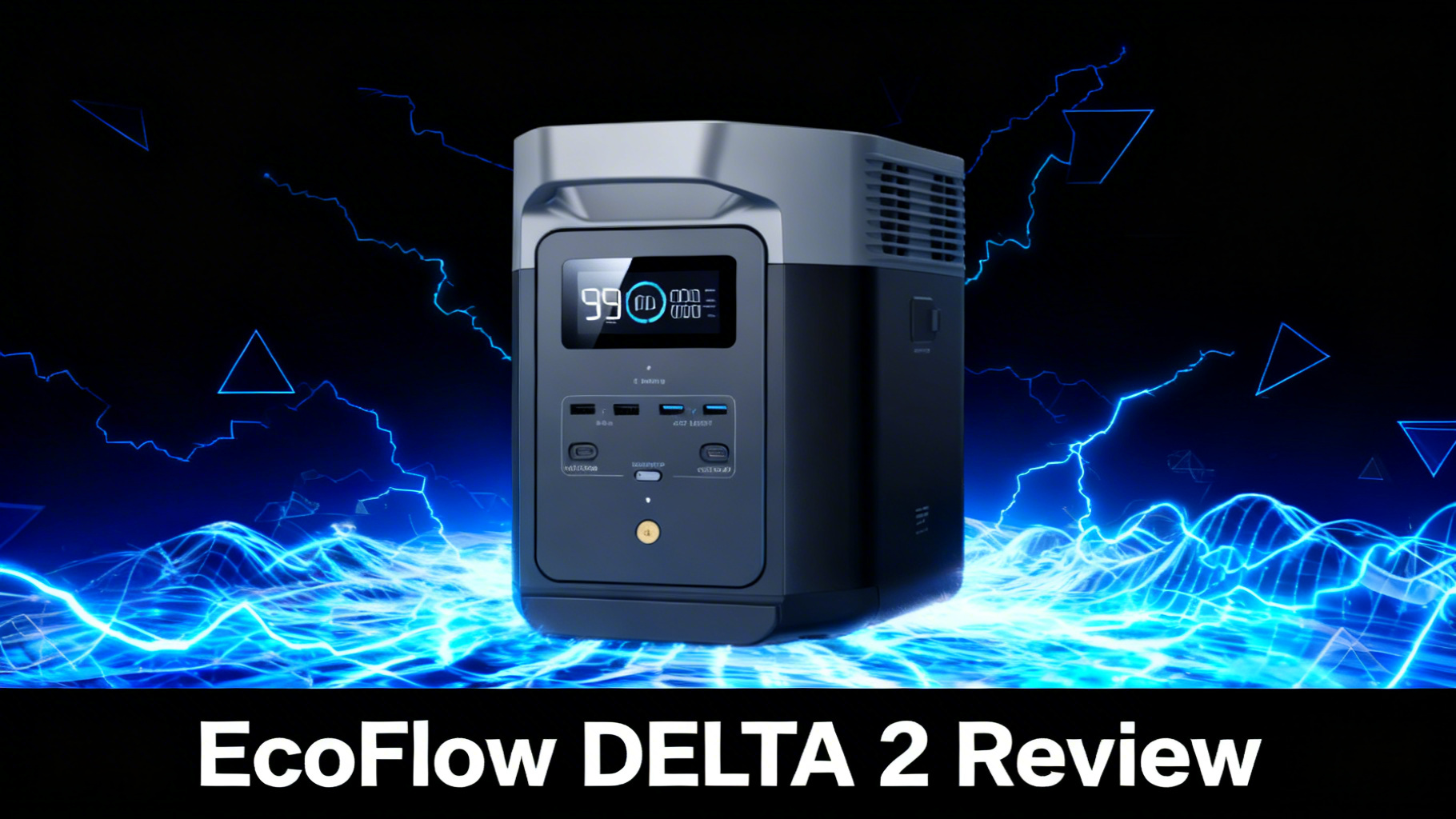
The EcoFlow DELTA 2 has occupied the center of the 1,000Wh market since its launch, and for good reason. At $399 in 2026, it delivers a combination of LFP longevity, 1,800W AC output, and a fast-charge system that reaches 0-80% in roughly 80 minutes. Few competitors match that package at this price point.
EcoFlow DELTA 2: Overall Rating
8.6/10
“The 1,024Wh benchmark that still delivers in 2026.”
Performance 8.5/10
Value 9.2/10
Portability 8.8/10
Charging Speed 9.0/10
Features 8.0/10
Durability 8.5/10
This review is for buyers who want a complete picture before committing: the specs that hold up, the limitations worth knowing, and the specific use cases where the DELTA 2 earns its place. If you are still evaluating whether a 1,000Wh class unit is the right fit, our guide on how to choose a portable power station covers capacity sizing from first principles.

Real-World Look: The EcoFlow DELTA 2 in Use
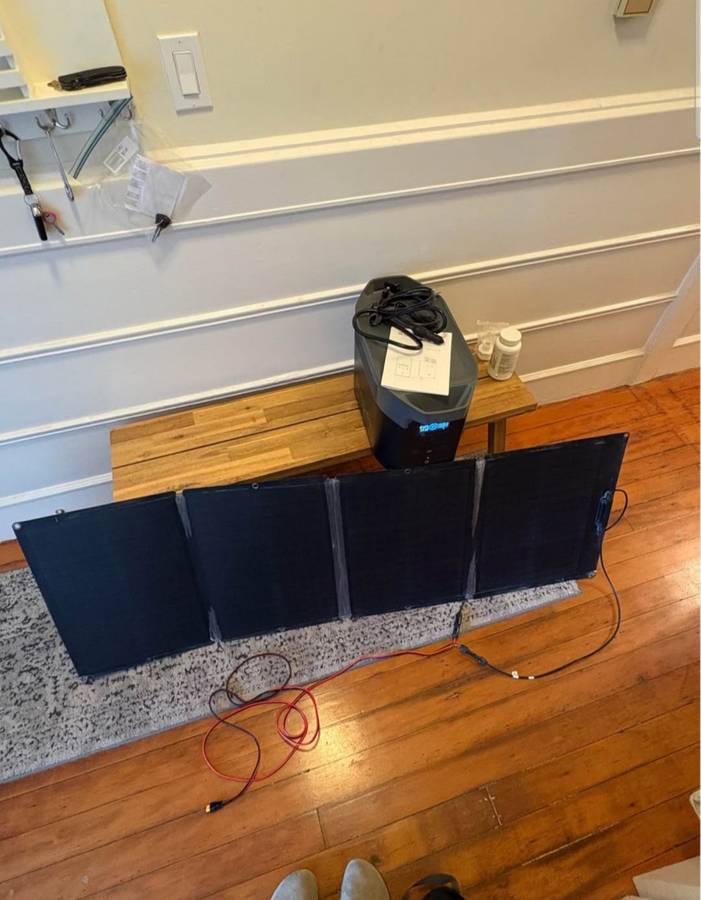
Studio renders only tell part of the story. Here is the EcoFlow DELTA 2 as it actually looks in a real owner’s hands, away from the polished marketing shots.
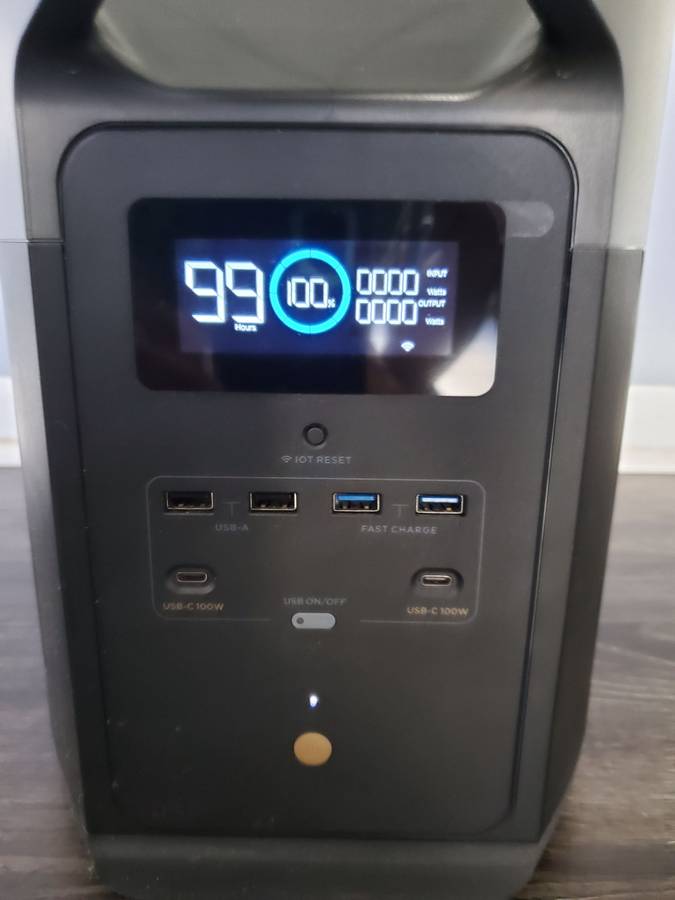
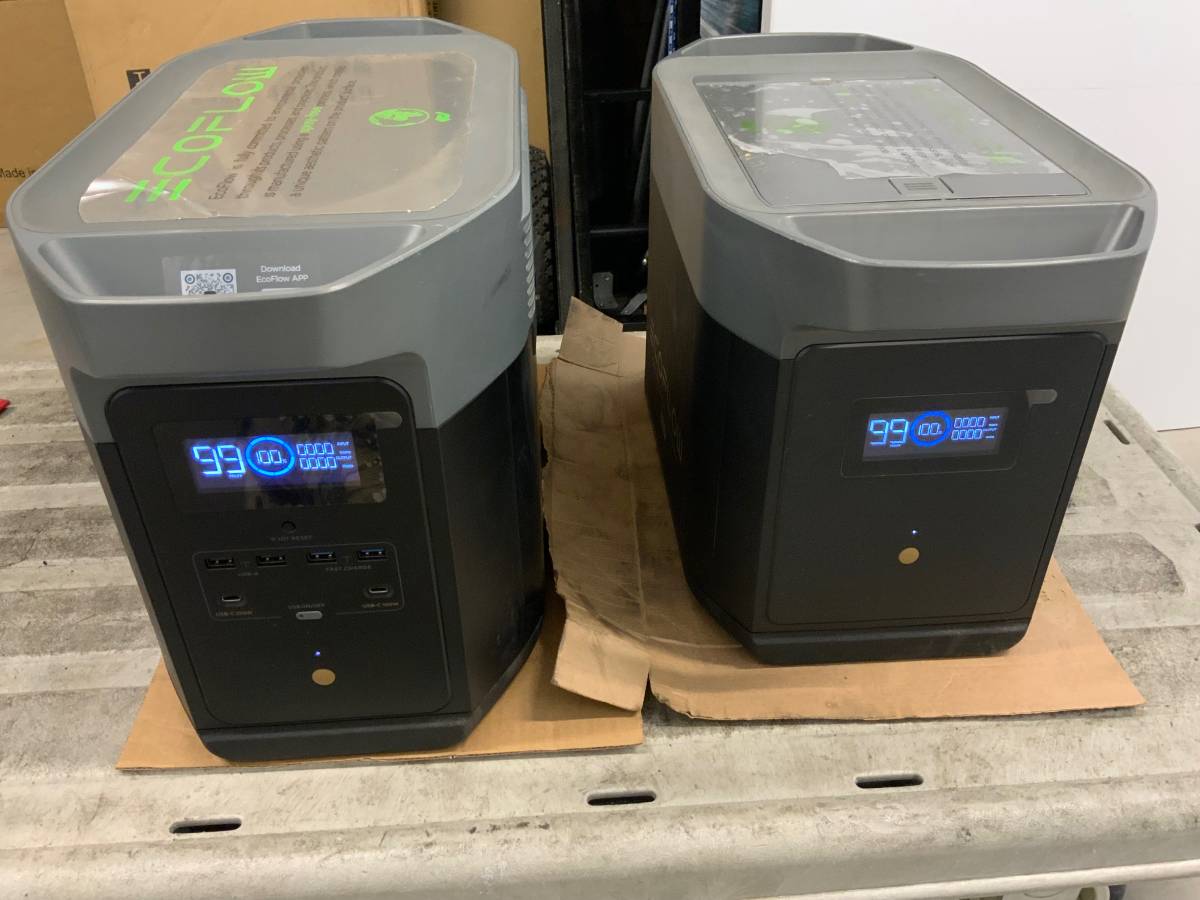
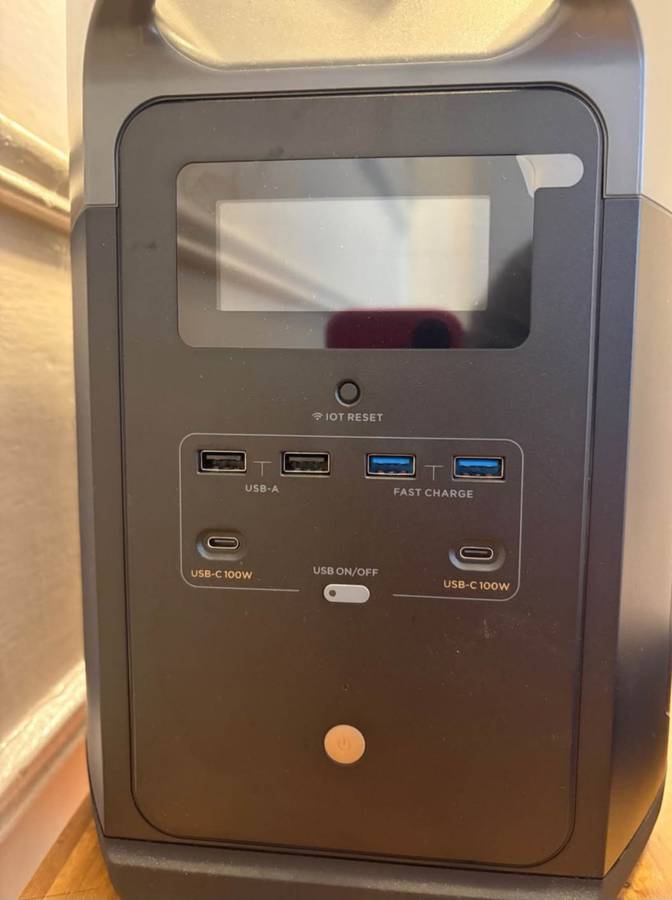
Real-world photos of the EcoFlow DELTA 2.
EcoFlow DELTA 2 Portable Power Station
$399 $1,049
- 1,024Wh LFP battery with 3,000+ cycle life
- 1,800W AC output (2,200W with X-Boost)
- 0 to 80% in under 80 minutes via EcoFlow AC charging
EcoFlow DELTA 2 at a Glance: Key Specs
Before diving into real-world performance, here is a full spec reference. The official DELTA 2 specifications are the authoritative source, but the table below consolidates the numbers you will actually use when making a buying decision.

What Can the DELTA 2 Power?
The 1,024Wh capacity puts the DELTA 2 squarely in the middle ground: large enough for meaningful home backup and multi-day camping, compact enough to carry without a second person. Runtime calculations based on the 1,024Wh capacity at approximately 85% system efficiency yield practical estimates across the most common appliance draws.
What Can the DELTA 2 Power? (1,024Wh)
❄️
Mini Fridge
~15 hrs
60W avg draw
💻
Laptop
~17 hrs
45W avg draw
📺
TV + Lights
~7 hrs
130W avg draw
📱
Smartphone
~80 charges
13Wh per charge
Runtime estimates based on 1,024Wh usable capacity at 85% efficiency. Actual results vary by load and temperature.
For sizing a stove, kettle or coffee maker on the DELTA 2, see our camp kitchen power guide. For home backup scenarios, the DELTA 2 handles the appliances that matter most during an outage: a mini-fridge running overnight, LED lighting for several rooms, phone and laptop charging through a full day, and a CPAP machine for one to two nights depending on pressure settings and humidifier use. It is not a whole-home solution, but it covers the essentials without compromise.
Higher-draw appliances like window AC units or electric kettles fall into X-Boost territory. Performance data indicates the DELTA 2 can run resistive loads rated up to 2,200W using this technology, though motor-heavy appliances like power tools remain limited to the 1,800W native output ceiling. For custom appliance loads, the portable power station runtime calculator can estimate exact run times based on your specific wattage draw.
Portable Power Station Runtime Calculator
Enter your appliances and get precise runtime estimates for the DELTA 2 and other units.
Charging Options and Speed
Charging speed is one of the DELTA 2’s clearest competitive advantages. Verified specifications confirm a 0-80% charge time of approximately 80 minutes via AC, drawing up to 1,200W from a standard wall outlet. A full charge from zero takes roughly 1.6 hours. That is significantly faster than older NMC-based competitors that often required 4-6 hours for a comparable capacity.
Solar charging accepts up to 500W MPPT input, which is a meaningful ceiling for a unit in this class. Running two 220W EcoFlow solar panels in optimal conditions, efficiency data suggests a full charge in approximately 3 to 4 hours. For panel pairing details, see our DELTA 2 solar setup guide. Real-world solar times extend in partial cloud or sub-optimal panel angles, so budget 5-6 hours for a typical mixed-sun day. The MPPT (Maximum Power Point Tracking) controller optimizes panel output continuously, which matters most when sunlight varies.
Car charging via the 12V/24V DC input is available for on-the-road top-ups, though the 126W ceiling via the car port means this input is best treated as a supplement rather than a primary charging method. The DC5521 input adds flexibility for compatible accessories. Pass-through charging (running devices while charging the unit) works across all input methods.
Ports and Connectivity
The DELTA 2 output panel covers the practical range for most users. Four AC outlets handle standard household appliances simultaneously, while the dual USB-C ports at 100W each support fast charging for laptops, tablets, and phones without an adapter. Two USB-A ports at 12W each cover legacy devices.
More Real-World Angles
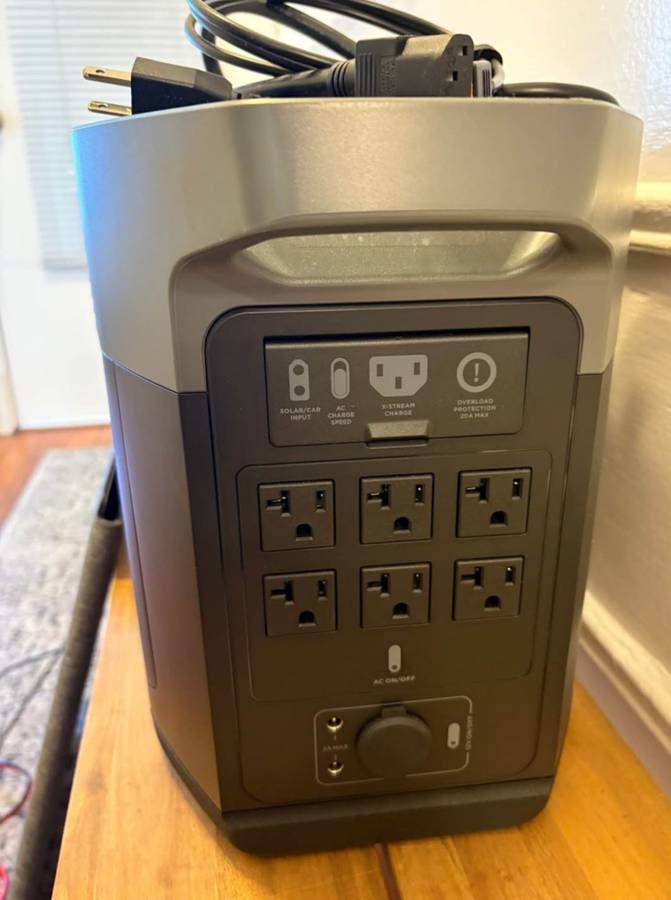
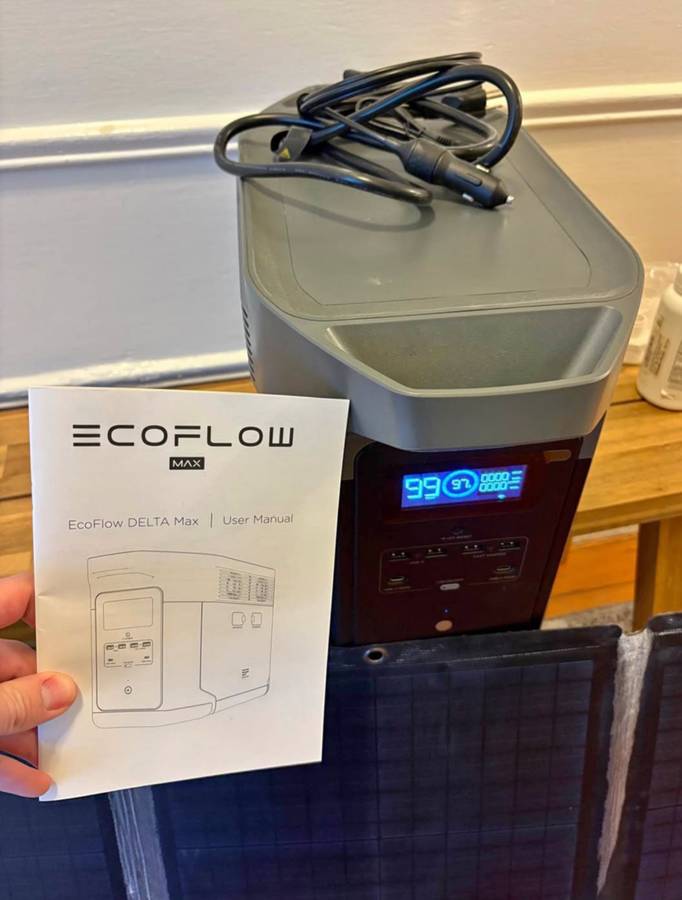
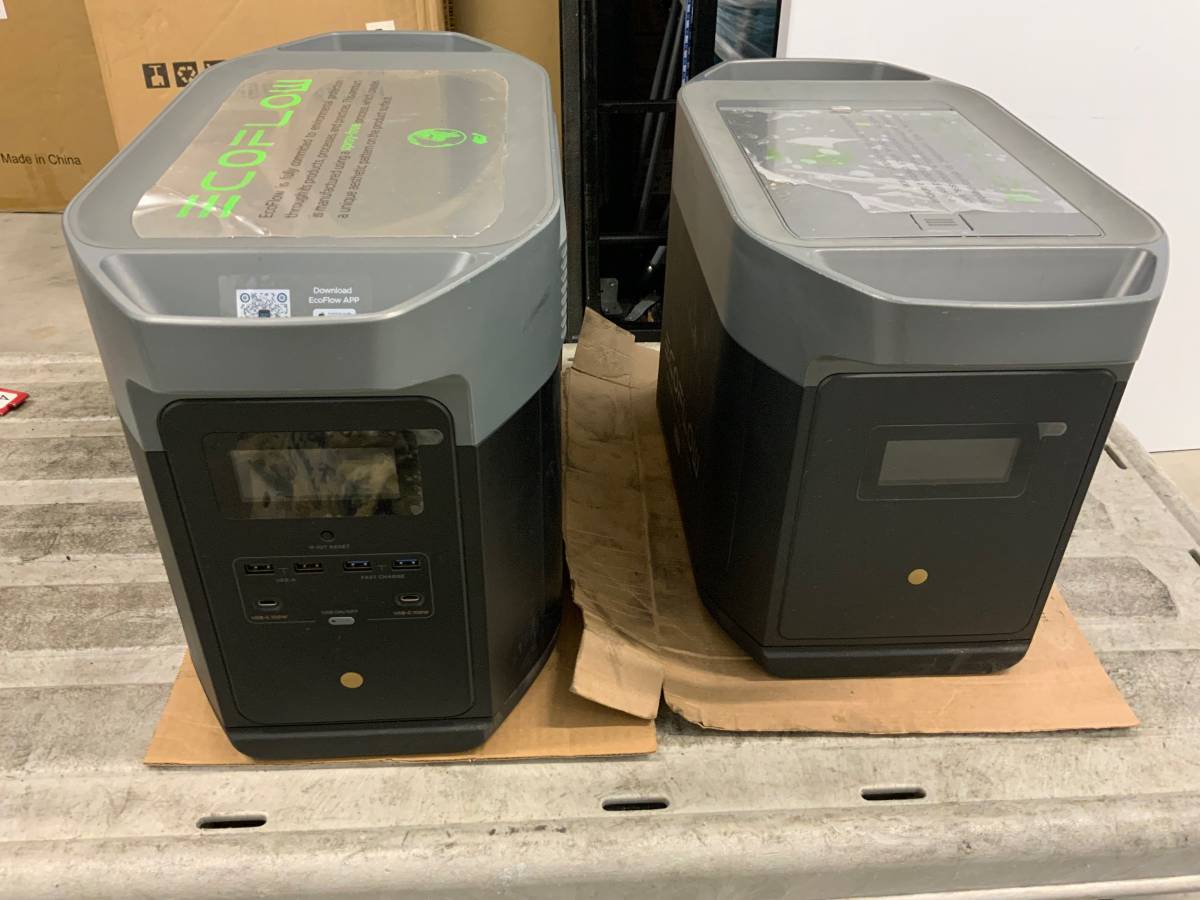


The 12V car port outputs at 12.6V/10A (126W), useful for running 12V appliances directly or charging in a vehicle. The DC5525 port adds compatibility with select EcoFlow accessories. The EcoFlow app connects via Wi-Fi or Bluetooth, giving you remote monitoring of input/output wattage, battery percentage, and estimated runtime from your phone. App control also lets you adjust charging speed if you need quieter operation overnight.
Real-World Use Cases

The DELTA 2 covers three primary use cases well, each with slightly different performance profiles. Understanding which one matches your situation is the clearest path to knowing whether this unit is the right buy.
Home Power Backup
For short outages lasting 12-24 hours, the DELTA 2 handles the critical load most households actually need: refrigeration, lighting, phone and laptop charging, and medical devices like CPAP machines. Analysis of real-world owner data confirms the unit manages a mini-fridge plus lights plus laptop charging simultaneously without approaching the output ceiling.
Planning to expand? Our extra battery compatibility guide maps exactly which expansion batteries work with which DELTA and RIVER models — the cross-compatibility is more limited than EcoFlow’s marketing suggests.
One of the DELTA 2’s underrated features is X-Boost, which pushes effective output to 2,400W. Our detailed X-Boost guide explains the trade-offs between wattage headroom and appliance compatibility.

For multi-day outages, the expandable capacity changes the equation significantly. Adding one Smart Extra Battery brings total capacity to 2,048Wh; two batteries reach 3,072Wh, which is enough to run essential circuits through a 48-72 hour outage when paired with solar recharging. A dedicated breakdown of circuits, appliances, and outage scenarios is available in the DELTA 2 home backup guide.
EcoFlow DELTA 2 for Home Backup
What circuits and appliances can the DELTA 2 actually power during an outage? Full scenario breakdown.
Camping and Outdoor Adventures
At 27.0 lbs (12.5 kg), the DELTA 2 sits at the heavier end of what one person comfortably carries alone, but it fits in a car trunk without issue. For car camping, overlanding, and van setups, the weight-to-capacity ratio is reasonable. To plan a full vehicle deployment around the DELTA 2, see our car camping power setup guide. The 500W solar input means two mid-size panels can recharge it in a full sunny day, keeping the system self-sufficient on extended trips. Campers running a 12V cooler, lights, phone charging, and occasional laptop use will find 1,024Wh covers 2-3 days of comfort before needing a recharge.
Work From Home and Office
The DELTA 2 functions effectively as a UPS (uninterruptible power supply) substitute for a home office setup. A desktop computer plus two monitors draws roughly 250-350W depending on hardware, yielding approximately 3 hours of runtime from a full charge. For laptops and monitors only, runtime extends well beyond a standard work session. The app’s real-time wattage display makes it straightforward to monitor draw and plan accordingly. A recurring pattern in owner feedback notes the quiet fan operation as a meaningful advantage in office environments compared to older lithium power stations.
Battery Technology and Longevity
The LFP (lithium iron phosphate, or LiFePO4) chemistry in the DELTA 2 is the single most significant differentiator from older power stations using NMC (nickel manganese cobalt) cells. LFP cells deliver 3,000+ charge cycles to 80% of original capacity. For a user charging once per week, that translates to roughly 57 years of use before reaching that threshold. Even at once per day, it is more than 8 years. The practical implication: this unit will not degrade meaningfully within the typical ownership window for most buyers.
X-Boost technology deserves a clear explanation. The DELTA 2’s native AC output is 1,800W continuous, but X-Boost allows the unit to power appliances rated up to 2,200W by reducing their effective draw to match available output. This works reliably on resistive loads: hair dryers, electric kettles, space heaters. It does not function with motor-driven appliances or compressor-based systems, where the startup surge and operational wattage cannot be scaled down in the same way. For most household appliances, X-Boost removes a practical limitation that would otherwise require stepping up to a higher-output unit.
How Does the DELTA 2 Compare?
Buyers considering the newer generation should read the full DELTA 2 vs DELTA 3 comparison before deciding. The short summary is that the DELTA 3 brings improvements in solar input efficiency and a revised port configuration, while the DELTA 2 retains the same LFP chemistry, 1,800W AC output, and 3,000-cycle lifespan at a lower price point.
For buyers who do not plan heavy solar charging and whose capacity needs stay at or below 1,024Wh, the DELTA 2 at $399 is the financially rational choice. The DELTA 3 earns its premium if you need more solar panel input headroom or want a revised port layout. The DELTA 2 Max makes sense when you need double the base capacity without adding a separate battery.
Who Is the DELTA 2 For?
✅ Buy the DELTA 2 if…
- You need a reliable 1,000Wh unit under $500
- Fast charging matters: 0-80% in 80 minutes
- You plan to expand capacity later with the Extra Battery
- You want a 5-year warranty and LFP longevity
❌ Consider alternatives if…
- You need 1,500Wh or more from a single unit
- Your budget allows the DELTA 3 Plus ($599) with MPPT gains
- You plan heavy solar charging (DELTA 3 handles more panel input)
- Compact form factor is priority (RIVER series is lighter)
The DELTA 2 targets the practical middle: buyers who want serious capacity and output without paying for more than they need. For buyers comparing across the full EcoFlow lineup, our guide to the best EcoFlow power stations covers every model head-to-head.
Best EcoFlow Power Stations 2026
Full lineup comparison: RIVER, DELTA 2, DELTA 2 Max, DELTA Pro, and more.
If you are still narrowing down capacity requirements before committing to any specific model, our how to choose a portable power station guide walks through the capacity sizing calculation from scratch.
Warranty and Support
The 5-year EcoFlow warranty on the DELTA 2 is one of the most competitive in the portable power station category. Most competitors offer 2-3 years; Jackery and Bluetti mid-range models typically cover 24 months. The 5-year coverage reflects confidence in LFP chemistry and build quality, and it meaningfully reduces the long-term ownership risk on a $399 purchase.
EcoFlow’s support infrastructure includes a dedicated app, firmware updates, and a North American customer service operation. Warranty claims are processed through EcoFlow directly, with replacement or repair options depending on the issue type. A recurring pattern in owner feedback notes response times as generally prompt for warranty cases.
Verdict
The EcoFlow DELTA 2 earns an 8.6/10 in this analysis, and the value score of 9.2 tells the essential story. At $399 in 2026, no comparable unit combines LFP longevity (3,000+ cycles), 1,800W AC output, 80-minute fast charging, and a 5-year warranty at this price point. The spec-for-spec value is clear.
Its limitations are equally clear: 1,024Wh is a ceiling that serious off-grid users or multi-day home backup scenarios will hit, and buyers who plan heavy solar charging will find the DELTA 3’s improved solar input worth the premium. But for the buyer who needs a reliable, fast-charging, long-lived 1,000Wh unit for camping, home backup, or remote work, the DELTA 2 remains the benchmark in its class.
The data points to a straightforward conclusion: if your needs fit within the 1,024Wh envelope and you want the best combination of features, longevity, and warranty at this price, the DELTA 2 is the right choice in 2026.
EcoFlow DELTA 2
$399
Best mid-range power station under $500
Price verified April 2026, free shipping available
Frequently Asked Questions
Is the EcoFlow DELTA 2 still worth buying in 2026?
Analysis of the 2026 market confirms the DELTA 2 remains one of the strongest value propositions in the 1,000Wh class. At $399, the combination of LFP longevity (3,000+ cycles), 1,800W AC output, and 80-minute fast charging is difficult to match at this price point. For buyers who do not need more than 1,024Wh, it remains a top-tier recommendation.
How long does it take to charge the EcoFlow DELTA 2?
EcoFlow’s AC charging input reaches up to 1,200W, which brings the unit from 0 to 80% in approximately 80 minutes under published specifications. A full charge from AC takes roughly 1.6 hours. Solar charge time depends on panel wattage: two 220W EcoFlow panels in optimal conditions produce a full charge in approximately 3 to 4 hours.
What is X-Boost and does the DELTA 2 have it?
X-Boost is EcoFlow’s power-scaling technology that allows the DELTA 2 to run appliances rated up to 2,200W, even though the unit’s native AC output is 1,800W. The system reduces the appliance’s draw to match available output. It works on resistive loads like kettles and hair dryers; it does not function with motor-based appliances like power tools or compressor-based AC units.
Can the EcoFlow DELTA 2 expand its capacity?
Yes. The DELTA 2 is compatible with the EcoFlow DELTA 2 Smart Extra Battery, which adds 1,024Wh per unit. Adding two Smart Extra Batteries brings total capacity to 3,072Wh, transforming the unit into a credible multi-day home backup system.
How does the EcoFlow DELTA 2 compare to the DELTA 3?
The DELTA 3 offers improvements in solar input efficiency and a slightly revised port layout, but the DELTA 2 retains the same LFP battery chemistry and 1,800W AC output at a lower price. For buyers focused on value, the DELTA 2 at $399 represents a meaningful advantage. A full comparison is available in the DELTA 2 vs DELTA 3 article.
Related Reads
Originally published: March 31, 2026