
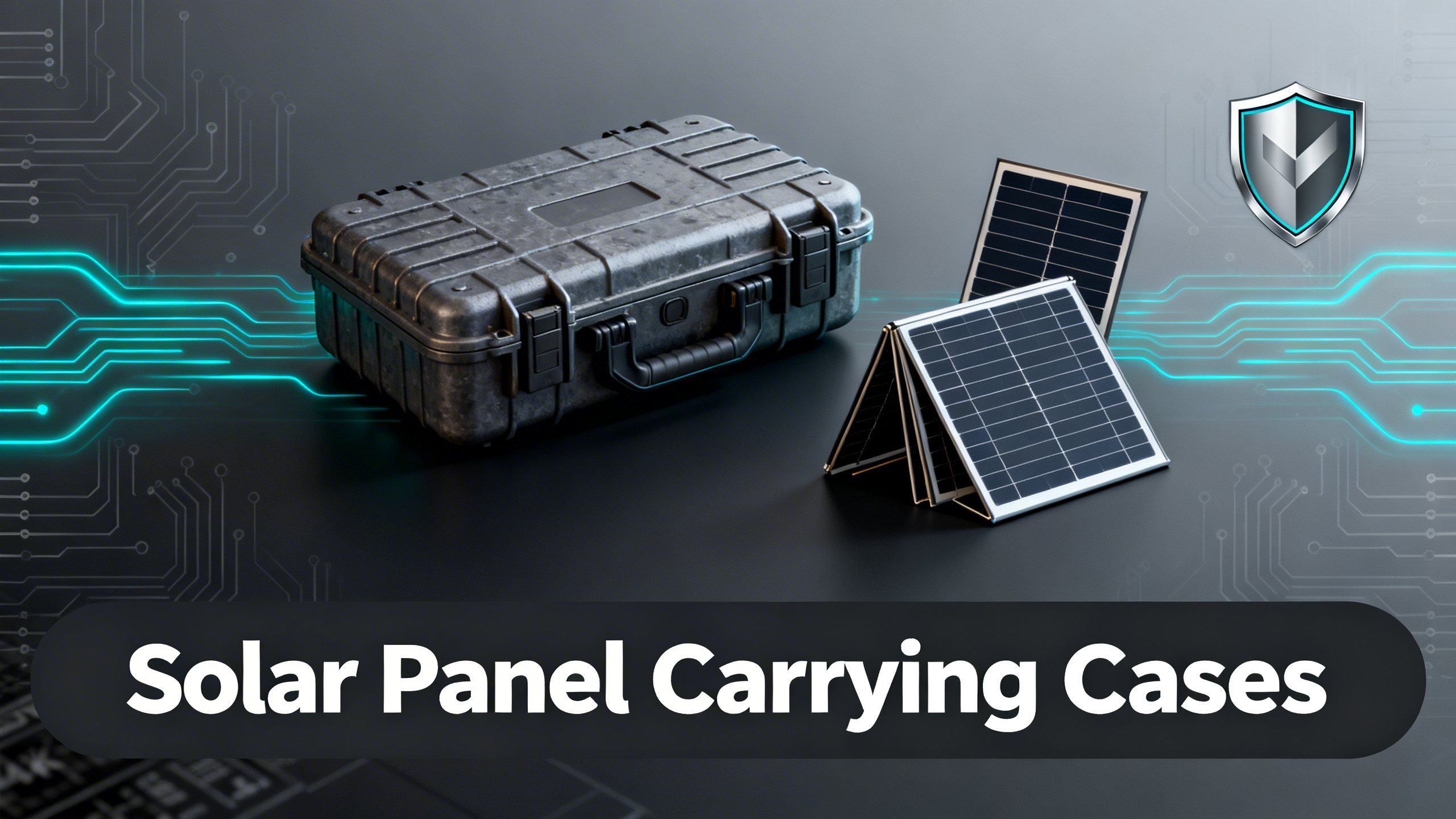
You just dropped $400 on a pristine set of foldable solar panels. Three months later, they’re scratched, one corner’s cracked, and you’re wondering if that investment was worth it. Here’s the thing most people don’t realize until it’s too late—your panels are actually more fragile than they look.
If you’ve invested anywhere from $200 to $700 in portable solar panels (whether Jackery, Bluetti, or another brand), you’re probably wondering how to keep them in working condition. The cells themselves are delicate. A crack you can barely see with your eyes can cut power output by 20% or more. And unlike a scratched phone screen that’s just annoying, damaged solar panels mean real money lost.
This buying guide walks you through everything you need to consider before choosing protection for your solar panels. We’ll cover materials, sizing, weather resistance, and help you figure out what level of protection actually makes sense for how you use your gear. By the end, you’ll know exactly what to look for in a portable solar panel case and what you can skip.
Get our Black Friday alerts for power stations
We track live prices on 40+ models from Jackery, EcoFlow, BLUETTI and Anker SOLIX. When a deal beats the lowest price we've recorded, you'll hear from us. During Black Friday week, one short recap a day at most.
Unsubscribe in one click. We may earn a commission when you buy through our links, at no extra cost to you. Privacy Policy
Why Solar Panel Protection Matters
Let’s talk numbers for a second. A decent 100W foldable solar panel runs around $300. A 200W panel? You’re looking at $500-600. These aren’t cheap accessories—they’re serious investments in your off-grid setup.

Jackery SolarSaga 100W – $299, needs proper protection during transport

Jackery Carrying Case (M) – $59.99, protects panels during storage
The problem is that portable solar panels are designed to be, well, portable. That means they fold up, get tossed in truck beds, stuffed under RV benches, and hauled across campsites. Every time you move them without proper solar panel protection, you’re risking damage to the photovoltaic cells inside.
💡 Quick Stat
Average solar panel replacement cost: $400-600
Quality carrying case cost: $40-80
Protection ROI: 5-10x your investment
Here’s what happens when panels get damaged. The cells are essentially thin wafers of silicon covered by a layer of glass or plastic. When you scratch that surface or crack a cell, you create resistance points that reduce power output—sometimes dramatically. A panel that looks fine visually might only be producing 70-80% of its rated output because of internal micro-fractures you can’t even see.
Most people underestimate how much their solar panels actually get jostled around. If you’re using them regularly—even just weekend camping trips—they’re getting moved, set up, taken down, and stored multiple times per month. That’s a lot of opportunities for something to go wrong without a proper solar panel storage bag.
Understanding Your Solar Panel Protection Needs
Before you start looking at specific cases or bags, you need to understand what you’re actually protecting. Not all panels are the same, and different types need different levels of protection.
Panel Types & Size Considerations
The first thing to figure out is what size panel you’re working with. This matters more than you might think, because a case that’s too small obviously won’t work, but one that’s too large means your panel will shift around inside during transport—which defeats the purpose of having protection in the first place.
📏 Panel Size Quick Reference
Weight: 8-12 lbs
Case Type: Small soft case
Budget: $30-50
Weight: 15-20 lbs
Case Type: Medium padded
Budget: $40-70
Weight: 25-30 lbs
Case Type: Large reinforced
Budget: $60-100
Weight: 40+ lbs
Case Type: Hard case
Budget: $100-200+
Compact panels in the 60-80W range typically fold down to around 20 inches by 13 inches. Standard 100W panels—probably the most common size for portable solar—fold to roughly 24 inches by 21 inches. This is where you start needing more substantial cases. Large 200W panels fold to about 24 inches by 27 inches and can weigh 25-30 pounds or more.
Don’t just go by wattage, though. Actually measure your panels when folded. Different brands have different dimensions even at the same wattage. A Jackery 100W and a Bluetti 100W might not be exactly the same size.
| Panel Power | Typical Dimensions (Folded) | Case Type Needed | Budget Range |
|---|---|---|---|
| 60-80W | 20″ × 13″ × 2″ | Small soft case | $30-50 |
| 100W | 24″ × 21″ × 2″ | Medium padded case | $40-70 |
| 200W | 24″ × 27″ × 3″ | Large reinforced case | $60-100 |
| 400W+ | Custom/Multi-panel | Hard case or custom | $100-200 |
Material & Durability
Cases and bags are made from a few different materials, each with trade-offs. Understanding what you’re actually getting helps you avoid paying for features you don’t need or skimping on protection that matters.
The most common material you’ll see is polyester, often listed as something like “600D polyester” or “900D polyester.” That D stands for denier, which is a measurement of thread thickness. Higher numbers mean thicker, more durable fabric.
🧵 Material Durability Comparison
600D Polyester
900D Polyester
Heavy Canvas
💡 Pro Tip: Look for YKK zippers regardless of material—they’re the gold standard for reliability and outlast cheap alternatives by years.
For reference, 600D polyester is what you’d find in a decent quality backpack. It resists tears and abrasion reasonably well. 900D is thicker and tougher—more resistant to punctures and wear, but also slightly heavier. For a panel that lives in your vehicle and gets moved carefully, 600D with 3mm padding works fine. For panels that see rougher use, step up to 900D with 5mm padding.
Weather Resistance
There’s a big difference between water-resistant and waterproof, and understanding this difference matters when you’re choosing protection for several hundred dollars worth of solar equipment.
💧 Waterproofing Protection Scale
Light rain OK
Humidity protection
Most users need this
Moderate rain OK
Sealed zippers
Outdoor storage
Submersion brief
Sealed seams
Extreme conditions
Water-resistant means the case can handle light moisture—a few raindrops, humidity, maybe brief exposure to light rain. The material has been treated with a coating (DWR—durable water repellent) that makes water bead up and roll off. Waterproof means the case can handle significant water exposure with sealed seams and waterproof zippers.
For most portable solar panel case users, water-resistant is actually sufficient. Your panels themselves are designed to handle weather during use. What you’re protecting against during storage and transport is moisture getting into crevices where it can cause corrosion on connections.
✅ Maintenance Tip: DWR coatings don’t last forever. After a year of use, refresh them with spray-on treatments like Nikwax TX.Direct to extend your case’s life significantly.
Get our Black Friday alerts for power stations
We track live prices on 40+ models from Jackery, EcoFlow, BLUETTI and Anker SOLIX. When a deal beats the lowest price we've recorded, you'll hear from us. During Black Friday week, one short recap a day at most.
Unsubscribe in one click. We may earn a commission when you buy through our links, at no extra cost to you. Privacy Policy
Jackery Solar Panel Carrying Cases: Product Overview
Since this is a Jackery-focused guide, let’s look at what Jackery offers directly. The company makes several sizes of carrying cases designed to match their power stations and solar panels.

Compact case for Explorer 100 Plus – $39.99

Small carrying case – fits 240/300/500 models – $44.99
🏆 Most Popular: Jackery Upgraded Carrying Case (M)

Why we recommend it: Perfect fit for Explorer 880/1000/1000 Plus power stations. 900D polyester construction with pearl cotton padding protects against bumps and scratches. Splash-resistant zipper seal and padded handles make transport comfortable.
- Dimensions: 14.17″ × 11.22″ × 11.61″
- Material: Polyester + pearl cotton foam
- Features: Dual handles, adjustable straps, splash-resistant
- Best for: Regular campers, van lifers, weekend warriors
$59.99 | Free shipping | Protects your $300-1000 investment
The medium case is probably Jackery’s most popular option. At 14.17 by 11.22 by 11.61 inches, it accommodates the Explorer 880, 1000, and related models. The padding is substantial, and the construction uses reinforced stitching at stress points. The handles are padded for comfort when carrying heavier loads. It’s splash-resistant with the zipper design and includes some internal space for accessories.
They also make a large size for power stations in the 30-35 kilogram range. It uses 900D fabric—a step up in durability. The padding is thicker pearl cotton, and it has a reinforced handle system designed for the extra weight. Pricing runs around $69.99.
🔒 Premium Protection Option
Jackery Explorer 5000 Plus Protective Cover – $99.99
This is different from traditional carrying cases—it’s a fitted cover designed to stay on during use. Rated IPX4 for water and dust protection, using 900D foldable material. Scratch-resistant design allows operation without removing the cover.
Best for: Explorer 5000 Plus owners needing maximum protection

Large case – 900D fabric for 30-35kg units – $69.99

5000 Plus cover – IPX4 rated, use without removal – $99.99
All of Jackery’s cases use similar construction philosophy: polyester outer shells, pearl cotton foam padding, zipper closures with water resistance, and handle systems appropriate to size and weight. They’re designed for protection during transport rather than heavy-duty field use.
For someone invested in the Jackery solar generator ecosystem, these cases make sense. They match the brand aesthetic, fit is guaranteed, and warranty claims are straightforward if issues come up.
Key Features to Look For in Solar Panel Cases
Fit & Compatibility
This might seem obvious, but you’d be surprised how many people buy a foldable solar panel case that’s almost the right size and then try to make it work. Don’t do this. Your panel should fit properly—not too tight, not with excessive room.
Measure your panel when it’s folded. Get the dimensions in all three directions—length, width, and thickness. Then compare these to case internal dimensions. You want about a half-inch to an inch of clearance around the edges. This leaves room for the padding to do its job without the panel swimming around inside.
⚠️ Common Mistake: Buying based on panel wattage alone instead of actual dimensions. A 100W panel from one manufacturer might be a completely different size than a 100W panel from another. Always measure.
Storage & Organization
A solar panel transport bag that only holds your panel is doing about half the job it should. The better cases have thought about where all the other stuff goes—cables, connectors, kickstands (if removable), and adapters.
Look for cases with internal pockets or elastic loops designed to hold cables and accessories. Some have mesh pockets you can see through, which helps when you’re trying to find a specific connector. Others have zippered compartments that keep smaller items secure during transport.
Budget Considerations & Decision Framework
Let’s bring this all together with practical guidance on what to spend based on your situation.
💰 Budget-to-Protection Decision Matrix
Budget Tier
Mid-Range (Recommended)
Premium Tier
🎯 Quick Decision Guide
Occasional camper with budget panel? → $35-50 basic case protects adequately
Regular user with mid-range panel? → $50-75 hits the sweet spot (most users)
Off-grid living or professional? → $80-150 premium case is worth it
Rule of thumb: Spend 10-20% of panel value on protection = smart insurance
Think of the case cost as insurance. You’re spending 10-20% of the panel’s value to protect the full 100%. For a three-hundred-dollar panel, is sixty dollars for proper protection reasonable? Most people would say yes.
Also consider how often you move your solar panels. If they’re set up semi-permanently and only moved occasionally, you can lean toward the lower end of the budget range. If you’re packing and unpacking multiple times per week with your portable solar panel case, invest more in durability.
💚 Budget-Friendly Option
Jackery Upgraded Carrying Case (S) – $44.99
Perfect for Explorer 240/240 v2/300/300 Plus/500 models. Dimensions: 12.2″ × 8.1″ × 11.0″. Polyester construction with pearl cotton padding, splash-resistant zipper seal, dual handles with adjustable straps.

Best for: Budget-conscious users, occasional camping, smaller power stations
Common Mistakes to Avoid
People make predictable mistakes when choosing and using solar panel carrying cases. Here’s what to watch out for.
⚠️ Top 5 Mistakes
- Buying based on wattage alone – Always measure actual folded dimensions
- Assuming all “waterproof” claims are equal – Check actual IP ratings
- Choosing a case that’s too large – Panels shift = potential damage
- Over-packing with accessories – Creates pressure on panel from inside
- Ignoring handle quality – Failed handle on 40lb case is dangerous
Not testing the case setup at home before heading out on a trip. Make sure everything fits, zippers work smoothly, and you understand the organization system before you’re trying to set up solar at a campsite in fading light.
Leaving panels in cases in hot vehicles for extended periods. Cases insulate, which means heat builds up inside. If you’re storing a panel in a hot car, leave the case partially open for ventilation or take the panel out.
Frequently Asked Questions
Do I really need a case for my portable solar panels?
If your panels are permanently mounted and never moved, you can skip the case. But for portable panels that get transported regularly, a case is smart insurance. The cells are fragile—micro-fractures from impacts can reduce output by 20%+ even if the panel looks fine. For roughly 10-15% of your panel’s value ($40-80 for most cases), you dramatically reduce the risk of $300-600 replacement costs.
Can I use a generic case instead of a brand-name Jackery case?
Yes, but do your homework on dimensions first. Generic cases can offer similar or better quality at lower prices. The key is ensuring fit—measure your panel when folded and compare to case internal dimensions (you want ½-1 inch clearance). If a quality generic case is $30+ cheaper than the brand case, it’s worth considering. If the price difference is only $10-15, the guaranteed fit of a brand case is worth the small premium.
What’s the difference between 600D and 900D polyester?
The “D” stands for denier, which measures thread thickness. 900D is 50% thicker than 600D, making it more durable and resistant to punctures and abrasion. 600D works fine for occasional use with careful handling. 900D is better for regular use, rough conditions, or if the case will be compressed under other gear. The weight and cost difference is minimal—usually $10-20 more for 900D.
Do I need a waterproof case or is water-resistant enough?
For most users, water-resistant (DWR coating) is sufficient. Your panels are already designed to handle weather during use. What you’re protecting against during transport is moisture in crevices that can corrode connections. If you store panels in truck beds or non-climate-controlled areas exposed to rain, step up to IPX4 rating. Full waterproofing (IPX5+) is only necessary for extreme conditions or marine environments.
How much padding do I need in a solar panel case?
For most portable panels, 3-5mm of pearl cotton or EPE foam padding is adequate for normal transport. This handles typical bumps—setting the case down, shifting in vehicles, minor impacts. If panels see rough use (going in/out of trucks daily, workshop environments, getting stacked under heavy gear), look for 5-7mm padding or closed-cell foam. Unless you’re in professional/commercial use where panels might actually get dropped from height, thicker padding is usually unnecessary weight.
Will a case for a 100W panel fit other brands’ 100W panels?
Not necessarily. Different manufacturers have different folded dimensions even at the same wattage. A Jackery SolarSaga 100W folds to roughly 24″ × 21″ × 2″, but a Bluetti PV120 might be 21″ × 18″ × 2.5″. Always check actual measurements rather than assuming wattage means the same physical size. Measure your panel folded, then compare to case internal dimensions—you need about ½-1 inch clearance on each side for padding to work properly.
How do I maintain and care for my solar panel case?
Basic maintenance extends case life significantly. Every 1-2 months: brush off dirt, wipe exterior with damp cloth, clean zipper teeth with soft brush (old toothbrush works). After a year: refresh DWR water-resistant coating with spray-on treatment (like Nikwax TX.Direct). Check handles/straps for wear at attachment points. Store in cool, dry place when not in use—avoid leaving in hot cars long-term. If the case gets wet, dry thoroughly before storing panels inside to prevent mold.
✅ Ready to Protect Your Solar Investment?
For most portable solar users, the Jackery Upgraded Carrying Case (M) hits the sweet spot: proven quality, perfect fit for popular models, and mid-range pricing at $59.99. Before ordering a case, Jackery owners should check our Jackery solar panel compatibility guide to match the right panel to their station.
Free shipping | 900D polyester + pearl cotton padding | Fits Explorer 880/1000/1000 Plus
Final Buying Advice
Here’s the straight talk: most people should spend between $50 and $70 on a case for a typical 100-200W portable solar panel. This gets you real protection without paying for features you don’t need.
Start by measuring your panel accurately. Then look for cases with internal dimensions that give you a half-inch to one inch of clearance on each side. Read the actual material specifications—900D polyester or equivalent with at least 3-5mm padding.
🎯 Your Action Plan
- Measure your folded panel (length × width × thickness)
- Determine your use case (occasional camping vs regular off-grid)
- Set budget based on panel value (10-20% of panel cost)
- Check material specs (900D fabric + 3-5mm padding = sweet spot)
- Verify fit (internal dimensions = panel size + 0.5-1″ clearance)
- Read reviews from users with your specific panel model
- Buy once, protect for years
If the manufacturer of your solar panel makes a case specifically for it, and the price is within $15 of a quality generic option, just get the manufacturer case. The guaranteed fit is worth the small premium and saves you from research time and potential return hassles.
For generic options, read reviews from people using your specific panel model. Check that zippers are quality (YKK preferred). Verify waterproofing claims with actual IP ratings if possible, and don’t trust vague marketing terms.
Don’t cheap out if you’re relying on your panels for important stuff. The difference between a $40 case that might last a year and a $70 case that’ll last five years is obvious in hindsight. Spend appropriately the first time.
And remember: the best case in the world doesn’t help if you don’t use it. Whatever you buy needs to be convenient enough that you actually put the panel in it every time rather than occasionally skipping it because it’s too much hassle.
For most users reading this, here’s the recommendation: measure your panel, find a case with proper dimensions and 900D construction with good padding, check reviews specifically for your panel model, and spend in the $50-75 range. That hits the sweet spot of protection, durability, and value for the majority of portable solar panel users.
Related Resources: Now that you’ve got your solar panels protected, learn how to maximize your complete solar generator system or explore our guide on choosing the right portable power station for your needs.
Originally published: April 7, 2026