


Why Most People Choose the Wrong Features
discussion, and you’ll see the same pattern repeating. Someone asks for recommendations, gets bombarded with specs, focuses on the wrong metrics, and ends up with a unit that doesn’t match their actual needs. The first major mistake? Choosing based on the biggest numbers.
“More is better, right?” So you grab the highest capacity and output your budget allows. But a 2000Wh unit is overkill for weekend camping and becomes a 50-pound burden you resent carrying. Meanwhile, your friend with a compact 500Wh model is perfectly happy because they matched capacity to actual usage.
The second mistake cuts the opposite direction—ignoring your actual use case. You think “I’ll just use it for camping,” then discover you want home backup during storm season. Or you buy for “emergency backup” but end up using it weekly for outdoor projects.
Your initial assessment was too narrow, and now the feature set doesn’t support how you actually use it. The third mistake is falling for marketing buzzwords. “Military-grade durability!” “Revolutionary charging!” “Smart AI optimization!” These phrases sound impressive but mean nothing concrete.
What matters is measurable specs and real-world performance, not vague marketing claims that every brand makes.
📊 The 3 Biggest Feature Selection Mistakes
Chasing Big Numbers
Buying the highest capacity/output without considering actual needs. Results in excess weight, cost, and features you never use.
Ignoring Use Case
Buying for one scenario then using it differently. Feature set doesn’t match reality. Constant frustration with limitations.
Marketing Buzzwords
Falling for vague claims like “military-grade” or “AI-powered” instead of focusing on measurable, verifiable specifications.
The Essential Features Framework: 4 Tiers of Importance
Not all features matter equally when you’re learning how to choose a portable power station. Some are absolute deal-breakers—get them wrong and the unit becomes unusable for your needs. Others significantly improve experience but aren’t make-or-break. Some add convenience. And some are pure marketing fluff you can ignore. We’ve organized important power station features into a four-tier framework. This system works for evaluating any power station, regardless of brand or price point. Learn these tiers, and you’ll cut through spec sheets in minutes instead of hours.Tier 1 – Critical Features (Deal Breakers)
These three features are non-negotiable. Get any of them wrong, and your portable power station won’t meet your fundamental needs—no matter how nice the other features are. Battery Capacity (Wh) must match your calculated needs. This is your fuel tank size. Too small and you run out of power mid-trip. Too large and you’re hauling excess weight and cost. You can’t retrofit more capacity later in most models, so this decision is permanent. Calculate your actual consumption, add a 20-30% buffer, and that’s your minimum capacity threshold. Output Power (W) must run your highest-draw appliance. If you need to run a 1200W space heater and your station maxes out at 1000W continuous, you’re simply out of luck—that appliance won’t work, period. Pay close attention to continuous (rated) output, not surge (peak) power. Your devices need sustained power, and surge only matters for initial startup draw. Battery Chemistry determines long-term value. Lithium-ion batteries typically last 500-800 cycles before degrading to 80% capacity. LiFePO4 (lithium iron phosphate) batteries last 4,000+ cycles—roughly 5-10 years of regular use versus 2-3 years. If you plan frequent use, LiFePO4 justifies its higher upfront cost through longevity. For occasional emergency backup, Li-ion works fine.⚠️ Critical Reminder: These three Tier 1 features are your foundation. Everything else builds on top, but without a solid foundation, nothing else matters. Don’t compromise here.
Tier 2 – High-Value Features (Quality of Life)
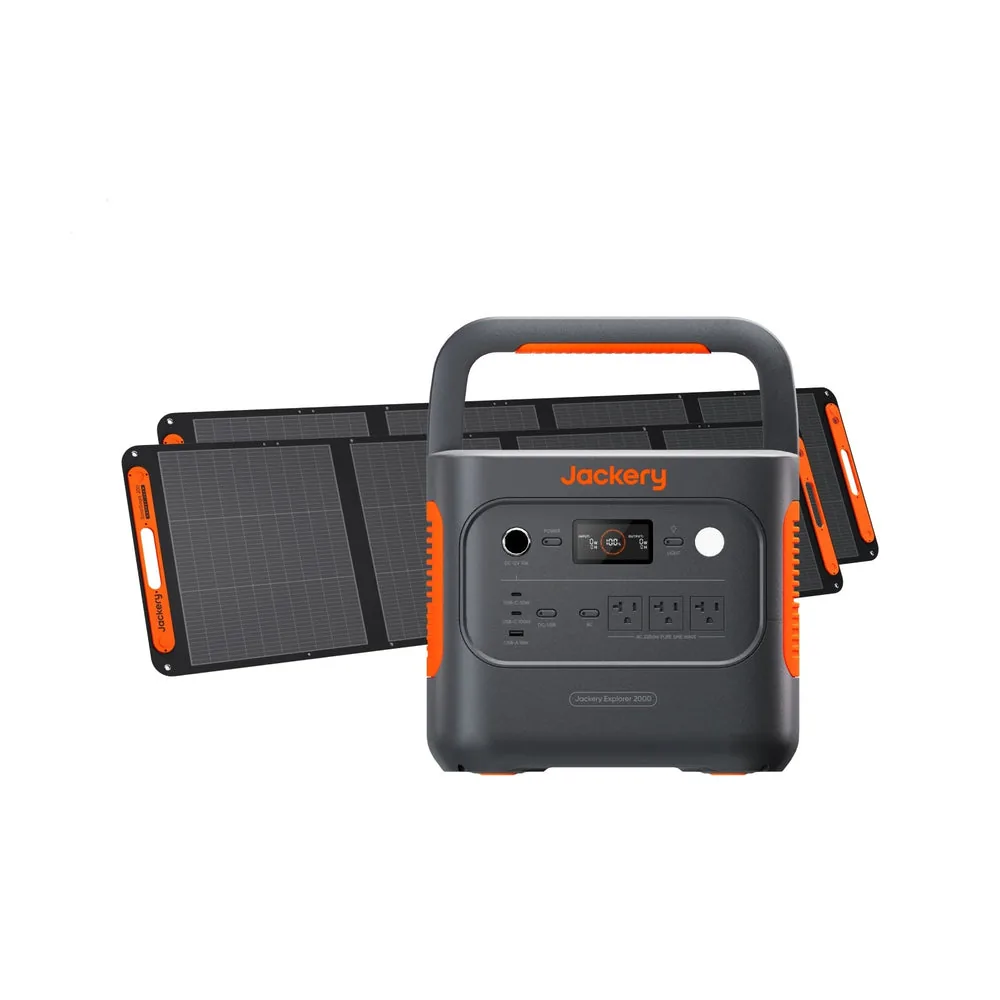
These features significantly improve your experience without being absolute requirements. They’re where you see the biggest difference between “functional” and “actually pleasant to use” in a portable power station. Recharge Speed matters more than you think. Waiting 8 hours for a full charge means planning days ahead. Modern fast charging (1-2 hours AC) or efficient solar (4-6 hours with adequate panels) means flexibility and spontaneity. You can recharge during lunch and be ready for dinner. Slow charging locks you into rigid schedules. Number and Type of Outlets determines device flexibility. Three AC outlets, multiple USB-A, USB-C with Power Delivery, and DC ports mean you charge phones, laptops, cameras, and lights simultaneously. Limited outlets force you to prioritize and swap devices constantly. Check the exact configuration—some models cluster all USB ports together beautifully, others scatter them awkwardly.
Tier 3 – Nice-to-Have Features (Convenience)
These features add convenience and polish but aren’t essential for core functionality of your portable power station. They’re worth paying for if budget allows, but don’t sacrifice Tier 1 or Tier 2 features to get them. App Control lets you monitor and configure settings remotely via WiFi or Bluetooth. Check battery status from inside your RV, adjust charging modes, or receive alerts when power drops low. It’s genuinely useful if you leave the unit running unattended. But it’s not essential—most users check the unit directly anyway. Pass-Through Charging means using the power station while it recharges. Useful for continuous operation or when you need backup power during grid failures. Without it, you either charge or discharge, never both. It’s a nice feature for home backup but less critical for camping. Wireless Charging Pad on top of the unit charges Qi-compatible devices without cables. Convenient for phones and earbuds. Does it matter? Not really—you have USB ports anyway. But it eliminates one cable from your setup. Built-in Lighting includes LED flashlight or emergency strobe modes. Helpful during nighttime power outages or setting up camp after dark. But honestly, you probably have a flashlight already. It’s a bonus, not a buying criterion.Tier 4 – Marketing Fluff (Low Priority)
These “features” show up in marketing materials but provide minimal real value when shopping for the best portable power station. Manufacturers emphasize them because they’re easier to market than boring (but critical) technical specs. Fancy Color Options might match your aesthetic, but they don’t affect performance. Most power stations are black, gray, or orange. Some offer limited color choices. Does it matter? Only if all other factors are equal—and they rarely are. Proprietary Accessories that only work with one brand create vendor lock-in. If you need a specific solar panel connector or expansion battery that’s sole-sourced, you lose flexibility. Standardized connections and expandability beat proprietary ecosystems. “Military-Grade” or Vague Marketing Claims sound impressive but mean nothing without specific standards cited. “Rugged durability” compared to what? “Advanced protection” using which safety features? Ignore marketing speak and focus on measurable, verifiable power station specifications.Get our Black Friday alerts for power stations
We track live prices on 40+ models from Jackery, EcoFlow, BLUETTI and Anker SOLIX. When a deal beats the lowest price we've recorded, you'll hear from us. During Black Friday week, one short recap a day at most.
Unsubscribe in one click. We may earn a commission when you buy through our links, at no extra cost to you. Privacy Policy
Deep Dive: The 10 Features That Actually Matter
Now that you understand the framework for what to look for in a power station, let’s examine each critical feature in detail. You’ll learn what to look for, how to evaluate it, and what separates acceptable from excellent.Feature #1: Battery Capacity (Wh) – The Foundation
Watt-hours (Wh) measure total energy storage—think of it as your fuel tank size. A 1000Wh unit can theoretically deliver 1000 watts for one hour, or 100 watts for ten hours, or any combination that multiplies to 1000. Why it’s the #1 priority: nothing else matters if you run out of power. You can’t retrofit capacity after purchase. Most models don’t expand (except premium lines with add-on batteries). You’re locked into this decision. How to calculate your needs: List devices you’ll run, check their wattage (usually on labels or manuals), estimate hours of use, and multiply. Add all devices together. That’s your minimum capacity. Then add 20-30% buffer because you rarely get rated capacity in real conditions, and batteries shouldn’t fully discharge for longevity.🏆 Capacity Range Quick Guide
- 500-1000Wh: Weekend camping, short power outages, charging devices and running lights
- 1000-2000Wh: Van life, extended trips, running small appliances like mini-fridges
- 2000Wh+: Home backup, off-grid living, powering multiple high-draw appliances
✨ Perfect Example: Jackery Explorer 1000 v2
The Jackery Explorer 1000 v2 showcases ideal Tier 1 features with 1,070Wh capacity and 1,500W output (3,000W surge). Perfect for weekend camping and van life, it covers mini-fridges, laptops, and devices for 2-3 days. The emergency super charging capability reaches 0 to 100% in just 1 hour—exactly what Tier 2 recharge speed should be.
Check Current Price on Jackery Explorer 1000 v2 →
$799 | Free shipping | Emergency 1-hour charge | 3+2 year warranty
Feature #2: Continuous Output Power (W) – Can It Run Your Stuff?
Output power determines what appliances you can run. This is measured in watts (W) and comes in two specs: continuous (rated) power and surge (peak) power. Continuous power is sustained output—what the unit delivers non-stop. This is what matters for 99% of your usage. A 1500W continuous rating means you can run devices totaling up to 1500W indefinitely. Surge power is brief spike handling for motor startups—fridges, power tools, and appliances with compressors need 2-3x their running wattage for 1-2 seconds when starting. A 1500W unit might handle 3000W surge. This matters only for startup; then the device drops to continuous draw.💡 Pro Tip: Your devices need sustained power. A space heater runs continuously at 1200W. If your station only outputs 1000W continuous, you simply cannot run it—even if surge rating is 2000W. Surge helps with startup, but continuous determines compatibility.
- 300-600W: Laptops (60W), LED lights (10W), phones (20W), fans (50W), CPAP machines (60W)
- 1000-1500W: Mini fridges (80W running), TVs (100W), electric blankets (100W), small coffee makers (600W)
- 2000W+: Full-size fridges (150-200W), microwaves (1000-1200W), power tools (1000-1500W), space heaters (1500W)
Feature #3: Battery Chemistry – Long-Term Value
Battery chemistry determines how long your investment lasts. The two main types are Lithium-ion (Li-ion) and Lithium Iron Phosphate (LiFePO4, sometimes called LFP). Li-ion is the older standard found in budget and mid-range models. Energy-dense (more capacity in less space), cheaper upfront, but degrades faster. Expect 500-800 full charge cycles before dropping to 80% original capacity—roughly 2-3 years if you use it weekly. LiFePO4 is newer technology in consumer portable power stations. Less energy-dense (slightly larger/heavier for same capacity), more expensive upfront, but lasts dramatically longer. Rated for 4,000+ cycles—easily 10 years of regular use or 5-7 years of daily use.⚡ LiFePO4 vs Li-ion: Lifecycle Comparison
🔋 Lithium-ion (Li-ion)
Cycles
- 500-800 charge cycles
- 2-3 years typical lifespan
- Capacity drops to 80% faster
- Lower upfront cost
- Replacement needed sooner
$233/year average cost
⚡ LiFePO4 (LFP)
Cycles
- 4,000+ charge cycles
- 10 years typical lifespan
- Minimal capacity degradation
- Higher upfront investment
- Long-term value leader
$120/year average cost ✓
💰 LiFePO4 saves money long-term while lasting 5-8× longer
Feature #4: Recharge Speed – Flexibility vs Frustration
Recharge time determines how quickly you’re back to full power. This splits into three categories: AC wall charging, solar charging, and DC car charging. AC Wall Charging is your primary recharge method. Modern standards:- Fast charging: 1-2 hours to full (1000Wh in 1-2 hours)
- Standard charging: 3-5 hours to full
- Slow charging: 6-10+ hours to full
 Solar Charging depends on panel wattage and sunlight conditions. A 1000Wh unit with 200W of solar panels takes roughly 5-7 hours in ideal conditions (direct sun, optimal angle, clear sky). Real-world conditions (clouds, suboptimal angles, morning/evening sun) extend this to 8-12 hours. Faster solar charging requires higher-wattage panels (400W+) or multiple panels in parallel.
Why speed matters: Flexibility. Fast recharging means you can use the portable power station multiple times per day if needed. Drain it running power tools morning, recharge over lunch, use it again for evening entertainment. Slow charging locks you into rigid schedules—use it today, charge tonight, available again tomorrow.
Solar Charging depends on panel wattage and sunlight conditions. A 1000Wh unit with 200W of solar panels takes roughly 5-7 hours in ideal conditions (direct sun, optimal angle, clear sky). Real-world conditions (clouds, suboptimal angles, morning/evening sun) extend this to 8-12 hours. Faster solar charging requires higher-wattage panels (400W+) or multiple panels in parallel.
Why speed matters: Flexibility. Fast recharging means you can use the portable power station multiple times per day if needed. Drain it running power tools morning, recharge over lunch, use it again for evening entertainment. Slow charging locks you into rigid schedules—use it today, charge tonight, available again tomorrow.
⚡ Fast Charging Champion: Jackery 1000 v2
Need rapid recharge? The Jackery Explorer 1000 v2 delivers emergency super charging from 0-100% in just 1 hour via AC—perfect for back-to-back uses. Pair with the bifacial SolarSaga 200W panel for efficient solar input. Next-gen ChargeShield 2.0 provides 62 forms of protection while maintaining fast speeds.
Check Jackery 1000 v2 + Solar Panel Bundle →
$1,299 bundle | 1-hour AC charge | Bifacial solar panel included
Feature #5: Output Variety – The Right Ports for Your Devices
Having sufficient outputs in the right types matters more than most people realize when choosing the best portable power station. You need to charge multiple devices simultaneously without swapping cables constantly. What to look for:- AC Outlets (standard wall plugs): 2-3 outlets minimum. Three is ideal for most uses. Check spacing—some outlets are too close together for large adapters.
- USB-A Ports: 2-4 ports for legacy devices. Still needed for many headlamps, fans, and older gadgets.
- USB-C with Power Delivery: 1-2 ports, ideally 60-100W each. This fast-charges laptops, tablets, and modern phones.
- DC Outlets (12V car-style ports): 1-2 outputs if you use 12V devices like portable fridges or tire inflators.
🔌 Versatile Outputs: Jackery 1000 v2
The Jackery Explorer 1000 v2 showcases ideal output variety with up to 100W dual PD charging via USB-C ports, multiple USB-A outputs, and AC outlets. Whether you’re charging laptops, phones, cameras, or running small appliances, the comprehensive port configuration handles 6-8 devices simultaneously. For a focused walkthrough at the campsite, see our charging electronics while camping guide.
View Jackery 1000 v2 Port Configuration →
For further research, see our where to buy portable power stations.
$799 | 100W USB-C PD | Multiple device charging
Feature #6: Display & Monitoring – Peace of Mind
A quality display transforms your experience from guesswork to confident power management when using your portable power station. You want real-time information that helps you make smart decisions. Critical display information:- Input/Output Wattage: See exactly how many watts you’re drawing (output) and receiving during recharge (input)
- Battery Percentage: Remaining capacity shown clearly, ideally in 1% increments
- Runtime Estimate: How many hours remaining at current draw (increasingly common in modern units)
- Charging Status: AC/Solar/DC input indicator showing recharge progress
Feature #7: Portability – Weight, Size, Handle Design
Portability is the weight-to-capacity ratio plus ergonomic design. Some units are joy to carry; others feel like punishment. Weight targets:- 500Wh: 12-15 pounds ideal, 18 pounds acceptable
- 1000Wh: 22-25 pounds ideal, 30 pounds heavy but manageable
- 2000Wh: 40-50 pounds (two-person lift or cart/dolly needed)


- Camping/Overlanding: You’re moving it in/out of vehicles regularly
- RV/Van Life: Limited storage space, moderate portability needs
- Home Backup: Sits stationary, portability matters least
Feature #8: Expandability – Future-Proofing Your Investment
Expandability means adding capacity later without buying an entirely new unit. This separates entry-level models from systems designed for growth. Types of expandability:- Add-on battery packs: Some units accept external battery modules that plug in, doubling or tripling capacity
- Parallel connections: A few models let you connect two identical units together for combined capacity and output
- None: Most budget and mid-range units are fixed capacity—what you buy is what you get forever
🔋 Expandable System: Jackery 2000 Plus
The Jackery Explorer 2000 Plus exemplifies premium expandability—supports up to 3 add-on battery packs, expanding from 2,042Wh to 12kWh total capacity. Start with the base unit ($1,999) for home backup, then add battery packs as needs grow. LiFePO4 chemistry ensures 10+ years lifespan across the entire system.
Explore Jackery 2000 Plus Expandable System →
From $1,999 | Expandable to 12kWh | LiFePO4 battery | 10-year lifespan
Feature #9: Safety Features – The Boring Essential
Safety features prevent fires, explosions, and equipment damage in portable power stations. They’re invisible when working correctly, catastrophic when absent. Battery Management System (BMS) is the critical safety component. A good BMS monitors:- Overcharge protection: Stops charging at 100% to prevent cell damage
- Over-discharge protection: Shuts down before battery damage from complete drain
- Short circuit protection: Cuts power instantly if output shorts
- Overload protection: Shuts down if you exceed rated capacity
- Temperature monitoring: Reduces output or shuts down if battery overheats
- Cell balancing: Keeps individual battery cells at equal charge for longevity
⚠️ Safety First: Reputable brands include comprehensive BMS and safety certifications (UL, FCC, CE). Don’t gamble on unproven brands to save $50—a garage fire from a faulty power station can destroy property and endanger lives.
Feature #10: UPS Functionality – Seamless Backup Power
UPS (Uninterruptible Power Supply) functionality provides instant backup during power outages. When grid power fails, the unit switches to battery power with minimal interruption. Switch time matters: Good UPS switches in under 20 milliseconds (ms). Most electronics tolerate brief interruptions under 20ms without issue. Slower switching (50ms+) may cause computers to reboot or equipment to shut down, defeating the purpose. Who needs UPS: Home workers with desktop computers who can’t afford data loss, anyone running medical devices that shouldn’t interrupt, network equipment requiring continuous uptime, or users in areas with frequent brief power flickers. Example scenario: You work from home on a desktop computer. Power flickers during a storm. With UPS, your computer never shuts down—the power station switched to battery in 18ms, imperceptibly fast. Without UPS, your computer reboots and you lose unsaved work.Which Features Matter Most for YOUR Use Case
Features don’t exist in a vacuum—they matter differently depending how you’ll actually use your portable power station. Let’s break down four common use cases and prioritize features for each.Weekend Camping – Capacity Over Speed
You’re heading out Friday evening, back Sunday afternoon. You need lights, phone charging, maybe a portable fridge, and device charging. Feature priorities:- Capacity (500-1000Wh): Enough for 2-3 days without recharge
- Output variety: Multiple USB ports and 1-2 AC outlets
- Portability: Must be easy to carry from car to campsite
- Solar capability: Nice for extending trips, not critical for weekends
🏕️ Weekend Warrior Pick: Jackery 500 v2
Perfect for weekend camping, the Jackery Explorer 500 v2 delivers 512Wh capacity and 500W output (1,000W peak) in a compact 12.6-pound package. Handles LED lanterns, phone charging, small fans, and electric coolers for 2-3 day trips. For pairing with strings of LED lanterns specifically, see our camping lighting solutions guide. At $399, it’s the sweet spot for casual outdoor enthusiasts who don’t need massive capacity.
Our Anker SOLIX buying guide is also worth a read before buying.
Availability note (checked September 28, 2026): Jackery no longer lists the Explorer 500 v2 in its US catalog, and its product page says it is not available for purchase. Check the page before you order.
Check Jackery Explorer 500 v2 Pricing →
$399 | 512Wh capacity | 12.6 lbs | Perfect for weekend trips
Van Life / Full-Time RV – Expandability & Solar
You’re living in your vehicle full-time or extended periods. Power is essential infrastructure, not convenience. Feature priorities:- Capacity (1500-3000Wh+): Multi-day autonomy
- LiFePO4 chemistry: You’ll hit thousands of cycles over years
- Fast solar charging: Sun is your primary recharge source
- Expandability: Grow capacity as needs evolve
- Strong output (2000W+): Run household appliances
Home Emergency Backup – UPS & Reliable Output
Power outages mean keeping fridge running, lights on, phones charged, and possibly medical equipment operating. Feature priorities:- Capacity (1000-2000Wh+): Multi-day backup
- UPS functionality: Seamless transition when grid fails
- Strong continuous output: Run fridge and essentials simultaneously
- Fast AC charging: Quick recharge between outages
- LiFePO4 chemistry: Long shelf life, minimal maintenance
Occasional / Light Use – Value & Simplicity
You need backup power a few times per year—camping trips, tailgating, power outages. You want simple, affordable, reliable. Feature priorities:- Good value: Don’t overspend on unused features
- Adequate capacity (300-500Wh): Covers basic needs
- Reliability: Works when you need it months apart
- Simple operation: No complex apps or settings
Budget Tiers: What Features You Get at Each Price Point
Budget determines feature set more than anything else when choosing the best value portable power station. Understanding what you get—and sacrifice—at each price tier prevents overspending or under-building.💰 Budget Tiers Pyramid: Know What You’re Paying For
💵 Budget Tier ($300-600)
What you get: 300-700Wh capacity, 500-1000W output, Li-ion battery (500-800 cycles), slow charging (6-8 hours), basic outputs, minimal extras.
Best for: Occasional emergency backup, light recreational camping (weekends only), first-time buyers, tight budgets.
💎 Mid-Range Tier ($600-1,200)
What you get: 700-1500Wh capacity, 1000-2000W output, quality Li-ion or entry LiFePO4, moderate charging speed (3-5 hours), comprehensive outputs, solid warranty.
Best for: Regular camping, van life users, home backup with moderate needs, most buyers seeking best value. Offers the best feature-to-price ratio.
Doing your homework? Check our Jackery brand review.
✨ Premium Tier ($1,200-2,500)
What you get: 1500-3000Wh capacity, 2000-3000W output, premium LiFePO4 (4,000+ cycles), fast charging (1-2 hours), expandability, UPS function, apps, 5-year warranty.
Best for: Full-time van lifers, high-demand home backup, users wanting best-in-class features and 10-year longevity.
🏆 Professional Tier ($2,500+)
What you get: 3000-10,000Wh+ capacity, 3000-6000W output, modular premium LiFePO4, maximum charging speed, comprehensive features, home integration, professional installation.
Best for: Off-grid homes, whole-home backup replacing generators, commercial applications, extreme power needs.
💡 Mid-Range ($600-1,200) offers the best balance of quality, features, and value for 80% of buyers
🎯 Premium Expandable: Jackery 2000 Plus
Moving to premium tier? The Jackery Explorer 2000 Plus delivers 2,042Wh capacity, 3,000W output, and industry-leading expandability (up to 12kWh total). LiFePO4 battery ensures 10+ years of reliable home backup or off-grid power. ChargeShield 2.0 protection, <20ms UPS switching, and smart app control justify the premium investment.
We cover related ground in our Bluetti brand review.
Explore Jackery 2000 Plus Premium System →
From $1,999 | 2,042Wh base | Expandable to 12kWh | 10-year LiFePO4
Common Feature Selection Mistakes to Avoid
Even armed with frameworks and knowledge, buyers make predictable mistakes when shopping for portable power stations. Learn from others’ errors and save yourself frustration and money.❌ Mistake #1: Overbuilding “just in case”
You calculate needing 800Wh but buy 2000Wh “just in case” needs grow. Your needs never grow. You spent an extra $800 for capacity you haul around but never use. Better: Buy what you need now, choose expandable model if future growth is likely.
❌ Mistake #2: Under-calculating actual consumption
You estimate your mini-fridge draws 50W but it actually draws 80W including compressor cycles. You run out of power sooner than expected. Fix: Add 20-30% buffer to all calculations. Devices rarely draw exactly rated wattage.
Another helpful resource: our best value power stations.
❌ Mistake #3: Ignoring battery chemistry for frequent use
You save $300 buying Li-ion instead of LiFePO4 because “it’s just for camping.” Then you camp weekly, hit 500 cycles in two years, and need expensive battery replacement. Fix: If weekly+ use, spend extra upfront for LiFePO4—you’ll save money long-term.
❌ Mistake #4: Fixating on capacity, ignoring output limits
You buy a 2000Wh unit but it only outputs 1000W continuous. You can’t run your 1200W space heater even though you have plenty of stored energy. Fix: Output power matters as much as capacity—check both specs match your needs.
The Ultimate Feature Decision Process: 7 Steps
You’ve absorbed the framework, understand features, and know common mistakes. Here’s your step-by-step process for choosing the right portable power station confidently.- Define Your Primary Use Case – Write down how you’ll primarily use this power station. Be specific. Camping” isn’t enough—is it weekend car camping, week-long backwoods trips, or full-time van life?
- Calculate Your Capacity Needs – List devices you’ll run, their wattage, and hours of use. Add everything up. Add 25% buffer. Now you have a target capacity number.
- Identify Your Output Requirements – What’s your highest-draw device? That’s your minimum continuous output. Running nothing over 300W? A 600W unit is fine.
- Prioritize Features Using the 4-Tier Framework – List Tier 1 features as absolute requirements. Identify which Tier 2 features matter most for your use case. Decide which Tier 3 features you’d like if budget allows. Ignore Tier 4.
- Set Your Budget Range – Based on your required features and use case, identify the appropriate budget tier. Occasional use? Budget tier works. Daily use? Plan for mid-range to premium.
- Compare 3-5 Specific Models – Within your budget range, find 3-5 models that meet your Tier 1 and most Tier 2 requirements. Create a simple comparison chart. Don’t compare 20 models—narrow to finalists.
- Check Reviews and Make Decision – Read real user reviews for your finalists. Look for mentions of durability, customer service, and long-term performance. Pick the model that best matches your priorities. Buy it. Done.
💡 Bonus Tip: Plan for reality, not best-case. People plan for “I’ll use it weekly!” then actually use it monthly. Be honest about actual usage patterns. Buying slightly less than you think you need often works out fine and saves money.
Frequently Asked Questions
What’s the most important feature in a portable power station?
Battery capacity (Wh) is #1 because it determines whether you have enough stored energy for your needs. Everything else is secondary if you run out of power. Calculate your actual consumption, add 20-30% buffer, and that’s your minimum capacity requirement. Don’t compromise here—too small means constant range anxiety and rationing power.
How do I calculate the right capacity for my needs?
List every device you’ll run, find its wattage (on labels or manuals), estimate hours of use per day, and multiply. Add all devices together. Example: mini-fridge (60W × 24 hours = 1,440Wh) + laptop (70W × 4 hours = 280Wh) + lights (30W × 6 hours = 180Wh) = 1,900Wh total. Add 25% buffer for inefficiency = 2,375Wh target. Round to nearest available capacity.
Is LiFePO4 battery worth the extra cost?
If you’ll use your portable power station weekly or more, yes—LiFePO4 lasts 4,000+ cycles (10 years) versus Li-ion’s 500-800 cycles (2-3 years). The higher upfront cost pays for itself through longevity. For occasional emergency backup (monthly or less), Li-ion is fine—you won’t hit cycle limits within reasonable timeframes. Match battery chemistry to usage frequency.
What’s more important: capacity or output power?
Both matter for different reasons. Capacity determines how long you can run devices. Output power determines which devices you can run at all. If your highest-draw appliance needs 1200W and your station only outputs 1000W, you can’t run it regardless of capacity. Check that both specs match your needs—capacity for runtime, output for device compatibility.
How many cycles should a power station last?
Li-ion batteries last 500-800 cycles to 80% capacity (2-3 years if used weekly). LiFePO4 batteries last 4,000+ cycles (10 years if used weekly). Below 500 cycles is poor quality. Above 2,000 cycles is good. Above 4,000 cycles is excellent. Match cycle rating to expected usage frequency—frequent users need high cycle counts.
Do I need an app to control my power station?
No, apps are convenient but not essential. They’re useful for remote monitoring (checking status from inside your RV) or adjusting settings without walking to the unit. For most users who interact with the power station directly, a good physical display provides all needed information. Apps are Tier 3 (nice-to-have), not Tier 1 (critical).
How fast should a power station charge?
Modern standard: 2-3 hours AC charging for 1000Wh capacity is solid. Under 2 hours is excellent (fast charging units like Jackery v2/Plus models). Over 5 hours feels slow for regular use. For solar, 6-8 hours is typical with adequate panel wattage (200W). Avoid units taking 10+ hours AC charge—you’ll regret waiting. Fast charging is Tier 2 (high-value feature).
Do I need a pure sine wave inverter?
Yes, absolutely non-negotiable. Modified sine wave damages sensitive electronics (laptops, TVs, medical devices, CPAP machines). All reputable brands (Jackery, Bluetti, Anker, EcoFlow) use pure sine wave as standard. If a brand doesn’t specify inverter type, assume modified sine wave and avoid. Pure sine wave is Tier 1 critical feature—no exceptions to protect your expensive devices.
Conclusion: Make Your Decision with Confidence
You now have the framework to choose the right portable power station confidently. The 4-Tier System—Critical Features, High-Value Features, Nice-to-Have, and Marketing Fluff—gives you a lens to evaluate any model in minutes. Remember the essentials:- Tier 1 is non-negotiable: Get capacity, output power, and battery chemistry right or nothing else matters
- Match features to YOUR use case: Weekend camping ≠ van life ≠ home backup—prioritize differently
- Budget wisely: Mid-range ($600-1,200) offers best value for most buyers
- Calculate, don’t guess: Add 25% buffer to actual needs, check both capacity AND output
- LiFePO4 for frequent use: Weekly+ usage justifies the upfront cost through 10-year lifespan
Ready to Choose Your Portable Power Station?
Apply the 4-Tier Framework to find your perfect match. Start with Tier 1 features, prioritize by use case, and choose confidently.
📚 Related Resources
Visit Buying Guides & Comparisons Hub →
Originally published: January 13, 2026