
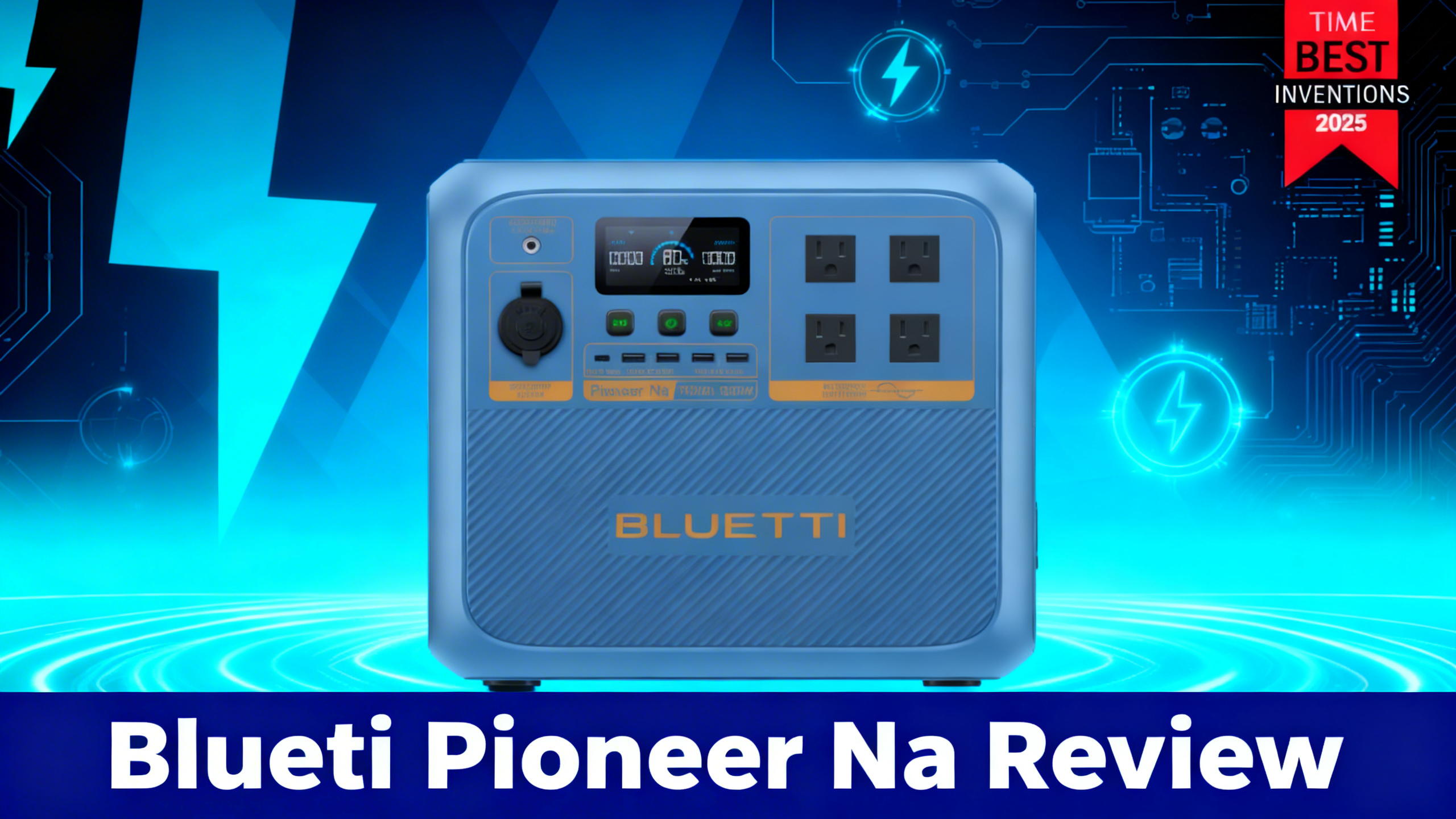
Sodium-ion chemistry has been a research topic for over a decade. But the Bluetti Pioneer Na is the first time it's shipped inside a consumer portable power station you can actually buy. That's not a small thing. Battery chemistry shifts in this market are rare, and the Pioneer Na arrives at $799 with specs that demand a closer look: 900Wh capacity, 1,500W output, 4,000-plus cycles, and an operating floor of -25°C (-13°F).
The question isn't whether sodium-ion is interesting. It clearly is. The question is whether the Pioneer Na's real-world data justifies the premium over proven LiFePO4 alternatives at similar price points. Here's what the specs and owner data show.

World's First Sodium-Ion Power Station
Bluetti Pioneer Na
$799 $1,299
- 900Wh sodium-ion, 4,000+ cycle lifespan
- 1,500W AC output, 1,900W fast charging
- Operates at -25°C / -13°F, 10-year battery life
What Is the Bluetti Pioneer Na?
The Pioneer Na is Bluetti's entry into sodium-ion chemistry: a 900Wh portable power station with 1,500W continuous AC output, a 1,900W fast charge system, and a rated cycle life of 4,000-plus cycles over 10 years. It targets users who need reliable power in extreme cold, or who plan to use their power station heavily over a long ownership window.
Bluetti positions it above the AC180 and below the larger AC200L in their lineup. At $799 (marked down from $1,299 at launch), it competes in a bracket where LiFePO4 stations typically offer more raw capacity per dollar. The trade is deliberate: you're paying for chemistry, not just capacity. If you want to see how the Pioneer Na fits alongside the rest of the lineup, the guide to best Bluetti 2026 ranked covers every current model.
What Is Sodium-Ion Technology?
Sodium-ion (NaI) batteries work on the same intercalation principle as lithium-ion, but swap lithium ions for sodium ions moving between electrodes during charge and discharge. The practical difference: sodium is far more abundant globally, the chemistry tolerates extreme cold better than most lithium variants, and the cycle durability at rated depth is exceptional.
How does it compare to the chemistries already in the market? LiFePO4 (lithium ferro-phosphate) is the dominant chemistry in quality power stations right now, rated typically to -20°C and 3,000-3,500 cycles. NMC (nickel manganese cobalt) offers higher energy density but degrades faster in cold below 0°C. Sodium-ion sits in its own category: lower energy density than both (hence 900Wh instead of 1,000Wh-plus in the same chassis footprint), but superior cold tolerance and documented longevity advantages. For a broader look at how battery technology choices affect long-term value, the U.S. Department of Energy covers sodium-ion battery technology explained in detail.


The energy density tradeoff is real and worth acknowledging. A LiFePO4 unit at $799 would typically deliver 1,000-1,200Wh. The Pioneer Na gives you 900Wh. That 10-25% capacity gap is the price of the chemistry upgrade. Whether that's a reasonable trade depends entirely on how you plan to use it.
Bluetti Pioneer Na Specs
The headline figures are straightforward. Published specifications confirm 900Wh of usable capacity with 1,500W continuous AC output and a surge rating above that for brief spikes. The 1,900W fast charge input is the standout number in the charging column: at that rate, charge time calculations show a full recharge from empty in approximately 30-35 minutes from a standard 120V outlet.
The 1,500W continuous output covers the practical majority of camping and light backup appliances: mini fridges (50-150W), CPAP machines (30-60W), laptops (45-90W), and small power tools under 1,500W. Where it doesn't reach is power-hungry kitchen appliances: most hair dryers, full-size microwaves, and electric kettles run 1,600-2,000W, which puts them above the Pioneer Na's ceiling.

What Can the Pioneer Na Power?
Runtime calculations based on the 900Wh capacity and typical inverter efficiency of around 90% give a clear picture of what this unit handles in practice. The numbers below reflect average appliance draws: real-world consumption varies by load, ambient temperature, and usage pattern.
What Can It Power? (900Wh)
❄️
Mini Fridge
~18 hrs
50W avg
💡
LED Lights (x5)
~100 hrs
9W total
💻
Laptop
~15 charges
60W avg
📱
Smartphone
~75 charges
12W avg
🌡️
Space Heater (low)
~1.5 hrs
600W
Runtime calculations based on 900Wh capacity at ~90% inverter efficiency. Real-world results vary by load and temperature.
For camping, the 18-hour mini-fridge figure is the standout use case: one full Pioneer Na charge covers a weekend of cold storage without needing solar input. For van lifers and overlanders, the combination of high capacity and all-weather operation makes it a practical primary power source on multi-day trips.

Home backup is a secondary use case, not a primary strength. At 900Wh and 1,500W output, the Pioneer Na can sustain lighting, phone charging, a router, and a CPAP machine for a full night's outage. It won't run a sump pump, window AC, or full-size electric stove. For those applications, a larger station with 2,000Wh-plus capacity is the right tool.
Cold Weather Performance: Where the Pioneer Na Shines
The -25°C (-13°F) operating floor is the specification that sets the Pioneer Na apart from every other power station in its price range. Most LiFePO4 stations are rated to -20°C, and many NMC-based units show meaningful capacity loss below 0°C. Sodium-ion chemistry data shows stable electrochemical behavior at sub-zero temperatures, which translates directly to usable capacity in cold conditions where LFP units would already be throttling.
What does this mean in practice? Consider a hunting camp in northern Canada in January: ambient temperatures around -20°C are common overnight. A LiFePO4 station at its rated minimum is still technically operational, but real-world data from owner communities consistently shows 15-25% capacity loss at those temperatures. The Pioneer Na's sodium-ion chemistry is documented to maintain a higher proportion of rated capacity at the same conditions.

The same chemistry advantage applies to users in northern Europe, Alaska, high-altitude winter camping, and anyone who stores their power station in an unheated garage or vehicle during winter months. If you're in a temperate climate where temperatures rarely drop below -10°C, the cold-weather advantage is less relevant to your buying decision.
💡 Pro Tip: Sodium-ion chemistry also charges more efficiently in cold conditions than LiFePO4. If you're using solar in winter, the Pioneer Na's charging acceptance rate at low temperatures remains higher than most LFP alternatives, which can meaningfully affect daily energy harvest.
Charging Speed and Input Options
The 1,900W AC fast charge is the Pioneer Na's most practically useful specification after cold-weather performance. Charge time calculations confirm a full recharge in approximately 30-35 minutes from a standard outlet. That's fast enough to fully top up during a lunch break, or to recharge overnight and then some before a day on the road.

Solar input is the other key charging path. Bluetti offers bundle configurations with 100W, 200W, and 350W panels. With the 350W solar bundle, spec analysis indicates full charge in roughly 3-4 hours under strong sun conditions. The 100W bundle extends that to approximately 10-12 hours. For a complete comparison of every Pioneer Na solar bundle by value per watt, the roundup of Pioneer Na solar kits breaks down which configuration makes sense for different usage patterns.
Bluetti Solar Generator Kits 2026
Compare every Pioneer Na solar bundle by value per watt and charging time.
Design, Portability and Build Quality
The Pioneer Na is a mid-size portable power station by current market standards. The form factor fits in the same bracket as the AC180: manageable for one person to carry for short distances, but not something you'd hike with. The built-in handle is solid, the chassis feels well-assembled, and the LCD display delivers clear real-time monitoring of input and output wattage, battery percentage, and estimated runtime.
The port selection covers the practical bases: multiple AC outlets, USB-C with Power Delivery, USB-A, and a DC output. It's a capable configuration for the target use cases. Where the Pioneer Na doesn't compete is expandability: unlike Bluetti's larger ecosystem units (AC200L, Apex 300), the Pioneer Na doesn't support external battery modules. The 900Wh you get at purchase is the 900Wh you keep.
Pioneer Na vs. AC180: Quick Comparison
The AC180 is the most direct comparison point for the Pioneer Na: both are mid-range Bluetti stations targeting campers and light backup users, both sit in the same price neighborhood. The differences in specs are meaningful.
Spec-for-spec, the Pioneer Na vs. AC180 comparison shows a clear split: the AC180 wins on raw capacity and price per watt-hour, the Pioneer Na wins on longevity and cold-weather tolerance. The AC180's 1,800W output also gives it an edge for users who occasionally run high-draw appliances. For a direct spec-for-spec breakdown between these two models, the Pioneer Na vs AC180 head-to-head goes deeper into performance tradeoffs.
Pioneer Na Bundles: Which Configuration to Choose?
Bluetti offers the Pioneer Na as a standalone unit at $799, or as part of a solar kit starting with the 100W panel bundle at $999. Is the $200 upgrade to the kit worth it?

For users who plan to use the Pioneer Na primarily at home or in a vehicle where AC charging is convenient, the standalone unit at $799 is the right call. If you're camping for multiple days without grid access, the 100W solar kit extends your range meaningfully: even at 10-12 hours to full charge, you're harvesting enough daily solar to sustain a mini-fridge and device charging through most camping scenarios.

Bluetti Pioneer Na: Overall Rating
8.4/10
“A landmark product for all-weather reliability and longevity”
Battery Longevity 9.5/10
Cold Weather Performance 9.0/10
Charging Speed 8.5/10
Output Power 7.5/10
Value for Money 8.0/10
Portability 7.5/10
Who Is the Pioneer Na For?
Buy the Pioneer Na if…
- You camp or work in sub-zero temperatures
- Long-term ownership matters more than upfront price
- You want a power station that will still hold charge in 10 years
- You live in a region with harsh winters or extreme cold
Skip the Pioneer Na if…
- You need to run power-hungry appliances above 1,500W
- You want a proven, mature battery chemistry (LiFePO4)
- Budget is the primary driver and $799 feels steep for 900Wh
- You need expandable capacity via battery modules
The Pioneer Na is a specialist tool. It's not the best answer for every buyer at $799. But for users in cold climates, heavy-use scenarios, or anyone prioritizing a decade of ownership over maximum upfront capacity per dollar, the data points strongly in its favor.
Verdict
Based on our analysis, the Bluetti Pioneer Na earns a solid recommendation for the right buyer. Shoppers cross-shopping the same tier should also read our AC70 review and Elite 100 V2 review, and van lifers can jump to our dedicated Bluetti van life 2026 guide. Curious about the parent brand? See our Is Bluetti a good brand analysis. The sodium-ion chemistry delivers on its core promises: better cold-weather performance than comparable LFP units and a cycle life that translates to a genuine 10-year product lifespan under regular use. At $799 with 4,000-plus rated cycles, the cost-per-cycle math is favorable compared to shorter-lived alternatives.
The limitations are real. At 900Wh and 1,500W output, it's not a capacity leader in its price bracket, and it won't expand. Buyers who need 1,200Wh or more, expandable systems, or maximum output wattage should look elsewhere. But buyers who need all-weather dependability and long-term value will find the Pioneer Na hard to beat at this price point.
The Pioneer Na joins an already strong lineup, and our ranking of the top Bluetti models puts it in context against the AC180, AC200L, and Apex 300. For a complete breakdown of every current Bluetti model and how they stack up against each other, the Bluetti brand review covers the full ecosystem.
You can check the current price and availability directly on the official Pioneer Na product page.
Bluetti Pioneer Na
$799
Best sodium-ion power station for all-weather use
Price verified April 2026. Free shipping available
Frequently Asked Questions
What is the Bluetti Pioneer Na?
The Pioneer Na is Bluetti's first sodium-ion portable power station, featuring a 900Wh capacity, 1,500W AC output, and a rated lifespan of 4,000-plus cycles over 10 years. It is the first consumer-grade power station built on sodium-ion chemistry rather than the more common LiFePO4 or NMC batteries. Priced at $799, it targets campers, overlanders, and users in cold-weather environments who prioritize longevity and all-weather performance.
What makes sodium-ion different from LiFePO4?
Sodium-ion chemistry offers several performance advantages in extreme conditions. Published data consistently shows better capacity retention at sub-zero temperatures, rated to -25°C versus around -20°C for most LiFePO4 units. The cycle count is also higher: 4,000-plus cycles for the Pioneer Na versus 3,000-3,500 for typical LFP stations. The primary tradeoff is lower energy density, which is why the Pioneer Na delivers 900Wh in a chassis where an LFP unit might fit 1,000-1,200Wh.
How long does the Pioneer Na take to charge?
With a 1,900W AC fast charge input, charge time calculations show the Pioneer Na can reach full capacity in approximately 30-35 minutes from a standard 120V outlet. Solar input time depends on panel wattage: with the 350W bundle, spec analysis suggests a full charge in 3-4 hours under optimal sun conditions. The 100W panel bundle extends that to approximately 10-12 hours of good sun exposure.
Can the Pioneer Na power a refrigerator?
Runtime calculations based on the 900Wh capacity indicate approximately 15-18 hours of continuous runtime for a mini-fridge drawing 50W on average. A full-size refrigerator drawing 150-200W on average would run for roughly 5-7 hours. These figures apply at room temperature. Sodium-ion chemistry's stable performance in cold environments means runtime in unheated spaces or cold garages remains more consistent than most LFP alternatives under the same conditions.
How does the Pioneer Na compare to the Bluetti AC180?
The AC180 uses LiFePO4 chemistry with 1,152Wh capacity and costs around $499 at discount, making it the better value for general-purpose use. The Pioneer Na delivers 900Wh of sodium-ion at $799, with a meaningful advantage in cold-weather performance and long-term cycle life. For temperate-climate users on a budget, the AC180 wins on raw capacity per dollar. For cold-climate users and buyers focused on 10-plus years of ownership, the Pioneer Na's chemistry advantages justify the premium.
What solar panels work with the Pioneer Na?
The Pioneer Na is compatible with Bluetti's solar panel lineup in bundle configurations: 100W, 200W, and 350W options are available. Third-party panels with compatible connectors also work, provided voltage stays within the station's rated input limits. The 200W panel is generally the best value-per-watt option for multi-day camping without grid access.
Is the Bluetti Pioneer Na worth it in 2026?
For users who prioritize longevity and cold-weather reliability over raw capacity, the Pioneer Na makes a strong case at $799. Published data on sodium-ion cycle life (4,000-plus cycles to 80% capacity) translates to over a decade of regular use before meaningful capacity degradation. For general-purpose camping or home backup in moderate climates, the higher cost over comparable LFP stations is harder to justify. The Pioneer Na is a specialist tool for demanding conditions, not a budget generalist.
Originally published: April 7, 2026