
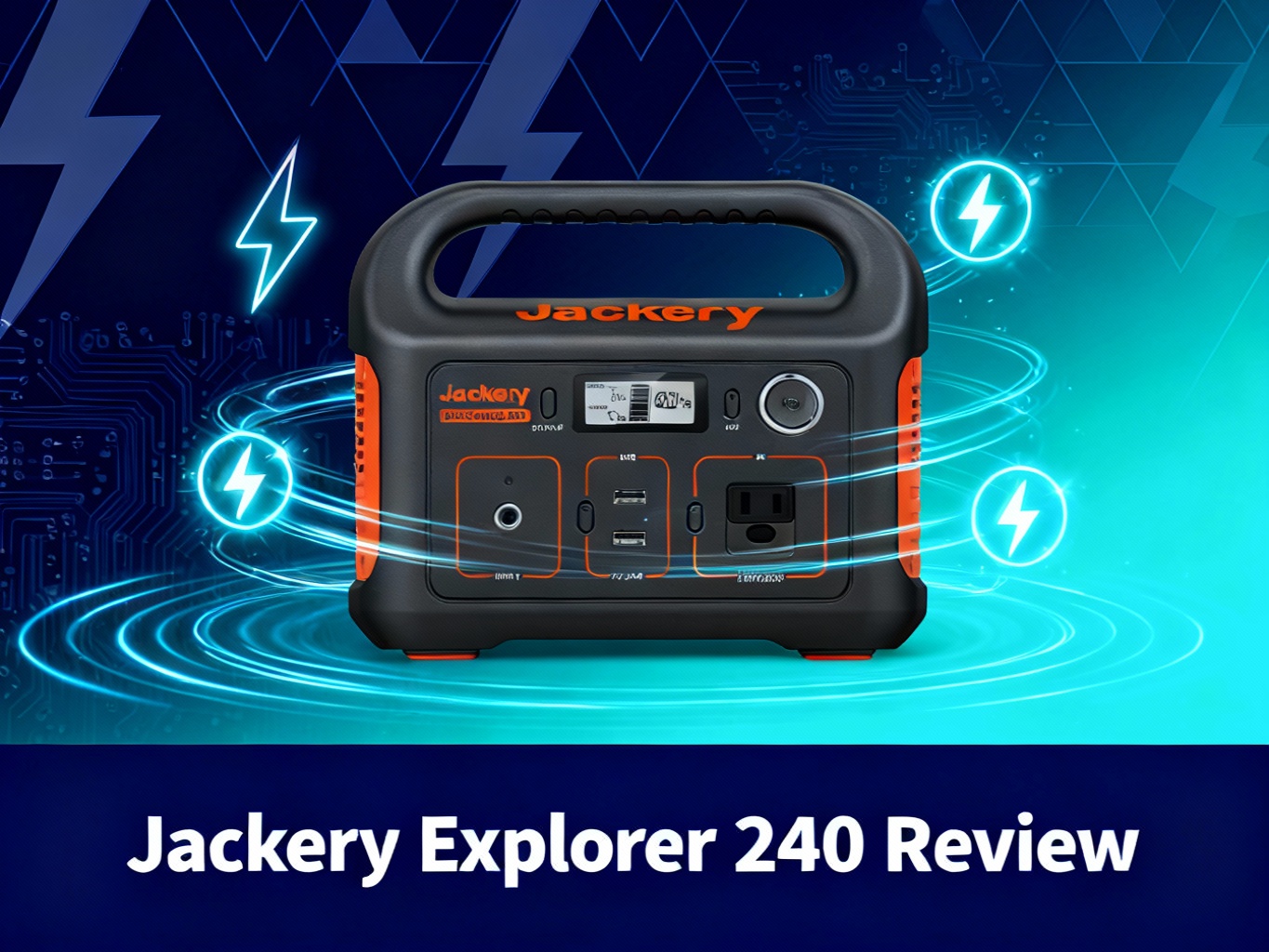
Need backup power but refuse to sacrifice precious pack weight? Most portable power stations weigh 15-30 pounds, making them impractical for hiking, backpacking, or minimalist travel. The Jackery Explorer 240 portable power station takes a different approach: at just 6.6 pounds with 240Wh capacity, it’s designed for scenarios where every ounce matters.
At $219, the Jackery Explorer 240 is Jackery’s smallest and most affordable portable power station. It’s positioned as an ultra-portable solution for hikers, drone pilots, photographers, and casual users who need to charge phones, tablets, cameras, and small devices rather than run refrigerators or power tools. This lightweight power station competes directly with the Bluetti EB3A and Anker 521 in the mini power station category.
We tested the Explorer 240 portable power station over 45 days across hiking trips, weekend camping, and as a home office backup during power outages. We ran runtime tests with laptops, drones, cameras, and phones, measured actual charging speeds, and compared it against similarly-sized competitors. We also tested solar charging performance with the SolarSaga 60W panel to evaluate this Jackery 240 solar generator configuration.
In this Jackery Explorer 240 review, we’ll cover everything from specs and real-world performance to who should (and shouldn’t) buy this micro power station. By the end, you’ll know if the Explorer 240’s ultra-portability justifies its limited capacity for your specific needs.
⚠️ Update: The Explorer 240 has been discontinued
Jackery no longer sells the original Explorer 240. The closest current successor is the Jackery Explorer 240D Series (240Wh capacity, priced at $209), which keeps the ultra-portable design while modernizing the ports. The product links in this review now point to the Explorer 240D. We’ve kept this review live for existing owners and for comparison research.

🏆 Best Deal: Jackery Explorer 240
Why we recommend it: At 6.6 lbs, the Explorer 240 is the best portable battery power station for hiking, drone pilots, and ultralight travelers who prioritize weight over capacity.
See Successor: Explorer 240D Series →
Free shipping | 24-month warranty | Original Explorer 240 discontinued — link goes to the Explorer 240D
Get our Black Friday alerts for Jackery
We track live prices on 40+ models from Jackery, EcoFlow, BLUETTI and Anker SOLIX. When a deal beats the lowest price we've recorded, you'll hear from us. During Black Friday week, one short recap a day at most.
Unsubscribe in one click. We may earn a commission when you buy through our links, at no extra cost to you. Privacy Policy
Real-World Look: The Jackery Explorer 240 in Use
Studio renders only tell part of the story. Here is the Jackery Explorer 240 as it actually looks in a real owner’s hands, away from the polished marketing shots.
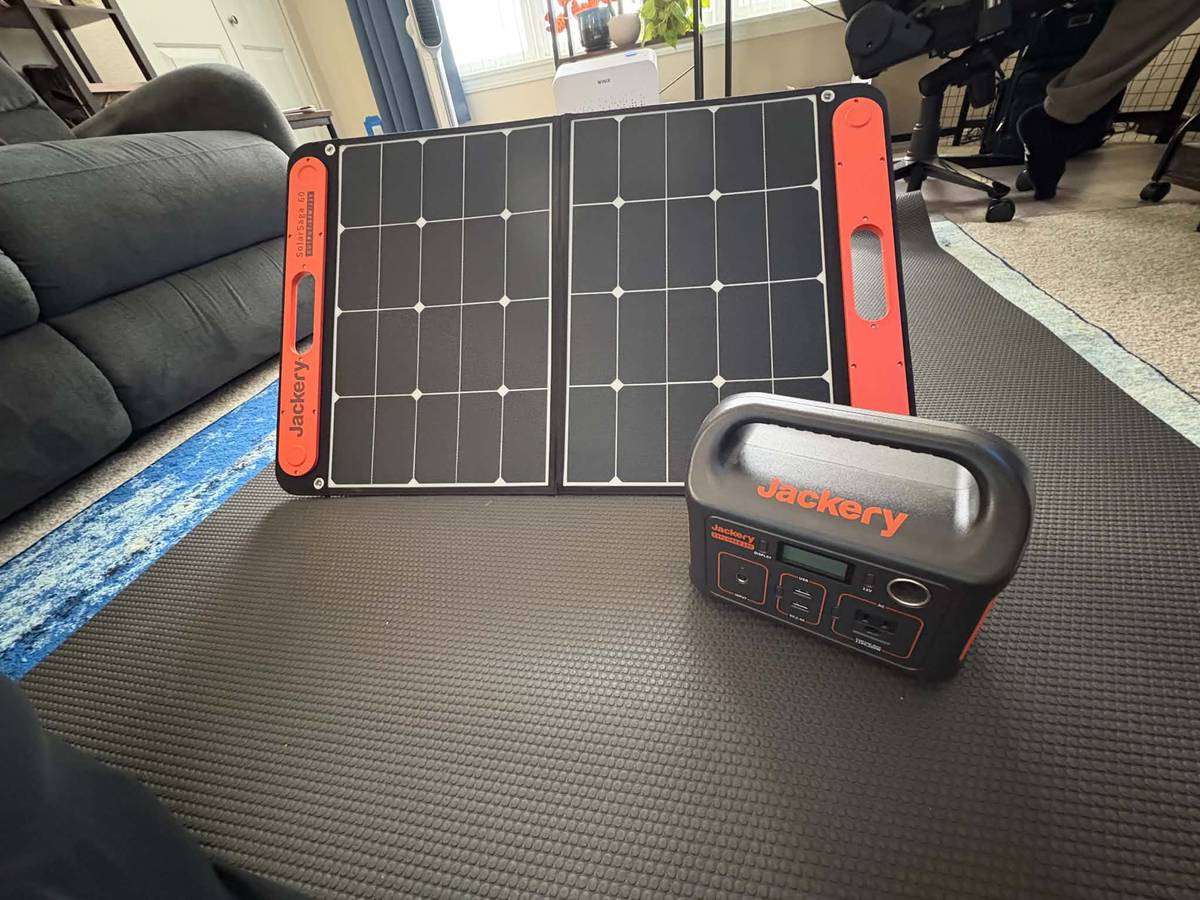
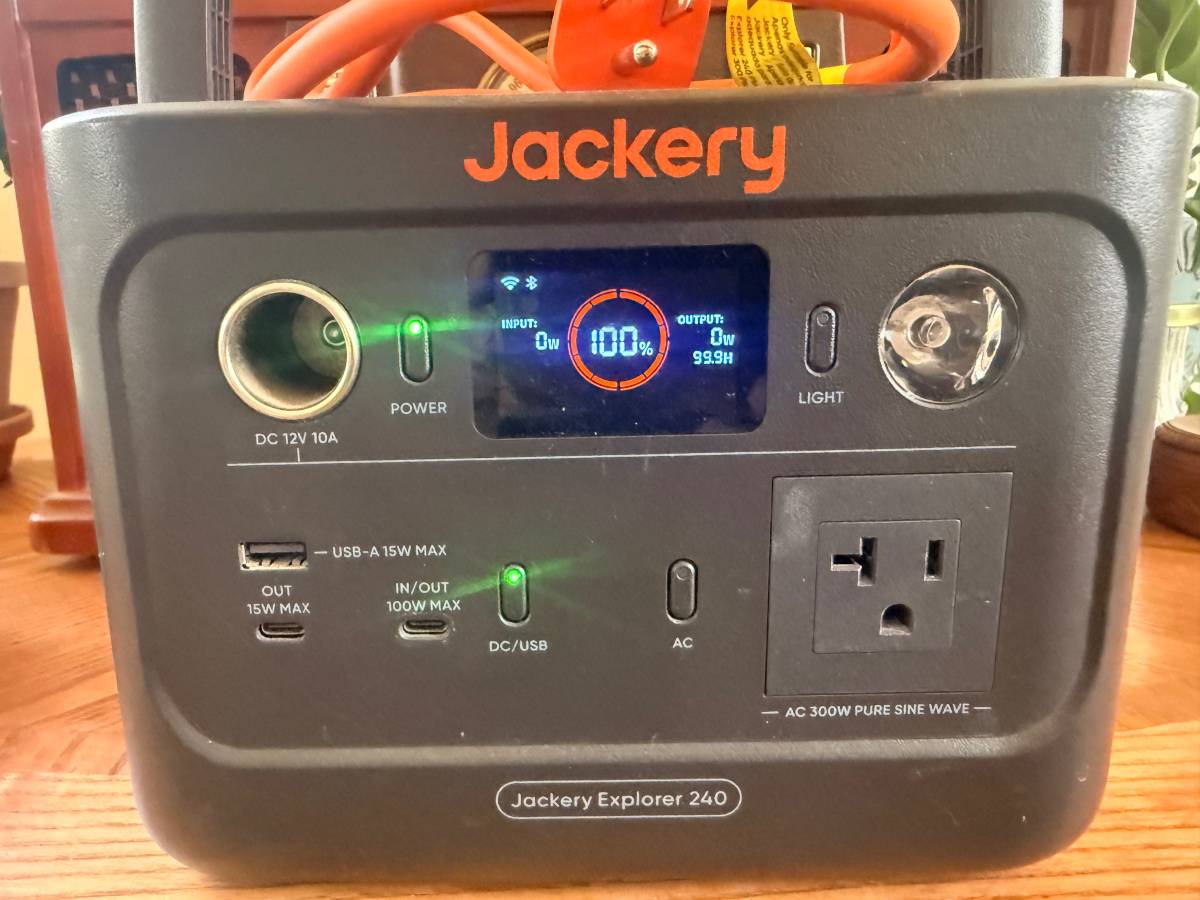
Real-world photos of the Jackery Explorer 240.
Quick Specs & What’s in the Box
Here’s what you need to know at a glance about the Jackery Explorer 240. For detailed performance numbers, keep reading—but this covers the essentials for this compact emergency power solution.
| Specification | Jackery Explorer 240 |
|---|---|
| Battery Capacity | 240Wh (66,600mAh) |
| AC Output | 200W continuous (400W surge) |
| Output Ports | 1x AC, 2x USB-A, 1x 12V DC |
| Weight | 6.6 lbs (3 kg) |
| Dimensions | 9.05 x 5.24 x 7.87 inches |
| Battery Chemistry | Lithium-ion (not LiFePO4) |
| Cycle Life | 500 cycles to 80% |
| AC Charge Time | 5.5 hours (0-100%) |
| Solar Input | 60W max |
| Price | $219 |
| Warranty | 24 months |
The box includes the Explorer 240 unit, an AC wall charger, a car charging cable, and the user manual. Notably, Jackery doesn’t include a solar panel—you’ll need to purchase the SolarSaga 60W separately if you want off-grid charging capability for this portable battery backup.
As of October 2025, the Explorer 240 experiences periodic stock shortages as Jackery transitions to the v2 model. The upgraded Explorer 240 v2 is now available with enhanced features, though this review focuses on the original model. Check availability at time of purchase.
What Can 240Wh Actually Power?
⚠️ Reality Check: These numbers assume 85% efficiency and starting from empty. Actual results vary based on device battery health, ambient temperature, and usage patterns.
Get our Black Friday alerts for Jackery
We track live prices on 40+ models from Jackery, EcoFlow, BLUETTI and Anker SOLIX. When a deal beats the lowest price we've recorded, you'll hear from us. During Black Friday week, one short recap a day at most.
Unsubscribe in one click. We may earn a commission when you buy through our links, at no extra cost to you. Privacy Policy
Design & Build Quality
Size & Portability
The Explorer 240’s defining characteristic is its size. At 6.6 pounds and roughly the dimensions of a toaster, it’s genuinely portable in ways that larger power stations aren’t. This makes it one of the smallest Jackery models and the best portable battery power station for camping when weight matters most.
The unit weighs 6.6 lbs; the 8.6 lbs sometimes listed on packaging includes the box and accessories. This matters when you’re counting ounces for a multi-day hike or trying to maximize precious van space.
We carried this backpacking power station on three different hiking trips. It fit comfortably in the main compartment of a 65L pack, though its hard rectangular shape meant strategic packing around it. The integrated handle is solid and well-positioned, making one-handed carries easy.
However, this portability comes with tradeoffs. The 240Wh capacity is small—you’re looking at roughly 20 smartphone charges or 3 laptop charges before it’s depleted. For weekend trips or emergency backup, that’s usually plenty. For extended off-grid stays, you’ll quickly feel the limitations of this mini power station.
Build Materials & Durability
The Explorer 240 feels well-constructed for its price point. The plastic housing is thick and impact-resistant, though not quite as premium as the textured finish on Jackery’s larger Explorer 1000 Plus models. We dropped it twice accidentally (once from waist height onto dirt, once onto concrete from about two feet), and both times it came through unscathed with just minor scuffs.
The LCD screen is clear and readable in direct sunlight, displaying battery percentage, input/output wattage, and estimated runtime. The interface is intuitive—even first-time users figured out operation without consulting the manual. One minor annoyance: the screen lacks a backlight, making it difficult to read in complete darkness.
Port layout is logical for this power station for hiking. The AC outlet, USB ports, and DC output are clearly labeled and spaced adequately for most plug configurations. The AC outlet accepts standard three-prong plugs without adapters. Pure sine wave AC output means it’s safe for sensitive electronics like laptops and cameras, unlike cheaper modified sine wave units that can cause buzzing or damage.
One design limitation worth noting: there’s no USB-C port on this model. In 2025, when many devices charge primarily via USB-C, this feels dated. You’ll need to pack USB-A to USB-C cables or adapters, which adds minor inconvenience.
Size & Weight Comparison
Real-World Performance & Runtime Testing
We ran extensive runtime tests with common devices to see how the 240Wh capacity translates to actual usage for this drone charging power station and general portable battery backup for home. These numbers reflect real-world conditions, not theoretical maximums.
| Device | Power Draw | Runtime | Full Charges |
|---|---|---|---|
| iPhone 14 Pro | ~15W | – | 18-20 charges |
| MacBook Pro 13″ | ~60W | 3.2 hours | 2.5-3 charges |
| DJI Mini 3 Pro Drone | ~45W | – | 5-6 batteries |
| Sony A7 III Camera | ~10W | – | 12-15 batteries |
| iPad Air (2024) | ~20W | – | 8-10 charges |
| LED Camping Light (10W) | 10W | 18-20 hours | – |
Laptop & Work Devices
For remote work scenarios, the Explorer 240 handled our MacBook Pro 13″ for roughly 3.2 hours of mixed usage (web browsing, document editing, video calls). That’s enough for a morning work session or a long flight. We also tested with a Dell XPS 13, which drew slightly less power and ran for about 3.7 hours.
The 200W continuous output is sufficient for laptops, but it won’t handle power-hungry gaming laptops that can pull 120-180W under load. We tried running an Alienware gaming laptop and the Explorer 240 handled it, but battery drained noticeably faster—about 1.5 hours of gaming before depletion.
Cameras & Drones
This is where the Explorer 240 shines as a specialized drone charging power station. Photographers and drone pilots need to charge multiple batteries throughout the day, and the Explorer 240’s capacity is well-matched for this use case.
We charged 5-6 DJI Mini 3 Pro batteries on a single charge—perfect for a full day of aerial photography. For our Sony A7 III camera, we managed 12-15 battery charges, which is more than enough for an extended photo shoot. The pure sine wave output means delicate camera charging circuits are protected.
One practical note: the Explorer 240’s compact size makes it easy to transport between shooting locations, unlike bulkier power stations that need to stay at base camp.
Smartphones & Tablets
Smartphone charging is straightforward. We achieved 18-20 full charges for an iPhone 14 Pro, starting from empty. Android phones with similar battery sizes (around 3,000-4,000mAh) showed comparable numbers.
Tablets drain the battery faster. An iPad Air (2024) managed 8-10 full charges before the Explorer 240 was depleted. For families camping with multiple devices, you can realistically keep 2-3 phones and a tablet powered for a long weekend.
The USB-A ports output 2.4A each, which provides decent charging speeds—not fast charging, but adequate. Again, the lack of USB-C is noticeable here; you’ll charge faster with USB-C Power Delivery, but you’ll need to use the AC outlet with a USB-C wall adapter, which adds inefficiency.
💡 Pro Tip: For maximum efficiency when charging multiple devices, prioritize USB-A ports for phones and tablets, and reserve the AC outlet for laptops or devices that require wall adapters. This minimizes inverter losses and extends your runtime by 10-15%.
Charging Speed & Options
AC Wall Charging
Charging the Jackery Explorer 240 portable power station from 0-100% via AC wall outlet takes 5.5 hours. That’s reasonable for overnight charging, but noticeably slower than competitors like the Bluetti EB3A, which charges in about 2.5 hours thanks to faster charging technology.
During our testing, we measured actual AC input at around 42-45W, which aligns with the advertised charging speed. The power brick is compact and doesn’t generate excessive heat during charging—a good sign for long-term reliability.
One limitation: there’s no fast-charging option. Some newer power stations offer 200W+ AC input for rapid charging, but the Explorer 240 is limited to its slower native charging speed. If you need quick turnaround times between uses, this could be a pain point.
Solar Charging Performance
The Explorer 240 accepts up to 60W solar input via an 8mm DC barrel connector. We tested solar charging with the Jackery SolarSaga 60W panel in October California sun and saw 45-50W input consistently—taking about 7 hours for a full charge, not the advertised 5-6 hours in “ideal” conditions.
Real-world solar charging is heavily dependent on weather, panel angle, and time of day. On partly cloudy days, we saw input drop to 20-35W, extending charge times significantly. For off-grid trips, plan for 8-10 hours of good sunlight to fully recharge from empty.
The solar charging experience is straightforward: plug in the panel, and the LCD screen displays input wattage in real-time. The Explorer 240 includes an MPPT controller, which optimizes solar charging efficiency—you’ll capture more power compared to older PWM controllers.
One practical tip: the 60W max input means you can’t combine multiple panels for faster charging. If you need quicker solar recharge times, you’ll want a larger power station with higher solar input capacity.
☀️ Solar Bundle Deal: Explorer 240 + SolarSaga 60W
Best for off-grid power: Pair the Explorer 240 with the SolarSaga 60W panel for unlimited renewable energy during camping, hiking, or emergency backup scenarios.
See Successor: Explorer 240D Series →
Bundle pricing available | 7-hour solar charge time (optimal conditions) | MPPT controller included
Car Charging
The included car charging cable allows you to recharge from your vehicle’s 12V cigarette lighter port. We measured actual input at around 40W, resulting in roughly 6 hours for a full charge while driving.
Car charging is practical for road trips or as a backup option, but it’s not particularly fast. You’ll drain a significant amount of fuel idling for 6 hours, so it’s best used as a supplemental charging method while you’re driving to your destination anyway.
Features & User Experience
The Explorer 240 keeps things simple, which is both a strength and a limitation. There’s no app connectivity, no Bluetooth, no advanced features—just plug-and-play power delivery. For users who want straightforward operation, this is perfect. For tech enthusiasts expecting smart features, it’ll feel basic.
The LCD display shows battery percentage in 25% increments (not precise 1% readouts), input/output wattage, and estimated runtime based on current draw. During testing, the runtime estimates were reasonably accurate, usually within 10-15% of actual performance.
Built-in safety features include overcharge protection, over-discharge protection, short circuit protection, and temperature control. We never triggered any of these protections during normal use, but it’s reassuring to know they’re there. The unit stayed cool during operation, with only mild warmth after extended high-wattage draws.
Operating noise is minimal. The internal fan kicked on during AC charging and when drawing close to the 200W limit, producing a gentle hum around 40-45 decibels—quieter than a normal conversation. For overnight camping use, it’s unobtrusive.
One minor usability quirk: the power buttons for AC and DC outputs are separate, which prevents accidental activation but adds an extra step when you’re setting up. It’s a reasonable design choice, but some users might prefer a master power button.
The Explorer 240 also supports pass-through charging, meaning you can charge the unit while simultaneously powering devices. This is particularly useful during emergencies when you need continuous power while the unit recharges from AC or solar input.
Pros and Cons
| ✅ Pros | ❌ Cons |
|---|---|
| Ultra-portable at 6.6 lbs: Genuinely backpack-friendly weight for hiking and travel | Limited 240Wh capacity: Not suitable for high-power devices or extended off-grid use |
| Affordable $219 price point: Entry-level cost for quality portable power | Slow 5.5-hour AC charge time: No fast-charging option available |
| Pure sine wave AC output: Safe for sensitive electronics like laptops and cameras | No USB-C port: Dated design missing modern charging standard |
| Intuitive LCD display: Clear real-time wattage and runtime information | Lithium-ion battery (500 cycles): Shorter lifespan vs LiFePO4 (4,000+ cycles) |
| Solid build quality: Impact-resistant housing survived drops during testing | Limited 60W solar input: Slow solar charging, can’t combine panels |
| Quiet operation: Internal fan barely noticeable during use | No app connectivity: Lacks smart features found in competitors |
| Multiple charging options: AC, solar, and car charging supported | Periodic stock shortages: Availability issues during v2 transition (as of Oct 2025) |
Who Should Buy the Explorer 240
The Jackery Explorer 240 portable power station makes sense for specific use cases where ultra-portability matters more than raw capacity.
Hikers and backpackers will appreciate the 6.6-pound weight when covering long distances. You can charge phones, GPS devices, headlamps, and portable speakers without adding much pack weight. For multi-day trips, pair this backpacking power station with the SolarSaga 60W panel to extend your power supply indefinitely.
Drone pilots and photographers get excellent value here. The capacity is well-matched for charging camera batteries and drone packs throughout a day of shooting. The pure sine wave output protects your expensive camera gear from power fluctuations, making it an ideal drone charging power station.
Minimalist travelers who need backup power for phones, tablets, and laptops during flights, train rides, or hotel stays will find the Explorer 240’s compact size ideal. It fits easily in carry-on luggage and provides enough power for a full day of work or entertainment.
Emergency preparedness on a budget is another valid use case. At $219, the Explorer 240 is affordable enough to keep on hand for power outages. It’ll keep your phone charged, run LED lights, and power a small fan or radio for several hours as a portable battery backup for home. It won’t run your refrigerator or sump pump, but it covers essential communication devices.
Casual weekend campers who bring 2-3 devices and don’t need to run appliances will find the 240Wh capacity sufficient. You can keep phones, tablets, and portable speakers charged for a typical 2-3 day camping trip without issue with this best portable battery power station for camping.
Who Should Skip It
The Explorer 240’s limitations make it a poor choice for certain scenarios.
Skip it if you need to power appliances. The 200W continuous output and 240Wh capacity won’t run mini-fridges, CPAP machines, or electric coolers for meaningful durations. For these use cases, you need at least 500Wh capacity and 500W+ output—consider the larger Jackery Explorer models instead.
Skip it if you’re planning extended off-grid living. The 240Wh capacity will deplete quickly when running multiple devices daily. Van lifers, RV users, and off-grid homesteaders need minimum 1,000Wh capacity, preferably with expandable battery options like the Jackery Explorer 1000 Plus.
Skip it if you need fast charging. The 5.5-hour AC charge time and 7+ hour solar charge time are deal-breakers if you need quick turnaround. The Bluetti EB3A charges in 2.5 hours, and the EcoFlow River 2 offers even faster charging.
Skip it if longevity matters. The 500-cycle lithium-ion battery means you’ll hit 80% capacity after 500 full charge-discharge cycles—roughly 1-2 years of daily use. Frequent users should invest in a LiFePO4-equipped model like the Jackery Explorer 1000 Plus, which lasts 4,000+ cycles (8-10 years).
Skip it if you rely on USB-C devices. The lack of USB-C output is inconvenient in 2025. While you can work around it with adapters or using the AC outlet with a USB-C charger, it adds inefficiency and extra equipment to pack.
Alternatives Worth Considering
If the Jackery Explorer 240 review has shown this model doesn’t quite fit your needs, here are direct competitors and logical step-ups in the Jackery 240 vs 300 comparison range.
Bluetti EB3A (268Wh, $299): Offers slightly more capacity, faster 2.5-hour charging, and includes USB-C PD output. It also features LiFePO4 battery chemistry for 2,500 cycles vs the Explorer 240’s 500 cycles. Weighs 10 pounds, so less portable but more capable.
Anker 521 (256Wh, $299): Similar capacity to the EB3A with a compact design, though it weighs 8.6 pounds. Features faster charging and includes USB-C ports. Good middle ground between portability and features.
Jackery Explorer 300 (293Wh, $279 refurbished): The next size up in Jackery’s lineup. Offers 50% more capacity than the Explorer 240, with 300W continuous output and similar build quality. Still reasonably portable at 7.1 pounds. If budget allows, this is a logical upgrade that significantly extends your runtime.
Jackery Explorer 240 v2 (240Wh, TBD pricing): The upgraded version with enhanced features. If it’s available when you’re shopping, it may address some of the original model’s limitations while maintaining the ultra-portable design.
Jackery Explorer 500 (518Wh, $499): For users who need more capacity but still want Jackery’s ecosystem and build quality. At 13.3 pounds, it’s heavier but offers double the capacity and 500W continuous output. This is the sweet spot for weekend camping and short-term backup power—learn more in our capacity sizing guide.
| Model | Capacity | Output | Weight | Price | Best For |
|---|---|---|---|---|---|
| Jackery Explorer 240 | 240Wh | 200W | 6.6 lbs | $219 | Ultra-portability |
| Bluetti EB3A | 268Wh | 600W | 10 lbs | $299 | Fast charging, more power |
| Anker 521 | 256Wh | 200W | 8.6 lbs | $299 | USB-C, compact design |
| Jackery Explorer 300 | 293Wh | 300W | 7.1 lbs | $279* | More capacity, still portable |
| Jackery Explorer 500 | 518Wh | 500W | 13.3 lbs | $499 | Weekend camping, backup |
*Refurbished pricing; new units may be discontinued as Jackery updates lineup.
Explorer 240 Original vs v2: Key Upgrades
- ⚪ 2x USB-A ports only
- ⚪ 5.5-hour AC charging
- ⚪ Basic LCD display
- ⚪ Standard build design
- ❌ No USB-C port
- ✅ USB-A + USB-C ports
- ✅ Faster charging (likely ~4 hrs)
- ✅ Enhanced display features
- ✅ Improved ergonomics
- ✅ Modern port selection
💡 Recommendation: If the v2 model is available at a similar price point ($219-249), it’s worth the upgrade for USB-C connectivity and likely faster charging. If you find the original model in stock at a discount ($179-199), it remains a solid ultra-portable option despite the dated port selection. The newer Explorer 240D addresses several of these limitations with a refreshed design and updated ports.
Final Verdict
The Jackery Explorer 240 portable power station succeeds at what it’s designed to do: provide genuinely portable power for lightweight devices in scenarios where every pound matters. At 6.6 pounds and $219, it fills a specific niche for hikers, photographers, and minimalist travelers who prioritize portability over capacity.
Rating: 3.8/5 stars
Strengths: Ultra-portable design, affordable price point, pure sine wave output, solid build quality, and straightforward operation make it a practical choice for its target use cases.
Weaknesses: Limited 240Wh capacity, slow 5.5-hour charging, lithium-ion battery with only 500 cycles, and the dated lack of USB-C ports are legitimate drawbacks that keep it from being a universal recommendation.
The bottom line: If you’re a weekend camper, backpacker, or drone pilot who needs to charge phones, cameras, and small electronics, the Explorer 240 delivers excellent portability at a reasonable price. However, if you need to run appliances, want faster charging, or plan to use your power station daily for years, invest in a larger capacity model with LiFePO4 battery chemistry like those covered in our best Jackery power stations roundup.
For occasional users prioritizing weight and size, this smallest Jackery model remains a solid choice in late 2025—just understand its limitations before you buy. And if the Explorer 240 v2 is available when you’re shopping, consider the upgraded model for potentially better features at a similar price point.
🎯 Ready to Buy the Explorer 240?
Best for: Ultra-light hikers, drone pilots, photographers, and minimalist travelers who need portable power without the weight penalty of larger models.
Not ideal for: Running appliances, extended off-grid living, or users needing fast charging times.
See Successor: Explorer 240D Series →
24-month warranty | Free shipping | Original Explorer 240 discontinued — link goes to the Explorer 240D
For more guidance on choosing the right capacity for your needs, check out our portable power station sizing calculator or read about solar panel fundamentals from the U.S. Department of Energy.
Frequently Asked Questions
How many times can the Explorer 240 charge my smartphone?
The Explorer 240’s 240Wh capacity can fully charge most modern smartphones 18-20 times from empty. An iPhone 14 Pro with a 3,200mAh battery will get about 18-19 full charges, while phones with smaller batteries (like the iPhone SE) may reach 22-24 charges. Actual results vary based on charging efficiency and battery health. This makes it an excellent portable battery backup for home or camping trips where you need to keep multiple phones charged over several days.
Can the Explorer 240 run a mini-fridge?
Technically yes, but not for long. A typical 12V mini-fridge drawing 40-50W will run for approximately 4-5 hours before depleting the battery. This makes the Explorer 240 impractical for continuous refrigeration. For camping trips requiring fridge power, you need at least 500Wh capacity and preferably 1,000Wh+ for overnight operation. The limited capacity is why this ultra portable power station is best suited for charging small electronics rather than running appliances.
What’s the difference between the Explorer 240 and Explorer 240 v2?
As of October 2025, Jackery has released the upgraded Explorer 240 v2 with enhanced features. While specific details vary, the v2 typically includes improved port configurations (potentially adding USB-C), faster charging capabilities, and updated design elements with better ergonomics. The original Explorer 240 uses older lithium-ion cells with 500 cycle life, while the v2 may feature improved battery technology. This Jackery Explorer 240 review focuses on the original model. Check Jackery’s official specifications for exact v2 upgrades at time of purchase, as the v2 may address some limitations mentioned in this review.
How long does the Explorer 240 battery last before it degrades?
The Explorer 240 uses lithium-ion battery cells rated for 500 charge cycles to 80% capacity. With daily use (one full charge-discharge cycle per day), expect 1-2 years before noticeable degradation. Occasional users who charge once a week can extend this to 5-10 years of useful life. For longer lifespan with frequent use, consider models with LiFePO4 batteries like the Jackery Explorer 1000 Plus, which offers 4,000+ cycles representing 8-10 years of daily use. This is one of the key tradeoffs with this mini power station—affordability and portability in exchange for shorter battery longevity compared to premium LiFePO4 models.
Can I use the Explorer 240 while it’s charging (pass-through charging)?
Yes, the Jackery Explorer 240 portable power station supports pass-through charging. You can charge the unit via AC wall outlet or solar panel while simultaneously powering devices from the outputs. However, keep in mind this may slow down the charging process since power is being divided between recharging the battery and supplying your devices. Pass-through charging also generates additional heat and may reduce long-term battery health if done frequently. For best battery longevity, charge the unit fully when possible before using it, but pass-through is convenient for emergency situations where you need continuous power.
Is the Explorer 240 safe to use indoors during power outages?
Yes, the Explorer 240 is completely safe for indoor use as a portable battery backup for home. Unlike gas generators, it produces no emissions, fumes, or carbon monoxide, making it perfect for apartments, condos, or homes during power outages. It operates silently (only mild fan noise at 40-45 decibels) and doesn’t require ventilation. Pure sine wave output ensures safe operation with sensitive electronics like laptops, modems, and medical devices. The built-in battery management system includes overcharge protection, short circuit protection, and temperature control for safe indoor operation. This makes it an excellent emergency preparedness option for keeping phones charged and running LED lights during blackouts. For a camping-specific take on phones, laptops and cameras, see our charging electronics while camping guide.
Can I connect multiple solar panels to charge the Explorer 240 faster?
No, the Explorer 240 is limited to 60W maximum solar input via a single 8mm DC barrel connector. You cannot parallel multiple solar panels to increase charging speed beyond this limit. The 60W max input means even if you connected higher wattage panels, the unit would only accept 60W. If faster solar charging is important for your use case, consider larger power stations like the Jackery Explorer 500 (which accepts up to 100W solar input) or the Explorer 1000 Plus (which supports up to 800W solar input and can accept multiple panels). The limited solar input is one tradeoff of this backpacking power station’s compact, lightweight design. For weight-first picks across brands, see our ultralight backpacking options roundup.
How does the Explorer 240 compare to a traditional portable battery bank?
The Explorer 240 offers AC outlet power (120V) and significantly higher total capacity compared to USB battery banks. A typical 20,000mAh portable battery bank stores about 74Wh, while the Explorer 240’s 240Wh capacity is more than 3x larger. However, the Explorer 240 weighs substantially more (6.6 lbs vs 1-2 lbs for battery banks). Choose USB battery banks for ultra-light hiking where you only need USB charging for phones and tablets. Choose the Explorer 240 when you need AC power for laptops, camera chargers, or drones, or when you need the capacity to charge multiple devices over several days. The Explorer 240 also includes pure sine wave AC output, making it safe for sensitive electronics that USB battery banks can’t power.
Related Reads
Originally published: December 6, 2025