
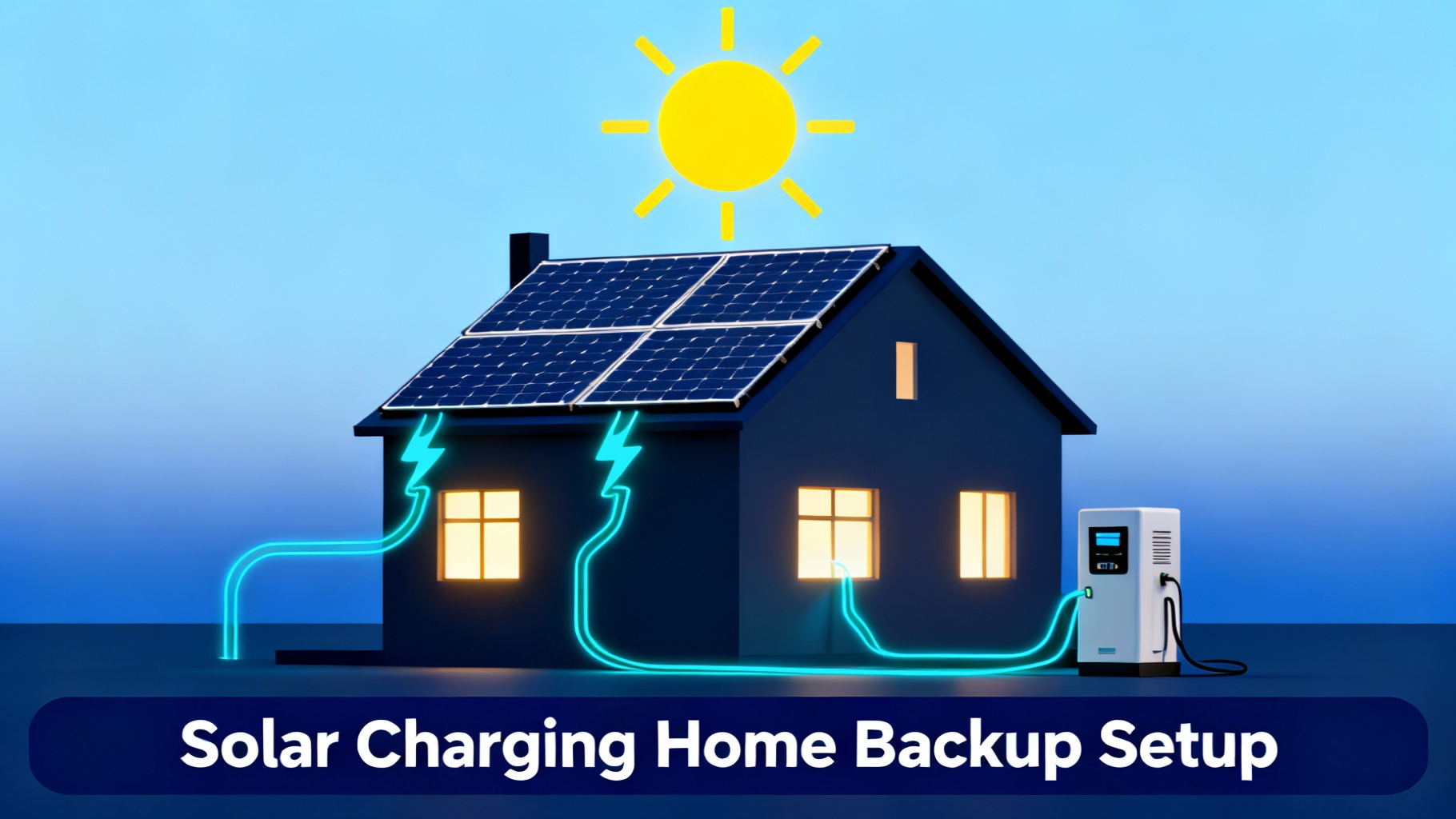

The power goes out at 6 PM on a freezing January evening. Your neighbors scramble to find gas for their noisy generators, queueing at stations with dwindling fuel supplies. Meanwhile, your home stays warm and lit—powered by a solar-charged backup system that’s been quietly collecting energy all day.
This scenario plays out more frequently than most homeowners expect. According to the SAIDI index, the average American household experiences 8 hours of power outages annually, with some regions seeing significantly more during severe weather events. For families with medical equipment, home offices, or food storage concerns, these outages represent more than inconvenience—they’re genuine emergencies that can cost thousands in spoiled food, lost productivity, and health risks.
Here’s where most backup solutions fall short. A standalone power station offers 1-3 days of runtime before it’s depleted. Gas generators require constant refueling, produce exhaust fumes, and wake the entire neighborhood. What if you could combine the clean, quiet operation of a portable power station with unlimited recharging capability? That’s exactly what solar charging for home backup systems delivers.
Leading manufacturers like Jackery, Bluetti, and Anker SOLIX now offer integrated solar solutions designed specifically for residential backup. These systems pair high-capacity battery stations with efficient solar panels for home with battery backup, creating a self-sustaining energy source that works as long as the sun rises. The technology has matured significantly—modern setups can fully recharge a 2,000Wh power station in under three hours with adequate panel arrays.
This guide walks through everything you need to build a solar-charged home backup system. You’ll learn how to calculate your actual power requirements, size your solar array appropriately, understand the technical specifications that matter, and make informed decisions about which products suit your specific situation. Whether you’re protecting critical medical devices, maintaining home office capability, or ensuring comfort during multi-day outages, solar charging transforms your backup strategy from temporary stopgap to genuine energy independence.
🏆 Top Recommended: Jackery Explorer 2000 Plus
Why we recommend it: Best balance of capacity (2,042Wh expandable to 12kWh), fast solar charging (800W input), and proven reliability for home backup. Includes 4× 200W panels for complete off-grid capability.
✓ 3,000W continuous output
✓ 2.5-hour full solar recharge
✓ 20ms EPS switchover
✓ LiFePO4 battery (2,000 cycles)
$4,099 $6,699 | Free shipping | Save $2,600
Price checked November 9, 2025
Get the 1-page outage plan
What to plug in first, how long a fridge really runs on a battery, and the 3 safety rules for connecting a power station to your home. Printable, sent by email.
About one email a week. Unsubscribe in one click. We may earn a commission when you buy through our links, at no extra cost to you. Privacy Policy
Why Add Solar Charging to Your Home Backup System?
The difference between a best portable solar generator for home backup alone and one connected to solar panels is the difference between a temporary fix and true resilience. Understanding this distinction helps clarify whether solar integration makes sense for your backup needs.
Extended Runtime Without Refueling
A power station by itself operates like a very large battery—once depleted, it’s useless until you can recharge from the grid. For a 2,000Wh unit powering essential loads at 200W continuous draw, you’re looking at roughly 10 hours of runtime before total depletion. Add refrigerator cycling, occasional microwave use, and device charging, and that drops to 1-2 days in real-world conditions.
Solar panels change this equation entirely. A properly sized array can replenish your daily energy consumption each afternoon, effectively creating unlimited runtime. Take a 2,000Wh power station paired with 800W of solar panels as an example. Under optimal conditions (direct sunlight, panels angled correctly), you’re looking at full recharge in approximately 2.5 hours. Even on partly cloudy days with reduced solar efficiency, you’ll capture enough energy to offset your nighttime consumption.

This matters most during extended grid failures. Hurricane damage, ice storms, or infrastructure problems can leave neighborhoods without power for 5-7 days or longer. Gas stations often close during these events, making generator refueling difficult or impossible. Solar charging keeps your home battery backup system with solar operational as long as daylight persists.
Lower Long-Term Operating Costs
Gas generators consume $5-8 worth of fuel per day of typical use, depending on load and fuel prices. Over a year with just 30 days of outages (reasonable for storm-prone regions), that’s $150-240 in operating costs—every single year, indefinitely.
Solar charging has zero ongoing fuel costs after your initial investment. The panels require minimal maintenance (occasional cleaning, annual inspections) and carry 25-year performance warranties from most manufacturers. Performance data indicates modern panels retain 85-90% of their original output capacity after two decades of use. For a high-output option, the Anker 440W rigid panels deliver excellent wattage per square foot.
💡 Cost Comparison: 5-Year Analysis
Key takeaway: By year 7, the solar system reaches cost parity. Everything beyond represents pure savings while maintaining unlimited backup capability.
Silent & Eco-Friendly Operation
Gas generators produce 65-75 decibels during operation—comparable to a vacuum cleaner running continuously outside your home. This noise carries to neighboring properties, creating tension during the extended outages when everyone’s already stressed. Many homeowner associations explicitly prohibit or restrict generator use due to noise complaints.
Solar charging operates at exactly zero decibels. Panels convert sunlight to electricity silently, and modern inverters produce only a quiet hum barely audible from a few feet away. You can run your portable solar battery backup for home 24/7 without disturbing neighbors or violating noise ordinances. For a complete walkthrough, see our E10 solar configuration guide covering panel placement and wiring.
Environmental benefits extend beyond noise reduction. Gas generators emit carbon monoxide (requiring careful ventilation), particulate matter, and greenhouse gases. Solar systems produce zero emissions during operation. For environmentally conscious homeowners, this alignment of preparedness with sustainability values matters deeply.
Grid Independence & Resilience
Solar charging reduces your dependence on the electrical grid in ways that extend beyond emergency backup. Many homeowners use their solar-charged systems for daily peak shaving—running high-draw appliances during expensive peak hours using stored solar energy rather than grid power. This strategy lowers monthly electricity bills while maintaining full backup capability.
The psychological value of energy resilience shouldn’t be underestimated. Knowing your household can maintain essential functions regardless of grid status provides genuine peace of mind. For families with medical needs, remote workers dependent on connectivity, or those who’ve experienced prolonged outages, this security has tangible value beyond dollars and cents.
Property value considerations also come into play. Studies from Berkeley Lab and other research institutions indicate homes with solar installations sell for 4-6% premiums compared to similar homes without solar. While portable power station with solar panels don’t add as much value as permanent rooftop installations, they do signal energy independence to potential buyers—a selling point in regions with unreliable grids.
Understanding Home Backup Solar Power Requirements
Getting solar sizing right requires understanding both your power consumption and solar production capabilities. Too small, and you’ll never fully recharge between outages. Too large, and you’ll waste money on excess capacity you’ll never use.
Calculate Your Daily Energy Consumption
Start by identifying which loads you’ll actually run during an outage. Most households don’t need whole-home backup—strategic selection of essential circuits provides adequate comfort and safety at much lower cost.
Essential loads for most homes include:
⚡ Critical Electronics
• Refrigerator (150-200W running)
• Freezer (100-150W)
• Modem and router (20-50W)
• Phone charging (10-20W per device)
• Laptops (45-65W)
🏠 Comfort & Safety
• LED lighting (10-15W per bulb)
• Fans or space heaters (50-1,500W)
• Sump pump if applicable (800-1,200W)
• Medical equipment like CPAP (30-60W)
📊 Example: Family of Four Winter Outage Calculation
• Refrigerator: 150W × 8 hours cycling = 1,200Wh
• Freezer: 100W × 6 hours cycling = 600Wh
• LED lighting (6 bulbs): 60W × 6 hours = 360Wh
• Modem/router: 30W × 24 hours = 720Wh
• Phone charging (4 devices): 40W × 2 hours = 80Wh
• Laptops (2 units): 100W × 8 hours = 800Wh
• CPAP machine: 50W × 8 hours = 400Wh
• Television: 100W × 4 hours = 400Wh
• Microwave: 1,000W × 0.25 hours = 250Wh
Total daily consumption: 4,810Wh
This figure becomes your baseline for sizing both your power station capacity and solar input capability.
Determine Your Peak Sun Hours
Solar panel output varies dramatically based on location, season, and weather conditions. The metric that matters is “peak sun hours”—the equivalent number of hours per day when solar irradiance averages 1,000W per square meter.
Florida averages 5-6 peak sun hours daily year-round. Seattle sees 3-4 hours in summer but drops to 1-2 in winter. Phoenix delivers 6-7 hours consistently. Your location determines how much energy your panels will realistically generate.
The NREL PVWatts Calculator provides precise data for your specific address and roof orientation. It factors in local weather patterns, seasonal variation, and geographic latitude to estimate monthly solar production. For backup planning, use the lowest monthly value—typically December or January for most U.S. locations.

Size Your Solar Array Appropriately
Take your daily consumption (4,810Wh in our example) and divide by your minimum peak sun hours (let’s say 3.5 for Virginia in January). That gives you 1,374W of solar panel capacity needed to fully recharge daily.
However, real-world efficiency losses mean you’ll capture only 75-85% of rated panel output. Factors include panel angle and orientation, temperature effects (panels lose 10-15% efficiency in high heat), dust or snow accumulation, inverter conversion losses (5-8%), and wiring resistance (2-3%).
Applying an 0.8 efficiency factor to our calculation: 1,374W ÷ 0.8 = 1,718W recommended solar capacity.
💡 Pro Tip: Overbuilding Your Solar Array
If your power station accepts 800W input, targeting 1,000W of panel capacity ensures you’ll actually achieve 700-800W in real conditions. The “wasted” capacity during perfect conditions (rare) provides insurance for the imperfect conditions you’ll encounter most of the time.
Match Your Power Station Capacity
Your battery capacity should accommodate at least 1.5 days of consumption to provide buffer during cloudy weather or heavy usage. Using our 4,810Wh daily consumption example, that suggests 7,200Wh minimum capacity.
For a more specific use case, see our best home backup power stations.
Most homeowners find 5,000-6,000Wh provides adequate cushion when paired with appropriately sized solar. You’ll rarely fully deplete the battery because solar recharging begins each morning, replenishing overnight consumption before evening loads resume. The extra capacity serves as insurance for consecutive overcast days or unexpected high-demand events.
Expandability matters significantly here. Systems like the Bluetti AC500 allow you to start with 3,072Wh and add expansion batteries to reach 18,432Wh total capacity. This modularity lets you begin with a manageable investment and scale as budget allows or needs evolve. For more information on whole-home solutions, see our complete guide to whole-home backup power systems.
Get the 1-page outage plan
What to plug in first, how long a fridge really runs on a battery, and the 3 safety rules for connecting a power station to your home. Printable, sent by email.
About one email a week. Unsubscribe in one click. We may earn a commission when you buy through our links, at no extra cost to you. Privacy Policy
Best Solar-Ready Power Stations for Home Backup
Choosing the best solar generator for home backup requires evaluating capacity, solar input capability, output power, and expandability. These five systems represent different price points and capacity levels, each optimized for specific household needs.
Premium Capacity: Anker SOLIX F3800 + 3× PS400 Solar Panels

The F3800 targets homeowners who want true whole-home backup capability without compromise. With 3,840Wh base capacity expandable to 26,880Wh through additional batteries, this system can power entire households through multi-day outages.
Solar input reaches 2,400W maximum, split across two MPPT controllers. This dual-input design lets you connect both portable panels and permanent rooftop arrays simultaneously, capturing maximum solar energy regardless of panel placement.
The 6,000W continuous output (12,000W surge) handles simultaneous operation of refrigerators, well pumps, space heaters, and other high-draw appliances without voltage sag or inverter shutdown. The included bundle with three PS400 panels (1,200W total solar) provides substantial recharging capability—full recharge in approximately 3.5 hours under optimal conditions.
LiFePO4 battery chemistry delivers 3,000+ charge cycles to 80% capacity, translating to roughly 10 years of daily use before noticeable degradation. The battery management system includes overcharge protection, temperature monitoring, and cell balancing to maximize longevity.
🔋 Anker SOLIX F3800 Complete Bundle
✓ 6,144Wh total capacity (with batteries)
✓ 6,000W output (12,000W surge)
✓ 2,400W dual MPPT solar input
✓ 3× PS400 panels included (1,200W)
✓ 3,000+ LiFePO4 cycles (10 years)
✓ Expandable to 26,880Wh
Price checked November 9, 2025
At 132 pounds for the main unit, portability becomes secondary to capacity. This system works best for permanent or semi-permanent installation—think garage mounting with quick-disconnect capability for true portability if evacuation becomes necessary. The current pricing positions this as a premium solution, but the included solar panels and massive capacity justify the investment for larger homes or those with extensive backup requirements.
Balanced Option: Jackery Explorer 2000 Plus + 4× 200W Solar Panels
This system hits the sweet spot between capacity and affordability for many homeowners. Base capacity of 2,042Wh expands to 12,284Wh with additional battery packs, providing scalability as needs or budget grow.
The solar bundle includes four 200W panels (800W total input), which recharges the base unit in approximately 2.5 hours under ideal conditions. Real-world testing shows even partial cloudiness still delivers 500-600W input, enough to fully recharge by late afternoon on most days.
Continuous output of 3,000W (6,000W surge) handles most household essentials simultaneously. You can run refrigerator, freezer, several lights, electronics, and occasional microwave use without approaching capacity limits. The surge rating easily accommodates compressor starts and other high-inrush loads.
We also cover this in depth in our best Jackery for home backup.
One standout feature is the integrated EPS (Emergency Power Supply) mode. Connected between your grid power and essential loads, the system detects grid failures and switches to battery backup in under 20 milliseconds—fast enough to keep computers and sensitive electronics running without interruption.
Jackery’s lineup offers excellent options at various price points—see our comparison of the best Jackery models for home backup to find your ideal match.
⚡ Jackery Explorer 2000 Plus Bundle
✓ 2,042Wh capacity (expandable to 12kWh)
✓ 3,000W output (6,000W surge)
✓ 800W solar input (4× 200W panels)
✓ 2.5-hour solar recharge
✓ 20ms EPS switchover
✓ 2,000 LiFePO4 cycles (20 years)
Price checked November 9, 2025
Current pricing makes this one of the most cost-effective integrated solutions. The combination of proven reliability, adequate capacity for most homes, and substantial solar input explains why this configuration consistently ranks among top sellers for best solar generators for home backup.
Maximum Capacity: Bluetti AC200L + B300K + 2× SP200L Solar Panels
When capacity takes absolute priority, this Bluetti configuration delivers. The AC200L base unit pairs with a B300K expansion battery to provide 5,120Wh total capacity—enough to run essential household loads for 2-3 days without any solar recharging.

But solar recharging transforms this from an emergency reserve into a continuous backup system. The AC200L accepts up to 1,200W solar input through its MPPT controller, and the included 2× SP200L panels (400W total) represent a starting point rather than maximum capability. Many users add additional panels to reach 800-1,200W for faster recharging.
Output power reaches 2,400W continuous with 3,600W surge capacity. This handles simultaneous operation of most residential load combinations including refrigerators, lighting, electronics, and occasional high-draw appliances.
💪 Bluetti AC200L + B300K Bundle
✓ 5,120Wh total capacity
✓ 2,400W output (3,600W surge)
✓ 1,200W MPPT capability
✓ 2× SP200L panels included (400W)
✓ Expandable with additional B300K
Need more guidance? Our best Bluetti for home backup has you covered.
✓ 3,500+ LiFePO4 cycles (15 years)
Price checked November 9, 2025
The modular battery approach deserves attention. You can start with just the AC200L (2,048Wh) and add B300K expansion batteries as budget allows, scaling up to significant capacity. Each expansion battery connects via a simple plug-and-play connector, requiring no tools or electrical knowledge. When you calculate the cost per watt-hour of usable energy over the system’s lifespan, this configuration often proves more economical than multiple smaller units despite the higher upfront cost.
Mid-Range Versatility: Jackery Explorer 1000 Plus + 2× 200W Solar Panels

Not every household needs massive capacity. For couples, small families, or homes with modest backup requirements, the 1000 Plus offers adequate power in a more manageable package.
Base capacity of 1,264Wh expands to 5,120Wh with additional batteries, providing growth path as needs evolve. The two included 200W solar panels (400W total input) recharge the base unit in approximately 3 hours under optimal sunlight.
Output power of 2,000W continuous (4,000W surge) handles most essential loads. You won’t simultaneously run electric heat and microwave, but strategic load management lets you power refrigeration, lighting, electronics, and occasional high-draw appliances in sequence.
📦 Jackery Explorer 1000 Plus Bundle
✓ 1,264Wh capacity (expandable to 5kWh)
✓ 2,000W output (4,000W surge)
✓ 400W solar input (2× 200W panels)
✓ 3-hour solar recharge
✓ Compact 32-pound design
✓ 2,000 LiFePO4 cycles
Price checked November 9, 2025
The smaller footprint and 32-pound weight make this system genuinely portable. Many users keep it accessible for camping and outdoor activities, then repurpose it for home backup during storm season. The versatility adds value beyond pure emergency preparedness. At current pricing, this represents the most accessible entry point for integrated best portable power station with solar panels.
You can find tailored recommendations in our best power stations for small houses.
Expandable Value Pick: Anker SOLIX C1000
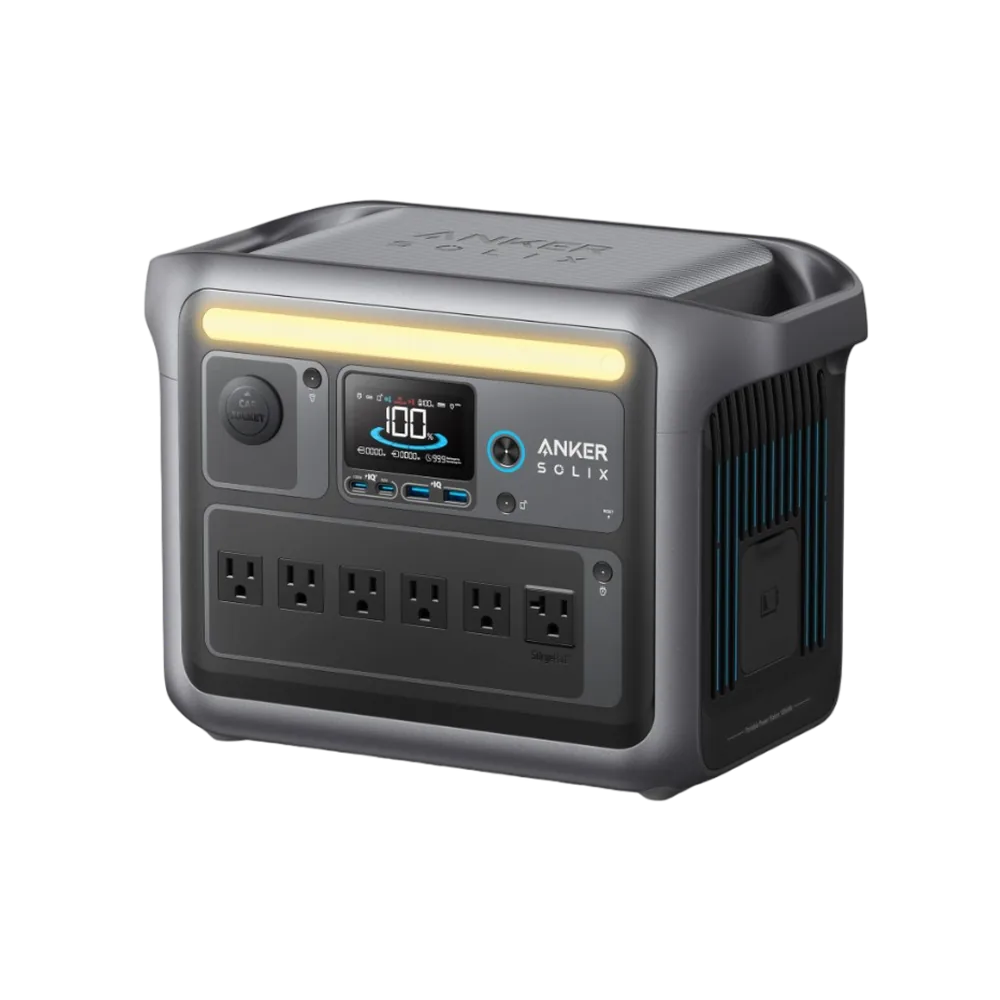
For homeowners who want strong capability without stepping up to a whole-home system, the C1000 hits a sweet spot of value. The 1,056Wh capacity won’t power a whole home indefinitely, but it comfortably supports critical loads like medical equipment, refrigeration, and communications.
Solar input maxes out at 600W, so pairing the C1000 with 400–600W of panels lets it top up quickly. Full solar recharge takes only a few hours in direct sunlight—easily manageable for maintaining charge during multi-day outages if you’re strategic about nighttime consumption.
Output power of 1,800W continuous (2,400W surge) handles most simultaneous loads with room to spare—you can run a refrigerator alongside smaller appliances. For keeping perishables cold, maintaining phone/laptop connectivity, and running a CPAP machine overnight, this capacity is more than sufficient.
💰 Anker SOLIX C1000
✓ 1,056Wh capacity
✓ 1,800W output (2,400W surge)
✓ 600W solar input max
✓ Expandable with add-on battery
✓ Compact 28-pound design
✓ 3,000 LiFePO4 cycles
Price checked November 9, 2025
A standout advantage is expandability—the C1000 accepts an add-on battery to grow capacity as your needs change, so you’re not locked into your starting size. For couples, small families, or as a supplementary system alongside a generator, it provides genuine value from a major manufacturer.
Complete System Comparison: Find Your Perfect Match
Here’s how these five best home backup solar generator systems compare across key specifications. Use this data to match your household’s requirements with the right capacity and features.
| Model | Capacity | Output Power | Solar Input | Price | Action |
|---|---|---|---|---|---|
| Anker F3800 + 3×PS400 | 6,144Wh (expandable 26.8kWh) |
6,000W 12,000W surge |
2,400W Dual MPPT |
$7,095 $9,894 |
View Deal → |
| Jackery 2000 Plus + 4×200W | 2,042Wh (expandable 12kWh) |
3,000W 6,000W surge |
800W Single MPPT |
$4,099 $6,699 |
View Deal → |
| Bluetti AC200L + B300K + 2×SP200L | 5,120Wh (expandable) |
2,400W 3,600W surge |
1,200W MPPT |
$4,897 $7,197 |
View Deal → |
| Jackery 1000 Plus + 2×200W | 1,264Wh (expandable 5kWh) |
2,000W 4,000W surge |
400W Single MPPT |
$1,899 $2,799 |
View Deal → |
| Anker SOLIX C1000 | 1,056Wh (expandable) |
1,800W 2,400W surge |
600W Single MPPT |
$449 | View Deal → |
🎯 Quick Selection Guide
• Choose Anker F3800 if you need whole-home backup with maximum capacity and don’t mind premium pricing
• Choose Jackery 2000 Plus if you want the best balance of capacity, features, and value (our #1 pick)
• Choose Bluetti AC200L if maximum capacity per dollar matters most and you can add panels later
• Choose Jackery 1000 Plus if you have modest needs and value portability for dual camping/backup use
• Choose Anker SOLIX C1000 if you want expandable capacity and strong output at a value price
Installation and Setup for Home Backup
Moving from concept to operational system requires addressing placement, wiring, and integration with home circuits. Professional installation ensures code compliance and safety. Our transfer switch installation guide walks through the complete process with electrical diagrams.
Related reading: our multi-day outage planning guide goes deeper on this topic.

Panel Placement and Positioning
Solar production depends heavily on panel orientation and angle. In the Northern Hemisphere, south-facing placement captures maximum daily sun exposure. East or west-facing can work but reduces production by 15-20%. North-facing is essentially useless for solar generation except during summer months at high latitudes.
Panel tilt angle matters nearly as much as direction. The optimal angle approximately equals your latitude—roughly 35-40 degrees for most of the continental United States. This compromise between summer and winter sun angles maximizes year-round production for your RV solar power setup or home backup system.
☀️ Optimal Solar Panel Angles by Season
Spring
35-40°
Mar-May
Summer
25-30°
Jun-Aug
Fall
40-45°
Sep-Nov
Winter
55-60°
Dec-Feb
Adjusting panel angle every 2-3 hours to track the sun can boost production 20-25% compared to fixed orientation
Basic Grid Integration (Plug-and-Play)
The simplest integration involves no permanent electrical work whatsoever. You place your power station near essential loads, plug devices directly into the station’s AC outlets, and let it operate as a standalone backup source.
This approach works well for modest needs—a refrigerator, freezer, lights, and electronics. Run extension cords from the power station to these loads, or better yet, position the station centrally and plug devices directly in. The station’s built-in inverter converts DC battery power to standard 120V AC, powering your devices just as grid power would.
Maximizing runtime requires strategic load prioritization. Learn home power load management strategies to stretch your backup capacity.

Advanced Integration with Transfer Switch
A transfer switch creates true whole-circuit backup by connecting your power station directly to your electrical panel. When the grid fails, you manually (or automatically) throw the switch, routing selected circuits to your backup power source instead of the grid.
Manual transfer switches cost $200-500 for quality units rated at 30-50 amps. Installation requires a licensed electrician and typically costs another $500-1,000 depending on panel proximity and circuit complexity. The result is seamless backup for everything on the transferred circuits—no extension cords, no manual plugging, just normal operation regardless of grid status.
This installation must comply with NEC Article 702 (Optional Standby Systems). Most jurisdictions require permits and inspections for transfer switch installation. Check ICC electrical code requirements or hire a licensed electrician for code-compliant work.
Return on Investment Analysis
Understanding the financial implications of solar-charged backup helps justify the investment beyond pure emergency preparedness. Multiple value streams contribute to overall ROI.
Federal and State Incentives
The federal Residential Clean Energy Credit, which let homeowners claim 30% of solar and battery costs, ended for systems installed after December 31, 2025. A system installed by then can still be claimed on a 2025 return.
Some states and utilities still offer incentives for battery storage. The DSIRE database provides state-by-state incentive information, though program availability changes frequently as funding gets allocated.
Frequently Asked Questions
Can I use my solar backup system while the grid is active?
Yes, and many homeowners do exactly this for daily peak shaving or off-grid practice. Your power station operates identically whether the grid is available or not. You can run loads from battery power during expensive peak hours, then recharge overnight during cheaper off-peak periods. This strategy reduces monthly electricity bills while maintaining full backup capability. Some systems include EPS passthrough modes specifically designed for this use case, automatically switching to battery during outages without manual intervention.
How long do solar panels last?
Quality solar panels carry 25-year power output warranties, typically guaranteeing 85-90% of original capacity at year 25. Physical lifespan often exceeds 30 years, though efficiency gradually declines. The panels don’t suddenly fail—they just slowly produce less power as cell efficiency degrades. For home backup applications where panels spend most of their time stored rather than deployed, effective lifespan extends even further. Budget for panel replacement around year 20-25 if you’re planning multi-decade use.
What happens during cloudy weather?
Clouds reduce solar output dramatically but don’t eliminate it entirely. Thin cloud cover might reduce production to 60-70% of clear-sky output. Dense overcast drops it to 20-30%. Even during heavy overcast, you’ll typically see 50-100W per 400W of panel capacity—not much, but better than zero. The practical impact depends on your consumption patterns. If you’re using 100W continuously and capturing 80W from cloudy-day solar, you’re only depleting the battery at 20W net—dramatically extending runtime compared to no solar input at all.
Do I need permits for a portable solar system?
Generally no for truly portable systems that don’t integrate with home wiring. If you’re just plugging devices into your power station using extension cords, no permits are required—you’re operating the power station the same way you’d use any appliance. Permanent panel mounting (roof or ground) typically requires permits even for portable power stations. Transfer switch installations definitely require permits and electrical inspections in all jurisdictions. Budget 2-4 weeks for the permitting process and include inspection costs in your installation budget.
Can I expand my system later?
Most quality power stations support expansion through additional battery packs. The Jackery 2000 Plus expands from 2,042Wh to 12,284Wh. The Bluetti AC200L scales with additional B300K batteries. The Anker F3800 grows from 3,840Wh to 26,880Wh. Solar expansion is even simpler—just add more panels up to your power station’s maximum input capacity. Buy expansion batteries from the same manufacturer as your base unit to avoid compatibility problems.
How much maintenance do these systems require?
Minimal maintenance keeps solar backup systems operational for years. Clean panels every 3-6 months or when you notice dust/pollen accumulation. Inspect cables quarterly for damage or corrosion at connectors. Test the system monthly by running typical loads to verify everything functions correctly. Battery health benefits from occasional full discharge cycles—once every 2-3 months, run the power station down to 10-20% capacity, then fully recharge. Check for firmware updates every 6 months and apply them when available.
Should I get a generator as backup to my solar system?
For many homeowners, a hybrid approach makes sense. Solar handles 80-90% of outages—the brief 1-2 day events that occur most frequently. A small generator serves as emergency backup for extended periods when solar production proves insufficient. This strategy lets you buy a smaller, cheaper generator than you’d need for primary backup. A 2,000W inverter generator costs $600-800 and runs quietly enough for extended use. The generator becomes your insurance policy rather than primary system.
Can I take this camping or use it for RV?
Absolutely, and this dual-use capability adds significant value. Most of these systems started as recreational products before homeowners realized their backup potential. They work beautifully for camping, tailgating, RV trips, and outdoor events. The transition from camping to home backup requires no modifications. The solar panels that recharge your backup battery at home work identically at a campground. This versatility means your emergency preparedness investment gets regular use rather than sitting idle for years between outages.
What’s the best solar generator for critical medical equipment?
For CPAP machines, oxygen concentrators, and other critical medical devices, you need a system with UPS-grade reliability and instant switchover capability. The Jackery 2000 Plus with its 20ms EPS mode works well for most medical equipment. For even more critical applications, see our specialized guide on the best power station for medical equipment with detailed runtime calculations and backup recommendations.
Conclusion
Solar charging transforms home backup from temporary emergency response into sustainable energy independence. The upfront investment exceeds standalone power stations or gas generators, but the long-term value proposition—unlimited runtime, zero fuel costs, silent operation, environmental benefits—tilts heavily toward solar integration.
Your specific needs dictate the right system size. Couples or small households with modest backup requirements find adequate capacity in 1,000-2,000Wh systems paired with 400-600W solar. Larger families or homes with medical equipment needs should target 3,000-6,000Wh with 800-1,200W solar arrays. Those seeking true whole-home backup capability need 5,000Wh+ expandable systems and 1,500W+ solar capacity.
The path forward starts with calculating your actual daily consumption during outages. Use this figure to size both battery capacity and solar input appropriately. Select quality equipment from established manufacturers offering solid warranties and service networks. Plan installation carefully—even simple plug-and-play setups benefit from thoughtful cable management and strategic positioning.
🎯 Ready to Build Your Solar Backup System?
Start with our #1 recommended system for most homeowners
View Jackery 2000 Plus Bundle →
$4,099 $6,699 | Save $2,600 | Free Shipping
Consider this not just emergency preparedness but energy resilience that serves daily use. Peak shaving during expensive grid hours, powering outdoor activities, maintaining critical loads during brief flickers—these everyday applications make your investment productive rather than waiting idly for the next major outage.
The grid continues experiencing stress from aging infrastructure, extreme weather events, and demand growth. Utility spending on transmission and distribution barely keeps pace with deterioration, much less improvements. Planning for outages isn’t pessimism—it’s realistic assessment of electricity reliability trends across most of the United States.
Solar-charged backup gives you control over that vulnerability. When the next storm knocks out power for days, you’ll maintain comfortable, normal operation while neighbors scramble for generator fuel or ice. That capability carries tangible value well beyond the dollar cost of equipment—it’s genuine resilience that protects your household regardless of external circumstances.
Start by determining your essential loads and daily consumption. Research systems that match those requirements with adequate buffer capacity. Purchase quality panels that will deliver reliable service for decades. Set up the system methodically with attention to optimization details. Then test it regularly to ensure everything works correctly when you actually need it.
Done properly, solar charging for home backup systems represents one of the best investments you can make in household resilience, paying dividends in security, savings, and sustainable operation for decades to come.
Visit Solar Charging Knowledge Hub →
Originally published: December 24, 2025