
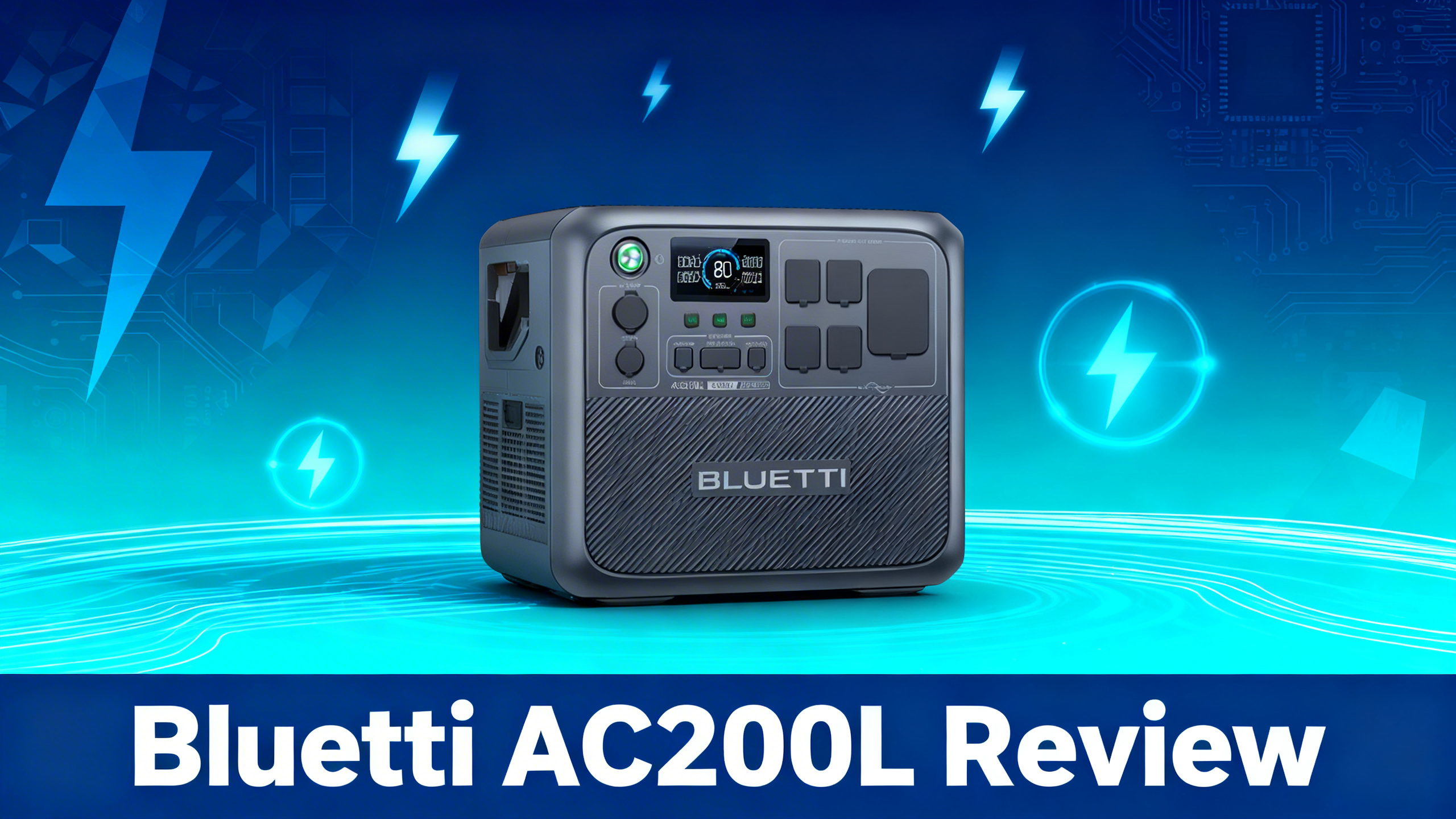
Most 2,000Wh-class power stations cost $1,500 or more. The Bluetti AC200L is listed at $799, which sounds too good to be true. It’s not. The AC200L occupies a specific sweet spot in the mid-range market: enough capacity for serious home backup, enough output for demanding appliances, and a price point that’s hard to argue with given what’s inside.
The AC200L sits between Bluetti’s AC180T ($699, 1,433Wh) and the Elite 200 V2 ($899, 2,048Wh) in terms of pricing, but it outguns both in one critical area: expandability. This review covers specs, charging performance, real-world runtime estimates, and who this unit actually makes sense for. For a full breakdown of the Bluetti lineup across all tiers, the Bluetti brand overview covers every model from entry-level to flagship.

Real-World Look: The Bluetti AC200L in Use
Studio renders only tell part of the story. Here is the Bluetti AC200L as it actually looks in a real owner’s hands, away from the polished marketing shots.
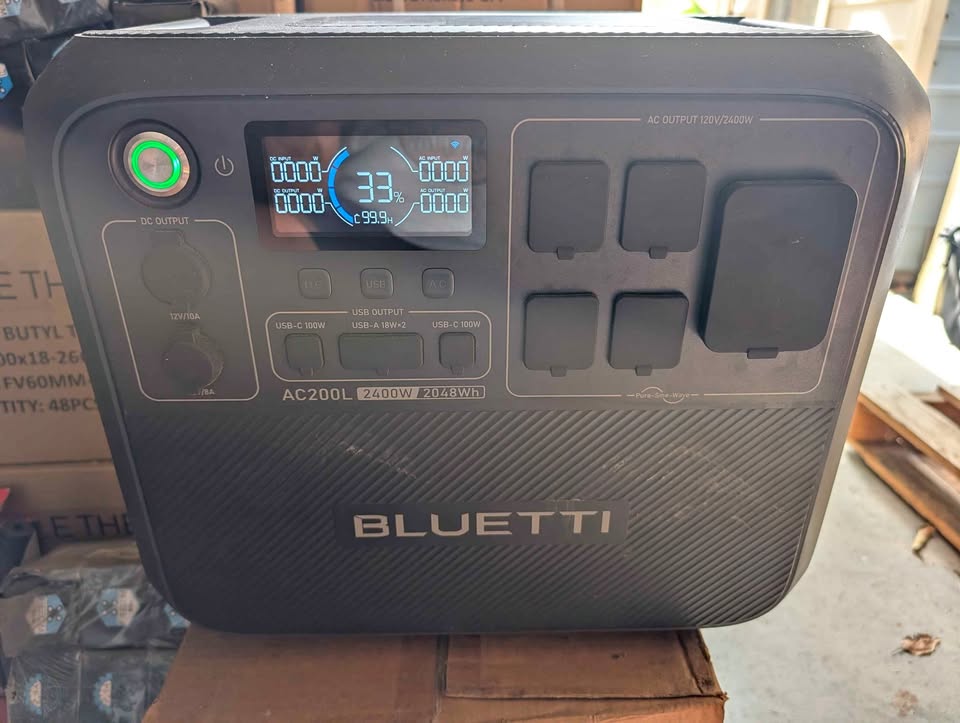
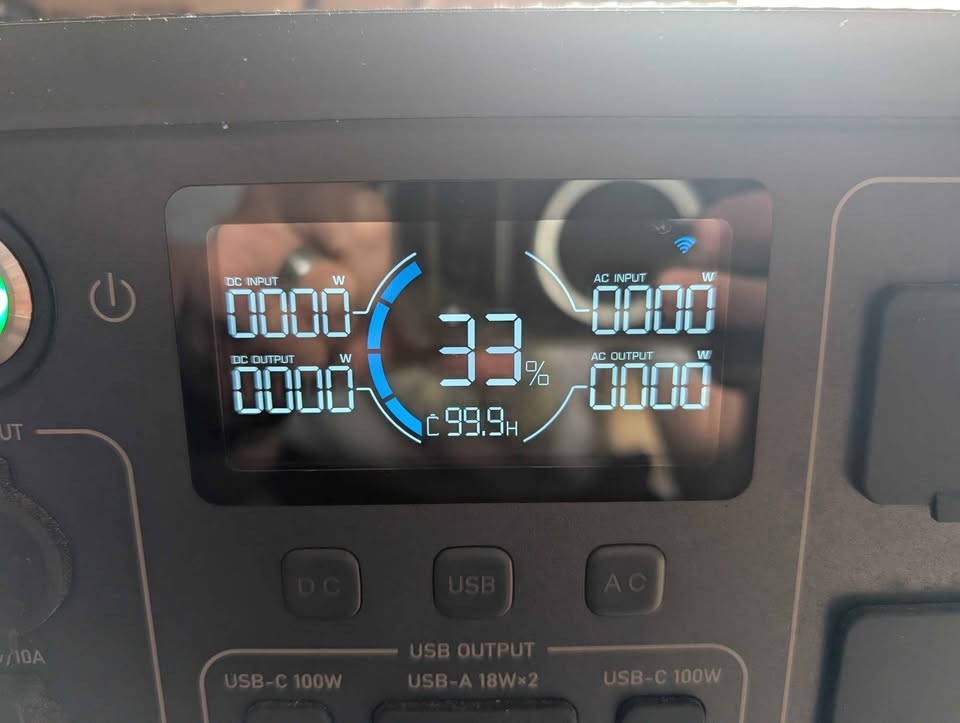
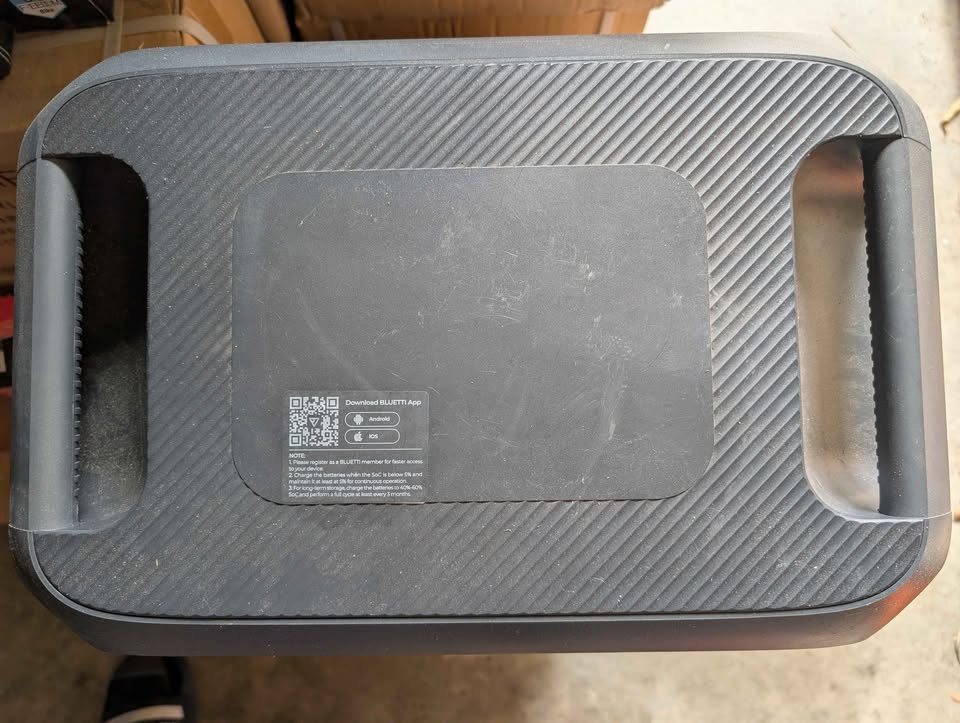
Real-world photos of the Bluetti AC200L.
Bluetti AC200L Portable Power Station
$799 $1,599
- 2,048Wh capacity, expandable to 7kWh
- 2,400W AC output (surge 4,800W)
- 0-80% recharge in just 45 minutes
Bluetti AC200L: Overall Rating
8.7/10
“Exceptional value: flagship-level expandability at mid-range pricing”
Battery Capacity 9/10
AC Output Power 9/10
Charging Speed 9/10
Expandability 10/10
Value for Money 9/10
Portability 7/10
Quick Verdict
Spec analysis confirms the AC200L punches well above its price. At $799, you’re getting 2,048Wh of LiFePO4 capacity, 2,400W of continuous AC output, and a fast-charge system that reaches 80% in roughly 45 minutes. That combination is genuinely rare under $1,000.
The expandability to 7kWh via B300K battery modules is the standout feature. No other Bluetti unit at this price offers that growth path. Performance data indicates it handles demanding loads, including kitchen appliances and power tools, without issue.
The limitation worth noting: at 57.3 lbs, this isn’t a grab-and-go unit. It’s built for stationary or semi-permanent use. If you need something lighter for camping carry-ins, look at the AC180T instead. For home backup and serious RV setups, the AC200L earns its score of 8.7/10.
Bluetti AC200L Full Technical Specifications
Published specifications position the AC200L as one of the more complete mid-range units on the market. The LiFePO4 chemistry delivers 3,500+ charge cycles to 80% capacity, which translates to roughly a decade of regular use before noticeable degradation. You can view the official AC200L specs page for complete technical details.

The 4-year warranty is longer than what most competitors offer at this price. Combined with 3,500+ cycle longevity from the LFP chemistry, the long-term ownership math is favorable compared to older lithium-ion alternatives.
Charging Options and Speed
The AC200L supports six charging methods: AC wall outlet, solar (MPPT), car DC (12V/24V), generator, dual AC+solar simultaneous, and grid-to-battery direct pass. In practice, the AC wall method is the fastest and most relevant for home backup scenarios.
Charge time data shows 0-80% in approximately 45 minutes via 2,400W AC input. Full charge typically takes 90-100 minutes. For emergency preparedness, that recharge window matters: if the grid comes back during an outage, you can top up quickly before the next event. The updated Bluetti home backup 2026 guide has current solar pairing recommendations for the AC200L if you’re planning a solar setup.


Solar charging peaks at 900W via the MPPT controller, with a 12-60V input range. Under optimal conditions, spec data suggests a full charge in roughly 2.5-3 hours with adequate panel wattage. The simultaneous AC+solar charging option is useful for maximizing recharge speed when both sources are available. At $799, the Bluetti AC200L delivers a charging speed profile that’s competitive with units costing twice as much.
What Can the AC200L Power?
Runtime calculations based on the 2,048Wh usable capacity show solid coverage across common household loads. At roughly 90% inverter efficiency, real-world delivery lands around 1,840Wh of usable energy. Readers specifically sizing for kitchen appliances should check the roundup of the best stations for refrigerator backup, which benchmarks runtime across brands.
What Can the AC200L Power? (2,048Wh)
❄️
Full-Size Fridge
~17h
120W avg
💻
Laptop
~68h
30W avg
🌬️
Box Fan
~136h
15W avg
💡
LED Lights (5x)
~204h
10W total
📱
Smartphones
~200x
10Wh/charge
Runtime calculations based on 2,048Wh usable capacity at ~90% efficiency. Actual results vary by appliance model and ambient temperature.
The expansion case is compelling. Add one B300K battery module and total capacity jumps to 3,072Wh. Add two and you’re at 4,096Wh. Three modules push the system to 7,168Wh. That’s enough capacity to run a full-size refrigerator for roughly 59 hours, which covers most multi-day outage scenarios without solar input. Owner feedback consistently highlights the modular architecture as the primary reason they chose the AC200L over fixed-capacity alternatives.
More Real-World Angles
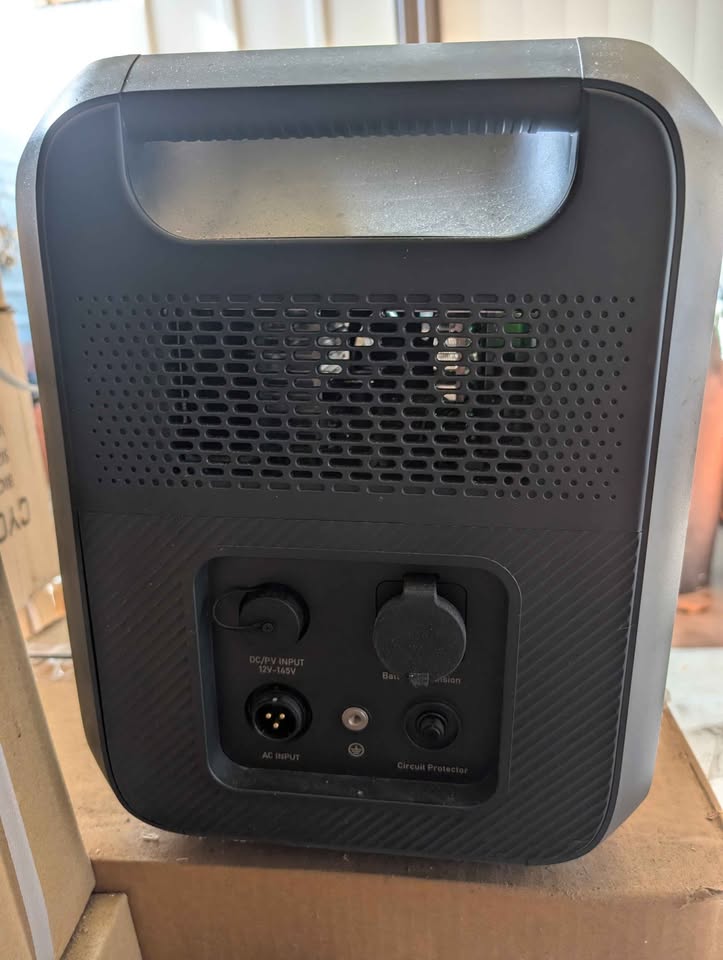
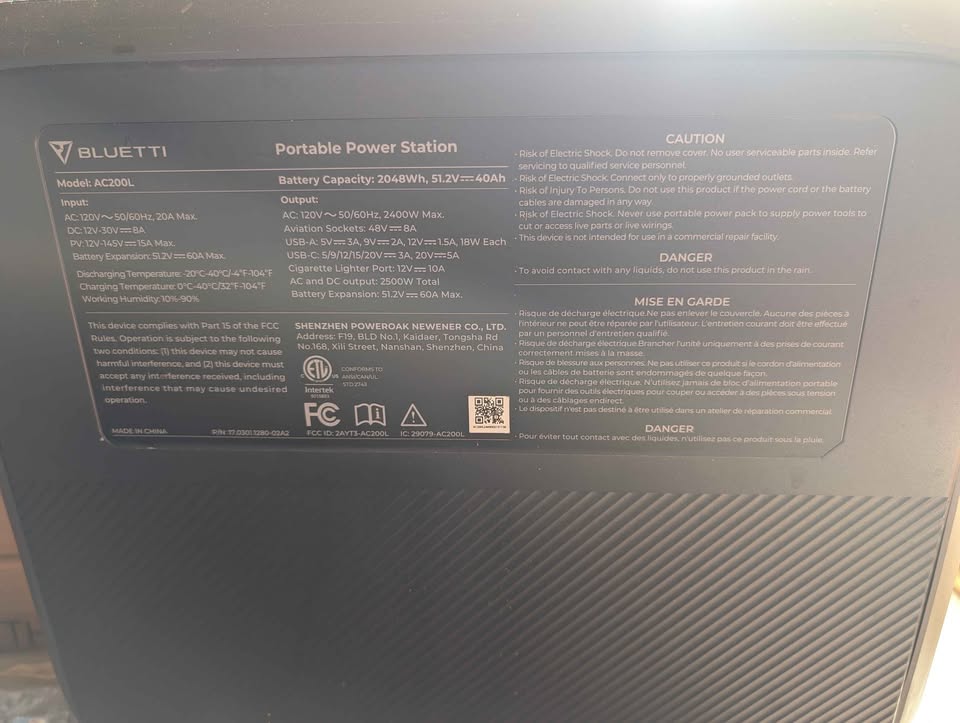
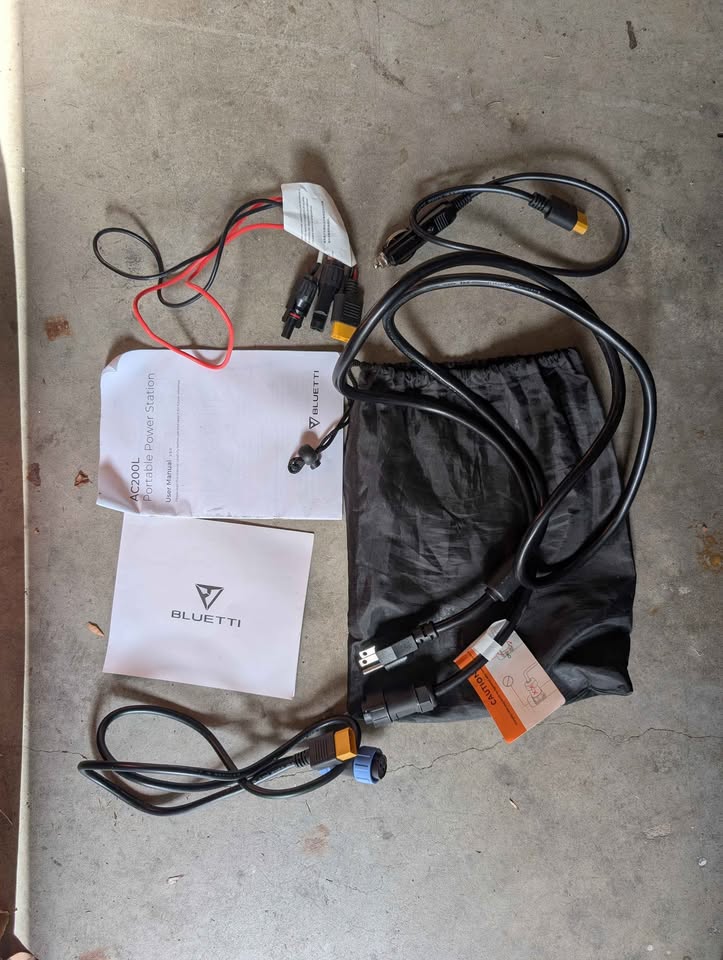
Ports and Connectivity
The AC200L’s output configuration covers most home and outdoor needs. Four AC outlets at 120V/60Hz handle appliances up to the 2,400W continuous limit. The 4,800W surge rating means it can start motor-driven loads like refrigerator compressors or power tool motors without tripping.


USB-C coverage is solid: two ports at 100W each, which handles fast charging for laptops and high-draw devices simultaneously. The 12V/10A car port and aviation DC connector round out the DC side for 12V applications. Compared to the AC180T, the AC200L adds an additional AC outlet and higher continuous output, which matters for users running multiple appliances at once.
Expandability: The AC200L’s Standout Feature
Expandability is where the AC200L separates itself from every other Bluetti unit at this price tier. The B300K battery module connects directly to the expansion port, adding 3,072Wh of LFP capacity per module. Three modules bring the total system to 7,168Wh.
AC200L vs Elite 200 V2: Which Is the Better Buy?
Same capacity, different output and expandability. The full breakdown explains which profile fits which buyer.
The Elite 200 V2 and AC180T don’t offer expansion at all. That’s a meaningful architectural difference. Spec-for-spec, the AC200L looks comparable to the Elite 200 V2 at launch, but the ability to grow the system over time changes the long-term value calculation. A recurring pattern in owner feedback shows buyers initially purchasing the base unit, then adding a B300K module 6-12 months later as their needs clarify. Shoppers debating between these two models will want to read the dedicated AC200L vs Elite 200 V2 head-to-head, which goes deeper on output and pricing.
Real-World Performance Analysis
Performance data and published specifications indicate the 2,400W inverter handles demanding loads without thermal throttling under typical conditions. Owner reports across user communities confirm consistent operation with electric skillets (1,200-1,500W), circular saws (up to 2,000W surge), and window AC units (draw varies by BTU).

UPS mode performance is a meaningful spec for home backup applications. Published data confirms sub-30ms switchover time, which is fast enough to protect most sensitive electronics including routers, NAS drives, and medical devices. A consistent limitation reported in owner feedback: the unit’s 57.3 lbs weight with no integrated wheels makes repositioning awkward. Users with mobility constraints or who need to move the unit frequently will want to factor that in. It’s a design trade-off common to 2,000Wh-class stations of this form factor.
⚠️ Important: The AC200L lacks built-in wheels. If your use case involves frequent repositioning (e.g., moving between rooms or outdoor-to-indoor), consider a wheeled cart accessory or the Apex 300, which has a larger built-in wheel set.
How the AC200L Compares
The three most relevant comparisons are within Bluetti’s own 2026 lineup: the AC200L at $799, the Elite 200 V2 at $899, and the AC180T at $699. Each serves a distinct buyer profile. Shoppers considering stepping up further will find the three-way premium comparison adds the Apex 300 into the equation. Bluetti has since added the AC200P L Premium upgrade to this segment. For a direct matchup, compare all three 2kWh Bluetti options side by side.
The data shows the AC200L wins on output power and is the only expandable option in this trio. The Elite 200 V2’s $100 premium doesn’t buy expandability or higher output. The AC180T makes sense for buyers who want a lighter, more portable unit and don’t need 2,000Wh of base capacity.
App and Smart Features
The BLUETTI App connects via Wi-Fi and Bluetooth, offering remote monitoring, output scheduling, and real-time power flow data. Analysis of the app’s feature set shows it covers the essentials well: you can check state of charge, toggle outputs, set charge limits to extend battery longevity, and monitor input/output wattage from your phone.
Owner feedback consistently identifies the BLUETTI App as more reliable than some competing apps in the portable power space. Scheduling features are particularly useful for users pairing the AC200L with solar, allowing automatic charge windows aligned with peak solar hours. For setup and configuration guidance, refer to the Bluetti AC200L user manual. The app is available for iOS and Android and supports both Wi-Fi and Bluetooth connections for flexibility in range-limited situations.
Best Bluetti Units for Home Backup in 2026
Scenario-by-scenario planning for outage-prone households, including the AC200L alongside Bluetti’s full backup lineup.
The BLUETTI App’s data logging is useful beyond convenience: it records power events, which can help you understand your actual consumption patterns and size any B300K expansion purchase more accurately. That’s a practical feature for users planning incremental capacity upgrades.
Who Should Buy the AC200L?
Homeowners in outage-prone areas are the primary fit. The combination of 2,048Wh base capacity, 2,400W output, and UPS mode covers the core needs for a 24-48 hour blackout: refrigerator, lighting, phones, router, and medical devices like CPAP machines. Homeowners prioritizing emergency preparedness will find detailed scenario planning in the guide covering Bluetti home backup solutions.

Semi-permanent RV setups are a strong secondary use case. The AC200L’s 900W solar input supports practical off-grid living when paired with adequate panel wattage. Small business operators needing reliable backup for POS systems, networking equipment, or workstations also fit the profile, given the 2,400W continuous output and UPS mode.
✅ Buy the AC200L if…
- You want 2,000+ Wh without paying flagship prices
- Home backup for multi-day outages is your priority
- You plan to expand capacity with B300K batteries later
- You need 2,400W output to run kitchen appliances
- Fast recharge (45 min to 80%) matters in your use case
❌ Skip it if…
- Portability is critical (it weighs around 57 lbs)
- You need whole-home backup for 5+ days (consider Apex 300)
- Camping trips requiring carry-in access are your main use
- Budget is under $600 (the AC70 covers lighter needs)
FAQ: Bluetti AC200L
What is the Bluetti AC200L’s battery capacity?
The AC200L has a base capacity of 2,048Wh using LiFePO4 (LFP) chemistry. Spec data confirms this configuration supports 3,500+ charge cycles to 80% capacity, which translates to roughly 10 years of regular use. The expandable architecture allows connecting up to three B300K battery modules, pushing total system capacity to 7,168Wh.
How fast does the Bluetti AC200L charge?
Published data shows the AC200L reaches 80% charge in approximately 45 minutes when connected to a standard 120V outlet using the full 2,400W AC input. Full charge typically takes around 90-100 minutes. Solar charging peaks at 900W MPPT, giving a full charge in roughly 2.5-3 hours under optimal conditions.
Can the Bluetti AC200L run a refrigerator during a power outage?
Capacity analysis confirms the AC200L can run a full-size refrigerator drawing 120W for approximately 17 hours on a single charge. With the UPS mode active, the transition to battery power occurs in under 30 milliseconds, ensuring no interruption to sensitive appliances during grid outages.
What is the difference between the Bluetti AC200L and the Elite 200 V2?
Both models share the same 2,048Wh capacity and similar fast charging speeds. The key distinctions are: the AC200L offers expandability to 7kWh (the Elite 200 V2 does not), and the AC200L delivers 2,400W AC output versus 2,048W on the Elite 200 V2. The AC200L is also priced lower at $799 compared to the Elite 200 V2 at $899 during sale periods.
Is the Bluetti AC200L good for home backup?
Performance data and owner reports consistently position the AC200L as a strong home backup option for 24-48 hour outages at the base 2,048Wh capacity. The expandability to 7kWh makes it viable for multi-day scenarios when paired with B300K modules. The 2,400W output handles most household loads including window AC units and kitchen appliances.
Does the Bluetti AC200L support solar charging?
Yes. Spec data confirms the AC200L accepts up to 900W of solar input via its MPPT charge controller (voltage range 12-60V). Published testing shows compatibility with Bluetti’s 350W, 200W, and PV100 FX panels, as well as compatible third-party panels within the voltage specification.
What is the weight of the Bluetti AC200L?
The Bluetti AC200L weighs approximately 57.3 lbs (26 kg). Performance data indicates this is on the heavier end for a 2,000Wh-class power station, which is a consideration for users needing frequent repositioning. The unit includes a carrying handle and roll-cage design, but no built-in wheels.
Final Verdict
The Bluetti AC200L earns its 8.7/10 score on the strength of three data points: 2,400W output at a price where most competitors max out at 2,000W, a 45-minute fast charge that’s among the fastest in its class, and expandability to 7kWh that no competing unit at $799 offers.
The limitations are real but narrow. At 57.3 lbs with no integrated wheels, this isn’t a portable unit in the traditional sense. Users needing frequent transport should look at lighter alternatives. For extended multi-day or whole-home coverage scenarios, the Apex 300 represents the step up. For buyers considering the full competitive picture, the three-way premium comparison with the Apex 300 and Elite 200 V2 is worth reviewing before finalizing a decision.
For the intended use case, which is stationary home backup with optional expansion, the AC200L is the most capable unit under $1,000 in Bluetti’s 2026 lineup. The value analysis is straightforward: expandability to 7kWh, 2,400W output, LFP chemistry, and a 4-year warranty at $799 is a combination that’s hard to match at this price point.
Bluetti AC200L
$799
Best expandable power station under $1,000
Price verified April 2026. Free shipping available
Originally published: April 7, 2026